

Customer Support and Technical Support: Key Differences
Modern businesses face increasing pressure to deliver exceptional service across multiple channels while managing costs and maintaining quality. Understanding the distinction between customer support and technical support has become essential for organizations seeking to optimize their service delivery models. While these terms are often used interchangeably, they represent distinct functions with unique objectives, skill requirements, and operational frameworks. Companies that recognize and leverage these differences position themselves to build more effective support infrastructures that drive customer satisfaction and business growth.
Defining Customer Support and Technical Support
Customer support encompasses a broad range of services focused on helping customers navigate their entire journey with a company. This function addresses inquiries about products, services, billing, account management, order status, and general guidance. The primary objective centers on ensuring customer satisfaction and building long-term relationships through positive interactions.
Technical support, conversely, specializes in resolving specific technical issues related to product functionality, software bugs, hardware malfunctions, or system errors. Technical support representatives require deeper product knowledge and troubleshooting expertise to diagnose and resolve complex problems that prevent customers from using products or services effectively.
Core Responsibilities and Scope
The scope of customer support extends across the entire customer lifecycle, handling diverse inquiries that may include:
- Product information and recommendations
- Order placement and tracking
- Account modifications and updates
- Billing questions and payment processing
- Returns, exchanges, and refunds
- General policy questions
- Feedback collection and complaint resolution
Technical support teams focus on specialized problem-solving that demands technical expertise:
- Diagnosing software or hardware malfunctions
- Troubleshooting network connectivity issues
- Resolving compatibility problems
- Investigating system errors and bugs
- Providing configuration guidance
- Performing remote diagnostics
- Escalating complex issues to engineering teams

Skill Requirements and Training Approaches
Customer support and technical support demand different competency profiles, requiring organizations to design targeted recruitment and training programs. Customer support representatives excel when they possess strong communication skills, empathy, patience, and adaptability. These professionals must navigate emotional situations, manage expectations, and maintain positive attitudes while addressing routine and sometimes repetitive inquiries.
Technical support personnel need strong analytical thinking, problem-solving capabilities, and detailed technical knowledge. They must understand system architectures, diagnostic methodologies, and troubleshooting frameworks. According to HDI’s State of Tech Support in 2025, continuous training remains critical as technology evolves rapidly, requiring technical support teams to stay current with new features, updates, and emerging issues.
Training Investment and Development
Organizations must allocate resources differently for these two functions:
| Function | Training Focus | Skill Development | Knowledge Requirements |
|---|---|---|---|
| Customer Support | Communication, product overview, CRM systems | Soft skills, conflict resolution | General product knowledge, policies |
| Technical Support | Technical documentation, diagnostic tools | Problem-solving, technical analysis | Deep technical expertise, system architecture |
| Cross-Training | Escalation protocols, handoff procedures | Collaboration, knowledge sharing | Understanding of both domains |
Companies leveraging call center outsourcing solutions gain access to established training programs that maintain quality standards across both support functions. These providers invest heavily in developing specialized talent pools for different support requirements.
Technology Infrastructure and Tools
The technological ecosystems supporting customer support and technical support differ significantly, reflecting their distinct operational needs. Customer support teams typically utilize customer relationship management platforms, ticketing systems, knowledge bases, and omnichannel communication tools. These systems prioritize tracking customer interactions, maintaining conversation history, and ensuring seamless transitions across communication channels.
Technical support infrastructure includes diagnostic tools, remote access software, system monitoring platforms, and technical documentation repositories. Helpdesk software serves as the foundation for both functions, but technical support teams require additional specialized tools for troubleshooting and problem resolution.
AI Integration and Automation
Artificial intelligence increasingly transforms both customer support and technical support operations. AI-powered virtual assistants handle routine customer inquiries, providing instant responses to frequently asked questions while freeing human agents to address complex issues requiring judgment and empathy.
Research demonstrates that large language models show promise in automating technical customer support, particularly for standard troubleshooting procedures. However, implementing these technologies requires careful consideration of customer trust and acceptance. Organizations must address growing customer distrust of AI by maintaining transparency and ensuring seamless escalation paths to human agents when needed.
Advanced AI agent solutions enable businesses to scale support capacity while maintaining quality through intelligent routing, predictive analytics, and automated response generation for common scenarios.
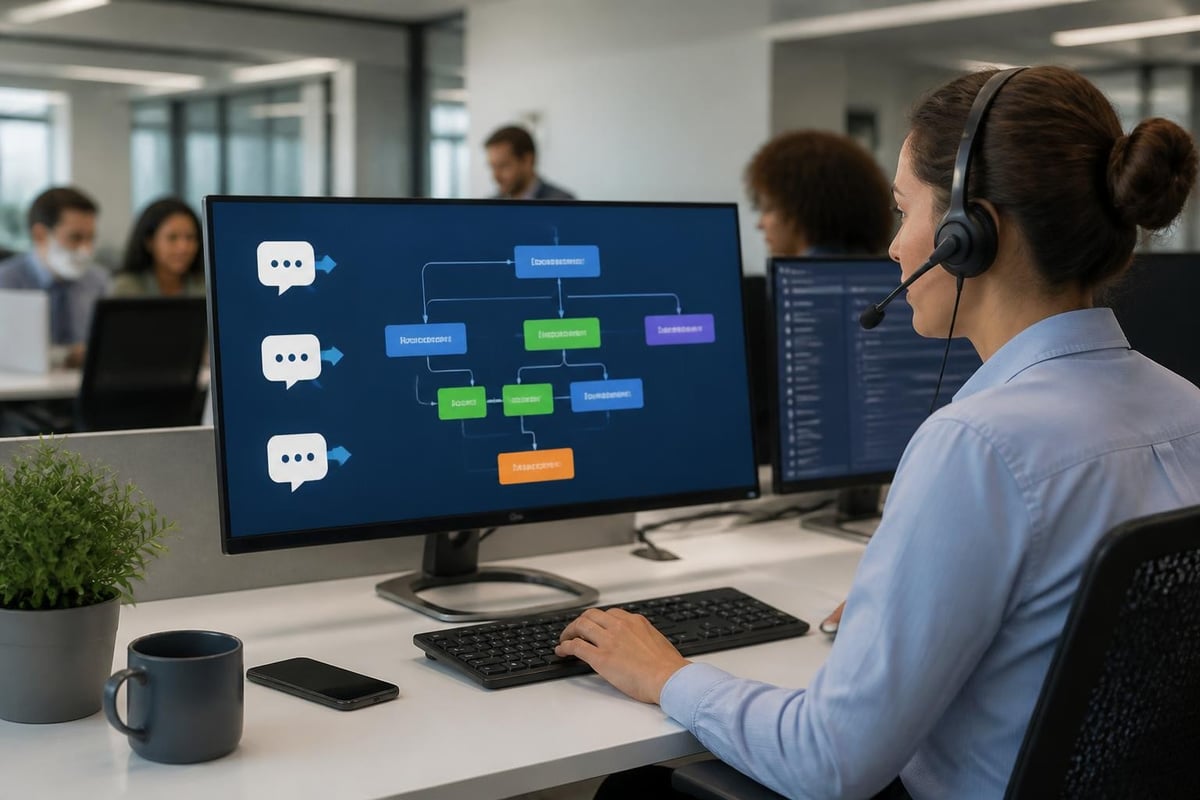
Performance Metrics and Success Indicators
Customer support and technical support require distinct performance measurement frameworks aligned with their unique objectives. Customer support metrics emphasize satisfaction, efficiency, and relationship building:
- Customer Satisfaction Score (CSAT)
- Net Promoter Score (NPS)
- First Contact Resolution (FCR)
- Average Handle Time (AHT)
- Customer Effort Score (CES)
- Retention rates
- Upsell and cross-sell conversion
Technical support metrics focus on problem resolution effectiveness and technical excellence:
- Time to Resolution (TTR)
- First-Time Fix Rate (FTFR)
- Escalation Rate
- Ticket Reopening Rate
- Mean Time to Repair (MTTR)
- Technical accuracy rates
- Knowledge base utilization
Balancing Efficiency and Quality
Organizations must avoid the pitfall of over-optimizing for speed at the expense of quality. Maintaining the human touch in technology-driven support remains essential, particularly for technical support where rushing through diagnostics can lead to incomplete resolutions and repeat contacts.
Businesses partnering with providers offering tech support outsourcing benefit from established quality frameworks that balance efficiency targets with satisfaction objectives, ensuring neither dimension suffers in pursuit of the other.
Escalation Protocols and Cross-Functional Collaboration
Effective customer support and technical support operations require clear escalation pathways and collaboration mechanisms. Customer support teams serve as the first line of contact, gathering initial information and attempting resolution within their scope of authority. When issues require specialized technical knowledge, well-defined handoff procedures ensure smooth transitions to technical support specialists.
Best practices for escalation include:
- Clear trigger criteria defining when issues should escalate
- Comprehensive information transfer providing technical teams with complete context
- Customer communication protocols keeping customers informed throughout escalation
- Follow-up procedures ensuring customer support closes the loop after resolution
- Feedback mechanisms allowing lessons learned to improve first-contact resolution
Technical support teams must communicate resolution steps back to customer support, enabling knowledge transfer that gradually expands customer support capabilities. This collaborative approach reduces unnecessary escalations over time while building organizational knowledge.
Geographic Distribution and Multilingual Capabilities
Global businesses require customer support and technical support across multiple time zones and languages. Geographic distribution enables 24/7 coverage while controlling costs through strategic location selection. Companies with global call center operations can staff support functions in regions offering optimal combinations of language skills, technical talent, and cost efficiency.
Different regions offer distinct advantages for various support functions:
| Region | Customer Support Strengths | Technical Support Strengths | Common Applications |
|---|---|---|---|
| United States | Native English, cultural alignment | Advanced technical expertise | Premium support tiers |
| Philippines | English proficiency, service culture | IT education infrastructure | Volume customer support |
| El Salvador | Spanish/English bilingual, nearshore | Growing technical talent pool | Americas coverage |
| South Africa | Multilingual, accent neutrality | Technical education systems | EMEA time zones |
Call centers in El Salvador provide particular advantages for businesses serving North American markets requiring bilingual support capabilities with minimal time zone differences.

Industry-Specific Considerations
Customer support and technical support requirements vary significantly across industries, demanding tailored approaches that reflect sector-specific challenges and customer expectations. E-commerce businesses require customer support focused on order management, shipping inquiries, and return processing, while technical support addresses website functionality, mobile app issues, and payment processing problems.
The travel industry demands specialized support approaches handling reservation modifications, cancellations, and travel disruptions through customer support, while technical support resolves booking system errors and integration issues with third-party platforms.
Healthcare and Financial Services Complexity
Healthcare and financial services introduce additional complexity requiring strict compliance adherence and specialized knowledge. Customer support in these sectors handles account inquiries, benefit explanations, and general guidance while maintaining HIPAA or financial privacy standards.
Technical support for healthcare systems addresses electronic health record issues, telemedicine platform problems, and medical device connectivity, requiring both technical expertise and understanding of clinical workflows. Financial services technical support resolves trading platform issues, mobile banking problems, and security concerns while maintaining regulatory compliance.
Organizations providing inbound customer service across regulated industries must implement rigorous training programs ensuring representatives understand both technical requirements and compliance obligations.
Self-Service and Knowledge Management
Modern customer support and technical support strategies increasingly emphasize self-service capabilities that empower customers to resolve issues independently. Comprehensive knowledge bases, video tutorials, community forums, and AI-powered chatbots reduce support volume while improving customer satisfaction through immediate access to information.
Technical support best practices emphasize developing robust self-service options that address common technical issues through step-by-step guides, troubleshooting wizards, and diagnostic tools. These resources prove particularly effective for standard configuration problems and frequently encountered errors.
Customer support knowledge bases focus on policy explanations, process documentation, and frequently asked questions covering routine inquiries. Well-designed self-service systems categorize content logically, implement effective search functionality, and maintain current, accurate information reflecting the latest products and policies.
Building Effective Knowledge Resources
Creating valuable self-service content requires systematic approaches:
- Analyze support tickets to identify common questions and pain points
- Develop content addressing root causes rather than symptoms
- Use clear, accessible language avoiding unnecessary jargon
- Incorporate visual aids, screenshots, and videos for complex procedures
- Implement feedback mechanisms measuring content effectiveness
- Update documentation promptly when products or policies change
- Track search queries identifying content gaps
Research into mining procedures from technical support documents demonstrates how organizations can systematically extract knowledge from support interactions, transforming individual resolutions into reusable resources that benefit all customers.
Quality Assurance and Continuous Improvement
Sustaining excellence in customer support and technical support requires ongoing quality assurance programs and commitment to continuous improvement. Quality monitoring evaluates both technical accuracy and customer interaction quality through call recording review, ticket analysis, and customer feedback assessment.
Customer support quality assurance emphasizes communication effectiveness, empathy demonstration, and adherence to service standards. Evaluators assess whether representatives actively listen, provide accurate information, and create positive experiences regardless of issue complexity.
Technical support quality reviews focus on diagnostic accuracy, resolution completeness, and knowledge application. Quality assessors determine whether technical representatives followed proper troubleshooting methodologies, identified root causes, and implemented effective solutions preventing recurrence.
Feedback Loops and Learning Systems
Organizations committed to excellence establish systematic feedback mechanisms:
- Regular coaching sessions addressing individual performance gaps
- Team calibration meetings ensuring consistent quality standards
- Customer feedback analysis identifying systemic improvement opportunities
- Root cause analysis for recurring issues or escalations
- Best practice sharing distributing successful approaches across teams
- Technology evaluation assessing tool effectiveness and identifying needs
Comparative research on automated customer support models provides insights into optimization approaches, highlighting the importance of continuous refinement based on performance data and customer outcomes.
Cost Optimization and Resource Allocation
Organizations must strategically allocate resources between customer support and technical support based on business priorities, customer needs, and cost considerations. Customer support typically handles higher volumes of relatively straightforward inquiries, benefiting from economies of scale and standardized processes.
Technical support requires more specialized personnel commanding higher compensation due to technical expertise requirements. However, effective technical support reduces overall support costs by resolving issues definitively, preventing repeat contacts and customer churn.
Strategic resource allocation considers:
- Volume patterns across different inquiry types
- Complexity distribution requiring various skill levels
- Customer segment needs varying by product tier or customer value
- Channel preferences affecting staffing and technology requirements
- Peak demand periods requiring flexible capacity
- Geographic coverage needs based on customer distribution
Organizations leverage outsourcing partnerships to optimize costs while maintaining quality. Call center outsourcing providers offer flexible capacity scaling, specialized expertise, and geographic diversity without the capital investment and management complexity of building internal capabilities.
The Future of Integrated Support Models
Forward-thinking organizations increasingly adopt integrated support models that blur traditional boundaries between customer support and technical support. Cross-trained representatives handle broader inquiry ranges, improving first-contact resolution while reducing handoffs and escalations.
This integration requires investment in comprehensive training programs, enhanced knowledge management systems, and sophisticated routing technologies that match inquiries with optimally skilled agents. The benefits include improved customer experience through reduced transfers, enhanced agent engagement through varied work, and operational efficiency through flexible resource deployment.
However, complete integration proves impractical for highly technical products or complex troubleshooting scenarios requiring specialized expertise. The optimal approach typically maintains specialized technical support tiers while expanding customer support capabilities to handle moderate technical inquiries.
Technology continues reshaping both functions, with AI handling increasing portions of routine interactions while human agents focus on complex, nuanced situations requiring judgment, creativity, and emotional intelligence. Success requires thoughtful implementation that enhances rather than replaces human capabilities, maintaining the personal touch customers value while leveraging technology for efficiency and scale.
Understanding the critical distinctions between customer support and technical support enables businesses to build more effective service organizations that meet diverse customer needs while optimizing operational efficiency. By implementing specialized training, appropriate technology, and clear escalation protocols, companies create support infrastructures driving satisfaction and loyalty. Focus Services delivers comprehensive call center outsourcing solutions spanning both customer support and technical support functions, with global operations, AI-enabled optimization, and industry-specific expertise helping businesses enhance service quality while controlling costs.