

Telemarketing Call Center: Strategies for Success
The telemarketing call center industry continues to evolve as businesses seek more efficient ways to reach customers, generate leads, and drive revenue growth. Modern telemarketing operations have transformed from simple cold-calling facilities into sophisticated centers that blend human expertise with advanced technology, data analytics, and strategic customer engagement. Whether handling outbound sales campaigns or supporting inbound product inquiries, these specialized facilities remain essential components of business development strategies across industries. According to comprehensive industry statistics, the U.S. telemarketing and call center market continues to demonstrate resilience and adaptation to changing consumer preferences and technological capabilities.
Understanding Modern Telemarketing Call Center Operations
A telemarketing call center serves as a dedicated facility where trained agents make or receive calls for sales, lead generation, appointment setting, market research, or customer engagement purposes. These operations differ significantly from traditional customer service centers by focusing primarily on revenue-generating activities rather than support functions.
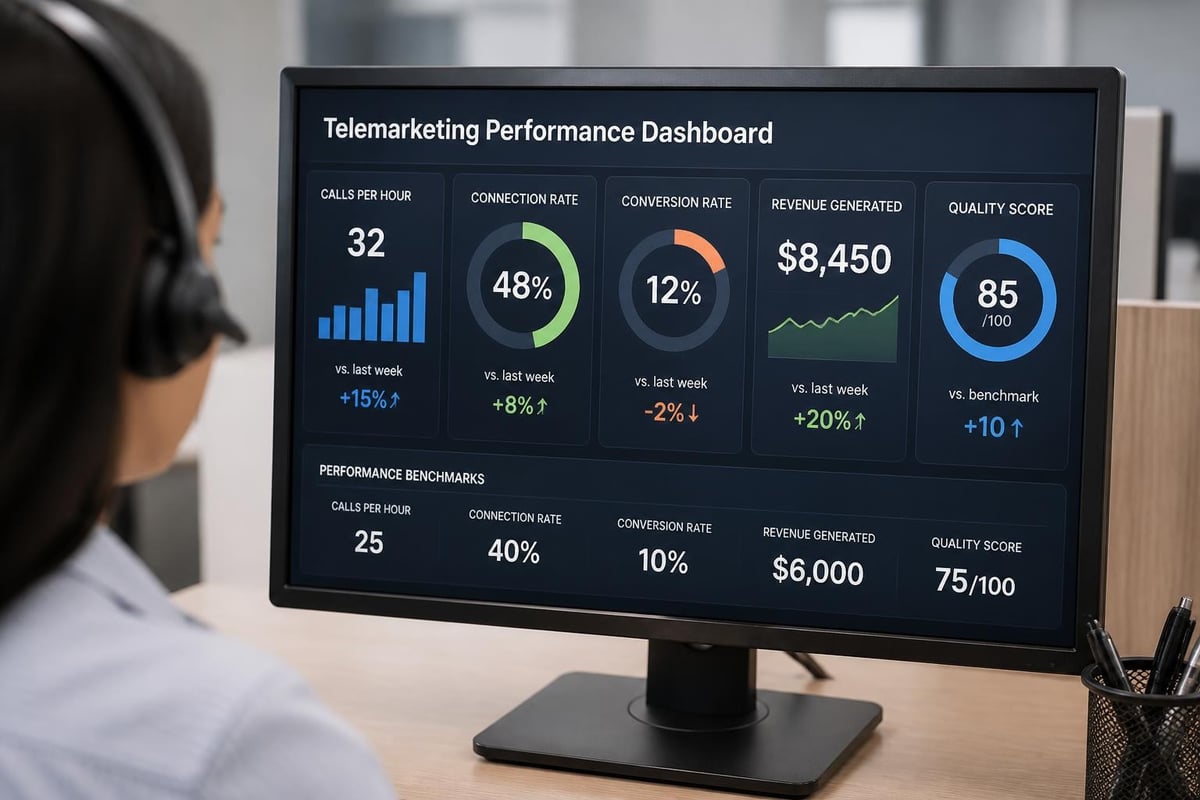
The contemporary telemarketing landscape requires sophisticated infrastructure that includes predictive dialers, customer relationship management systems, quality monitoring tools, and performance analytics dashboards. Successful operations balance automation with personal touch, using technology to enhance rather than replace human connection.
Core Functions and Service Offerings
Telemarketing call centers typically specialize in several distinct service categories:
- Outbound Sales Campaigns – Direct product or service promotion to targeted customer lists
- Lead Generation and Qualification – Identifying and vetting prospects for sales teams
- Appointment Setting – Scheduling consultations or demonstrations for field representatives
- Market Research – Gathering customer feedback and competitive intelligence
- Customer Reactivation – Re-engaging dormant clients or lapsed customers
Each function requires specific agent skill sets, training protocols, and performance metrics. Organizations partnering with providers like Focus Services gain access to specialized teams with expertise across these distinct disciplines.

Technology Infrastructure and Platform Requirements
Modern telemarketing operations depend on integrated technology stacks that streamline workflows and maximize agent productivity. The foundation includes cloud-based telephony systems offering automatic call distribution, interactive voice response, and seamless CRM integration.
Predictive dialing technology revolutionized telemarketing efficiency by automatically calling numbers from databases and connecting agents only when live contacts answer. This eliminates manual dialing time and reduces idle periods between conversations. Advanced algorithms calculate optimal dialing rates based on agent availability, average call duration, and connection rates.
| Technology Component | Primary Function | Business Impact |
|---|---|---|
| Predictive Dialer | Automated outbound calling | 200-300% productivity increase |
| CRM Integration | Centralized customer data | Improved personalization |
| Call Recording | Quality monitoring and training | Enhanced compliance and performance |
| Analytics Dashboard | Real-time performance tracking | Data-driven decision making |
| Speech Analytics | Conversation pattern analysis | Improved script optimization |
The integration of artificial intelligence capabilities continues to transform telemarketing operations. AI voice agents now handle initial contact phases, qualify basic leads, and schedule callbacks for human agents to manage more complex interactions. This hybrid approach maximizes efficiency while maintaining the personal touch essential for relationship building.
Workforce Management and Agent Development
The human element remains central to telemarketing call center success despite technological advances. Agent selection, training, and ongoing development directly influence campaign outcomes and customer perception.
Recruitment and Selection Criteria
Successful telemarketing agents possess distinct characteristics beyond basic communication skills:
- Resilience and persistence when facing rejection
- Active listening abilities to identify customer needs
- Adaptability to handle diverse personality types
- Goal orientation with intrinsic competitive drive
- Emotional intelligence for reading verbal cues
Organizations benefit from structured call center training programs that develop both technical competencies and soft skills essential for telemarketing success. Comprehensive onboarding typically spans two to four weeks and includes product knowledge, objection handling techniques, compliance requirements, and system navigation.
Performance Metrics and Compensation Models
Telemarketing operations track numerous key performance indicators to measure effectiveness and identify improvement opportunities. Conversion rates, average handle time, dial-to-connect ratios, and revenue per agent provide quantitative measures of individual and team performance.
Many successful telemarketing call center operations implement compensation structures that balance base salary with performance incentives. Commission-based components align agent motivation with business objectives while ensuring financial stability through guaranteed minimum earnings.
Compliance Considerations and Regulatory Requirements
Telemarketing activities face extensive regulation designed to protect consumer privacy and prevent abusive practices. The Telephone Consumer Protection Act (TCPA), National Do Not Call Registry, and state-specific legislation establish strict parameters for lawful telemarketing operations.
Compliance management requires systematic processes including:
- Regular scrubbing of calling lists against Do Not Call registries
- Obtaining express written consent for automated or pre-recorded calls
- Maintaining detailed call records and consent documentation
- Implementing robust opt-out mechanisms
- Training agents on legal requirements and prohibited practices
Recent regulatory trends show increasing scrutiny of telemarketing activities. Industry statistics indicate that consumer complaints about unwanted calls remain high, prompting stricter enforcement actions and potential regulatory expansion. Organizations must prioritize compliance infrastructure to mitigate legal risk and protect brand reputation.
International operations face additional complexity when conducting cross-border telemarketing campaigns. Different countries maintain varying standards for consent requirements, calling hours, and consumer rights. The impact of regulatory changes demonstrates how policy shifts can fundamentally reshape telemarketing landscapes across regions.
Strategic Advantages of Outsourced Telemarketing Operations
Organizations increasingly recognize the value proposition of partnering with specialized outsourcing call center providers rather than maintaining internal telemarketing teams. This strategic shift offers multiple operational and financial benefits.
Cost Efficiency and Scalability
Building internal telemarketing infrastructure requires substantial capital investment in technology platforms, facility space, and management overhead. Outsourcing converts fixed costs into variable expenses that scale proportionally with business needs.
Global outsourcing provides additional cost advantages through geographic arbitrage. Locations with favorable labor markets offer access to educated, multilingual talent at competitive rates. Operations in regions like El Salvador combine cost efficiency with cultural alignment and convenient time zone overlap for North American markets.
Specialized Expertise and Best Practices
Professional telemarketing call center providers maintain deep expertise across industries and campaign types. Their experience managing diverse programs yields insights that drive continuous improvement in messaging, timing strategies, and conversion optimization.
According to research on telemarketing best practices, personalization and customer-centric approaches significantly improve success rates. Specialized providers implement these methodologies systematically across campaigns rather than relying on trial-and-error learning curves.
Data Analytics and Campaign Optimization
Modern telemarketing success depends on rigorous data analysis and iterative refinement. Advanced analytical approaches enable organizations to optimize list selection, refine messaging, and improve conversion rates through evidence-based decision making.
List Segmentation and Targeting Strategies
Effective telemarketing begins with intelligent prospect identification. Sophisticated segmentation divides databases according to:
- Demographic characteristics (age, income, location)
- Behavioral patterns (purchase history, engagement level)
- Firmographic data (company size, industry, revenue)
- Psychographic attributes (values, interests, lifestyle)
Targeted campaigns delivering relevant messages to appropriate audience segments consistently outperform broad-based approaches. Data analytics reveal which customer profiles respond favorably to specific value propositions, enabling precision targeting that maximizes return on investment.
Script Development and A/B Testing
Telemarketing scripts provide structural frameworks while allowing agent flexibility to personalize conversations. Effective scripts balance standardized messaging that conveys key benefits with natural dialogue that builds rapport and addresses individual concerns.
Continuous testing methodologies compare script variations, opening statements, and value propositions to identify highest-performing approaches. Systematic A/B testing yields incremental improvements that compound into substantial performance gains over time.
| Script Element | Version A | Version B | Conversion Improvement |
|---|---|---|---|
| Opening Line | "I'm calling about…" | "Quick question for you…" | +15% connection rate |
| Value Proposition | Feature-focused | Benefit-focused | +22% interest level |
| Closing Technique | Direct ask | Assumptive close | +18% conversion rate |
Integration with Broader Customer Engagement Strategies
The most effective telemarketing programs function as components within comprehensive customer engagement ecosystems rather than isolated tactical initiatives. Integration with digital marketing, customer service operations, and sales processes creates cohesive customer experiences that build brand loyalty.

Omnichannel Coordination
Contemporary consumers interact with brands across multiple touchpoints before making purchase decisions. Telemarketing call center agents equipped with comprehensive customer interaction histories provide contextually relevant conversations that acknowledge previous engagements.
Cloud-based platforms enable seamless data sharing between telemarketing operations and other customer-facing functions. When agents access complete customer profiles showing website visits, email opens, and previous inquiries, they deliver more informed, personalized outreach that resonates with recipient needs.
Lead Nurturing and Follow-Up Protocols
Not every telemarketing contact results in immediate conversion. Sophisticated operations implement structured follow-up sequences that maintain engagement with prospects not yet ready to purchase.
Multi-touch campaigns combining telemarketing outreach with email nurturing and targeted content distribution keep brands top-of-mind throughout extended buying cycles. Strategic persistence that respects prospect preferences demonstrates commitment while avoiding counterproductive pressure tactics.
Industry-Specific Applications and Use Cases
Different sectors leverage telemarketing call center capabilities in distinct ways aligned with their unique business models and customer characteristics. Understanding industry-specific applications helps organizations design programs optimized for their markets.
Financial services organizations use telemarketing for credit card acquisition, insurance policy reviews, and investment product introductions. Regulatory complexity and product sophistication require highly trained agents capable of explaining detailed terms while maintaining compliance with disclosure requirements.
Healthcare and pharmaceutical companies employ telemarketing for appointment reminders, patient education, and medication adherence programs. These applications emphasize empathy and clear communication while navigating privacy regulations specific to health information.
Technology and software businesses leverage telemarketing for lead generation, trial-to-paid conversion, and upsell campaigns. Agents must demonstrate technical fluency and consultative selling skills to effectively communicate product capabilities and address implementation concerns.
E-commerce operations utilize telemarketing for cart abandonment recovery, VIP customer engagement, and new product launches. Speed and efficiency matter in fast-paced retail environments where timing influences purchase decisions.
Emerging Trends Shaping Telemarketing's Future
The telemarketing call center industry continues evolving in response to technological innovation, changing consumer preferences, and competitive pressures. Organizations that anticipate and adapt to emerging trends position themselves for sustained success.
Artificial Intelligence and Automation Expansion
AI capabilities expand beyond basic call routing into sophisticated applications including sentiment analysis, conversation intelligence, and predictive lead scoring. Current call center industry statistics demonstrate significant automation adoption across operations.
Natural language processing enables systems to analyze conversation content in real time, providing agents with suggested responses and alerting supervisors to calls requiring intervention. This augmented intelligence approach enhances human capabilities rather than replacing agent roles entirely.
Research initiatives like CallCenterEN datasets support development of increasingly sophisticated AI systems trained on real-world telemarketing interactions. These advances enable more natural automated conversations for routine tasks while escalating complex scenarios to human expertise.
Preference-Based Consent Models
Consumer expectations around communication permissions continue evolving toward explicit, granular consent rather than broad opt-in frameworks. Progressive telemarketing operations implement preference management systems allowing customers to specify channel preferences, contact frequency limits, and topic interests.
This shift from permission-based to preference-based marketing improves campaign effectiveness by ensuring outreach aligns with recipient expectations. Customers who actively consent to specific communication types demonstrate higher engagement and conversion rates than those contacted through broad permissions.
Global Workforce Distribution
Technology enablement allows telemarketing call center operations to leverage distributed workforce models spanning multiple geographic regions. This approach provides business continuity through redundancy while accessing specialized talent pools and optimizing cost structures.
Companies with global operations across continents offer clients flexibility to allocate campaigns according to time zone requirements, language capabilities, and regulatory environments. This geographic diversity also mitigates concentration risk from regional disruptions.
Quality Assurance and Continuous Improvement Frameworks
Sustained telemarketing success requires systematic quality management processes that maintain standards, identify improvement opportunities, and drive performance optimization. Comprehensive quality assurance programs evaluate both quantitative metrics and qualitative interaction elements.
Call Monitoring and Evaluation Systems
Regular call review provides insights into agent adherence to scripts, compliance with regulations, and effectiveness in handling objections. Quality analysts assess recorded interactions using standardized evaluation forms that score multiple dimensions including:
- Professional demeanor and tone
- Script adherence and message accuracy
- Active listening and response relevance
- Compliance with legal requirements
- Closing effectiveness and call control
High-performing operations evaluate representative samples of each agent's calls weekly, providing constructive feedback through one-on-one coaching sessions. This ongoing development process builds competencies while demonstrating organizational investment in agent success.
Customer Feedback Integration
Post-interaction surveys and customer feedback mechanisms provide valuable perspectives on telemarketing effectiveness from the recipient viewpoint. While response rates for outbound telemarketing surveys typically remain low, collected feedback offers important insights into customer perception and satisfaction.
Organizations increasingly employ speech analytics platforms that automatically analyze 100% of calls rather than small samples. These systems identify patterns in customer reactions, common objections, and successful persuasion techniques that inform training priorities and script refinements.
Telemarketing call center operations remain powerful tools for business development when executed with strategic focus, technological sophistication, and genuine customer orientation. By combining skilled agents, advanced platforms, data-driven optimization, and rigorous quality management, organizations create sustainable competitive advantages in customer acquisition and revenue generation. Focus Services delivers comprehensive telemarketing solutions backed by global infrastructure, AI-enabled optimization, and deep industry expertise across locations in the United States, El Salvador, the Philippines, and South Africa, helping businesses scale their sales operations while maintaining quality and compliance standards.