
What’s Trending in the Call Center Outsourcing Industry in 2026
Contents
- 1 What’s Trending in the Call Center Outsourcing Industry in 2026
- 1.1 1. AI-Powered Customer Support Is Becoming the Standard
- 1.2 2. Call Center Outsourcing Is Expanding Globally
- 1.3 3. Omnichannel Customer Experience Is Essential
- 1.4 4. Data-Driven Decision Making
- 1.5 5. Human-Centered Customer Support
- 1.6 6. Remote and Hybrid Call Center Teams
- 1.7
- 1.8 7. Customer Experience as a Competitive Advantage
- 1.9 The Future of Customer Support Starts with the Right Call Center Partner
The call center industry is evolving faster than ever. In 2026, businesses across the world are redefining how they deliver customer service, focusing on speed, personalization, and efficiency. Companies are no longer just answering customer calls—they are creating complete customer experience ecosystems powered by technology, automation, and highly trained agents.
As customer expectations continue to rise, organizations are increasingly turning to call center outsourcing and advanced AI solutions for call center operations to stay competitive. These strategies allow companies to improve service quality, reduce operational costs, and scale customer support quickly.
Understanding the latest trends in the call center industry is essential for businesses that want to remain competitive and provide exceptional customer experiences. In this article, we explore the key trends shaping call centers in 2026 and how companies can leverage them to improve customer service and operational efficiency.
Listen to this article on our most recent podcast: What’s Trending in Call Center Outsourcing Industry in 2026
1. AI-Powered Customer Support Is Becoming the Standard
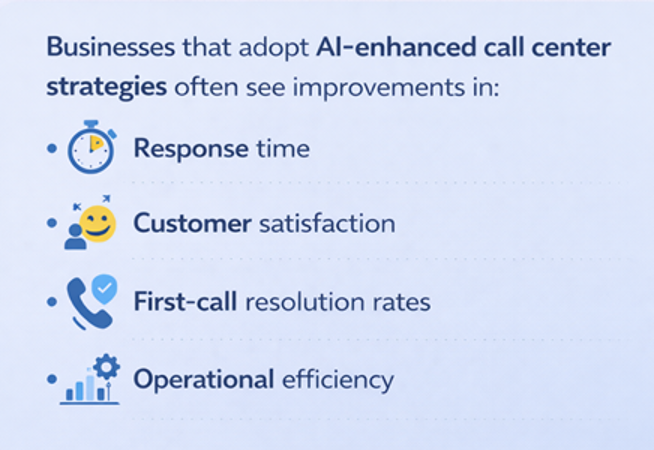 Artificial intelligence is no longer a futuristic concept in the call center industry—it is now a core component of modern customer support strategies.
Many companies are integrating AI solutions for call center environments to automate repetitive tasks, analyze customer data, and assist agents in real time. AI-powered tools can instantly identify customer intent, suggest responses, and even predict customer needs before agents answer a call.
For example, AI systems in call centers can analyze previous interactions, purchase history, and customer sentiment to provide agents with recommended solutions. This allows agents to solve problems faster and deliver more personalized support.
However, AI is not replacing human agents. Instead, it is empowering them. By handling routine inquiries through chatbots or automated systems, AI allows agents to focus on more complex and meaningful customer interactions.
As AI technology continues to improve, it will become an essential part of every high-performing call center.
2. Call Center Outsourcing Is Expanding Globally
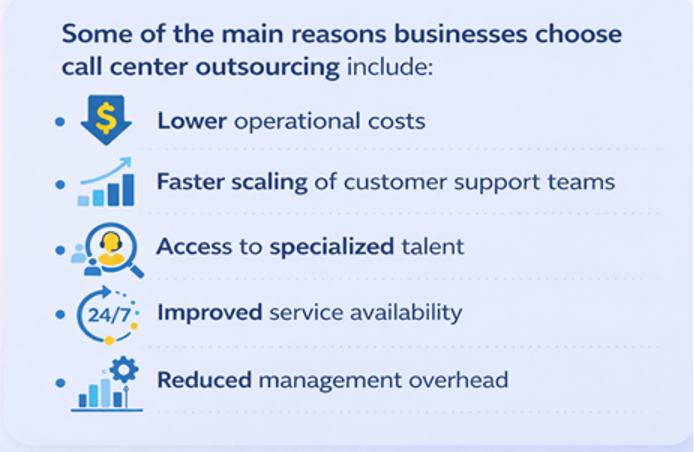 One of the most important trends in 2026 is the continued growth of call center outsourcing.
Companies are increasingly partnering with external service providers to manage their customer support operations. This approach allows businesses to access trained agents, advanced technology, and scalable infrastructure without the high costs of building an in-house support team.
Outsourcing also enables companies to offer 24/7 customer support, multilingual services, and rapid scalability during periods of high demand.
Countries in Latin America, including El Salvador, have become attractive outsourcing destinations due to their bilingual workforce, competitive pricing, and strong cultural alignment with North American markets.
For growing businesses, outsourcing customer support is often the fastest and most efficient way to deliver high-quality service without overextending internal resources.
3. Omnichannel Customer Experience Is Essential
Today’s customers expect to communicate with companies through multiple channels, including phone, email, live chat, social media, and messaging apps.
In 2026, successful call centers are no longer focused only on phone support. Instead, they provide omnichannel customer experiences that allow customers to switch between communication channels seamlessly.
For example, a customer might start a conversation through a chatbot, continue through live chat, and later speak with an agent by phone. Modern call center systems allow agents to see the entire conversation history, ensuring a smooth and consistent experience.
This integrated approach helps businesses:
- Reduce customer frustration
- Resolve issues faster
- Provide personalized service
- Improve overall customer satisfaction
Companies that fail to offer omnichannel support risk losing customers to competitors that provide more convenient and flexible communication options.
4. Data-Driven Decision Making
Data analytics is becoming a critical part of call center management.
Modern call centers collect large amounts of data from customer interactions, including call recordings, chat transcripts, customer satisfaction surveys, and performance metrics.
By analyzing this data, companies can gain valuable insights into customer behavior, common service issues, and agent performance.
Advanced analytics tools allow managers to identify trends such as:
- Frequent customer complaints
- Product or service issues
- Customer sentiment patterns
- Training opportunities for agents
These insights enable businesses to improve service quality, optimize processes, and make better strategic decisions.
When combined with AI technology, data analytics can also predict customer needs and recommend proactive solutions before problems escalate.
5. Human-Centered Customer Support
Despite the rapid growth of automation and artificial intelligence, the human element remains essential in customer service.
Customers still value empathy, understanding, and personal interaction—especially when dealing with complex problems or emotional situations.
In 2026, successful call centers focus on combining technology with human expertise. AI handles routine inquiries and repetitive tasks, while skilled agents manage high-value conversations that require empathy and problem-solving.
This hybrid model ensures that customers receive fast service without losing the personal touch that builds trust and loyalty.
Companies are also investing more in agent training, employee wellbeing, and workplace culture. Happy, motivated agents tend to deliver better customer experiences, which directly impacts brand reputation.
 6. Remote and Hybrid Call Center Teams
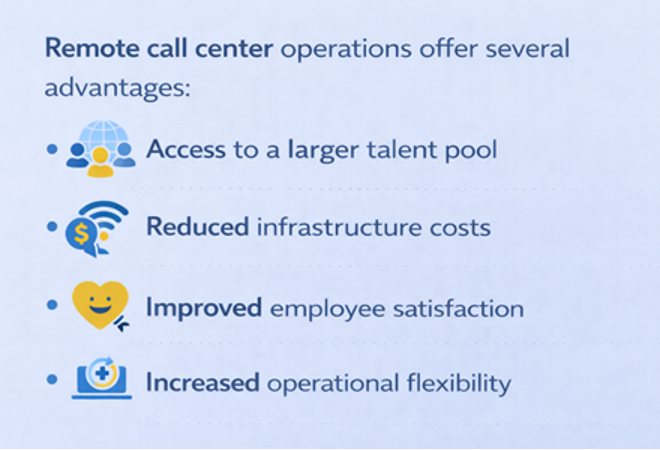
The shift toward remote work continues to influence the call center industry in 2026.
Many companies now operate with remote or hybrid call center teams, allowing agents to work from home while maintaining high service standards through cloud-based platforms.
Cloud-based call center technology allows managers to monitor performance, manage schedules, and maintain service quality regardless of where agents are located.
This model has proven highly effective and is expected to remain a key component of the industry moving forward.
7. Customer Experience as a Competitive Advantage
Customer experience has become one of the most important factors influencing purchasing decisions.
In highly competitive markets, companies that deliver exceptional customer support often outperform competitors—even if their products or prices are similar.
A well-managed call center plays a critical role in shaping customer perception. Positive service experiences can increase customer loyalty, generate positive reviews, and drive long-term business growth.
Organizations that invest in customer support technology, skilled agents, and efficient processes are better positioned to create lasting relationships with their customers.
The Future of Customer Support Starts with the Right Call Center Partner
The call center industry in 2026 is defined by innovation, flexibility, and a strong focus on customer experience. From AI-powered automation to the rapid growth of call center outsourcing, businesses are adopting smarter strategies to meet rising customer expectations.
Technology continues to transform how customer support operates, but human expertise remains essential for building trust and solving complex problems. The most successful companies are combining AI solutions for call center operations with highly trained agents to deliver faster, more personalized service.
At the same time, outsourcing customer support has become a strategic decision for businesses that want to scale efficiently, reduce operational costs, and offer 24/7 customer service without the complexity of managing large in-house teams.
By partnering with the right call center provider, companies gain access to trained professionals, advanced technology, and scalable support that can grow alongside their business.
Ready to Elevate Your Customer Support?
If your company is looking to improve customer experience, reduce support costs, and scale operations efficiently, call center outsourcing may be the solution you’re looking for.
Our team specializes in providing reliable, high-quality customer support solutions tailored to your business needs. From inbound support to omnichannel customer service and AI-enhanced operations, we help companies deliver exceptional experiences to their customers.
Contact us today to learn how our call center solutions can help your business grow:
