

Inbound and Outbound Call Center: Complete Guide 2026
Modern businesses face constant pressure to maintain exceptional customer relationships while driving revenue growth. The contact center represents the frontline of these efforts, serving as the critical connection point between companies and their customers. Understanding how to leverage both inbound and outbound call center operations creates opportunities to maximize customer satisfaction, increase sales performance, and build sustainable competitive advantages. Whether managing customer service inquiries or executing targeted sales campaigns, the strategic deployment of call center resources directly impacts business outcomes across industries and markets.
Understanding the Core Differences Between Inbound and Outbound Operations
Contents
- 1 Understanding the Core Differences Between Inbound and Outbound Operations
- 2 Essential Skills and Training Requirements for Different Agent Roles
- 3 Technology Infrastructure That Powers Modern Call Centers
- 4 Best Practices for Optimizing Inbound Call Center Performance
- 5 Maximizing Outbound Call Center Results and Conversion Rates
- 6 Hybrid Models Combining Inbound and Outbound Capabilities
- 7 Measuring Performance Across Different Operation Types
- 8 Compliance and Regulatory Considerations for Call Center Operations
- 9 The Future Evolution of Call Center Operations
The fundamental distinction between inbound and outbound call centers lies in who initiates the conversation. Inbound operations receive calls from customers seeking assistance, information, or support. These interactions typically focus on resolving issues, answering questions, processing orders, or providing technical guidance. The customer drives the timing and topic of these conversations.
Outbound operations flip this dynamic entirely. Agents initiate contact with prospects or existing customers for purposes including sales, lead generation, market research, appointment setting, or customer retention campaigns. The business controls when these interactions occur and what objectives they pursue.
Operational Characteristics and Workflow Management
Each type of operation requires distinct infrastructure and management approaches. Inbound centers must handle unpredictable call volumes that fluctuate based on time of day, seasonal patterns, marketing campaigns, and external factors. Workforce management becomes critical to ensure adequate staffing during peak periods while avoiding overstaffing during slower times.
Outbound centers offer greater control over pacing and volume. Managers can adjust dialing rates, campaign intensity, and contact strategies based on available resources and business priorities. This predictability simplifies scheduling but demands rigorous performance monitoring to maintain productivity standards.

The technology requirements for inbound and outbound processes differ substantially. Inbound systems prioritize intelligent call routing, queue management, and integration with customer relationship management platforms to provide agents with relevant customer history. Outbound systems emphasize dialing automation, lead management, and compliance features to manage contact strategies effectively.
Essential Skills and Training Requirements for Different Agent Roles
Agent capabilities must align with operational demands. Inbound agents excel at active listening, problem diagnosis, empathy, and de-escalation techniques. They need comprehensive product knowledge and the ability to navigate complex systems while maintaining conversation flow. Patience and adaptability prove essential when handling frustrated or confused customers.
Outbound agents require different competencies. Persuasion, objection handling, quick thinking, and resilience distinguish top performers. They must deliver consistent messaging while personalizing conversations based on prospect responses. The ability to maintain motivation despite frequent rejection separates successful outbound agents from those who struggle.
Building Effective Training Programs
Training approaches should reflect these distinct skill requirements. Inbound programs emphasize:
- Comprehensive product and service knowledge
- Customer service protocols and escalation procedures
- Technical system navigation and multitasking capabilities
- Conflict resolution and emotional intelligence development
- Quality assurance standards and compliance requirements
Outbound training focuses on:
- Sales methodology and conversation frameworks
- Script customization and natural delivery techniques
- Objection handling and closing strategies
- Regulatory compliance and do-not-call list management
- Performance metrics interpretation and self-improvement
| Training Component | Inbound Focus | Outbound Focus |
|---|---|---|
| Primary Objective | Problem Resolution | Goal Achievement |
| Communication Style | Responsive and Supportive | Proactive and Persuasive |
| Knowledge Depth | Comprehensive Product Details | Value Proposition Clarity |
| Resilience Building | Stress Management | Rejection Handling |
| Success Metrics | Customer Satisfaction | Conversion Rates |
Technology Infrastructure That Powers Modern Call Centers
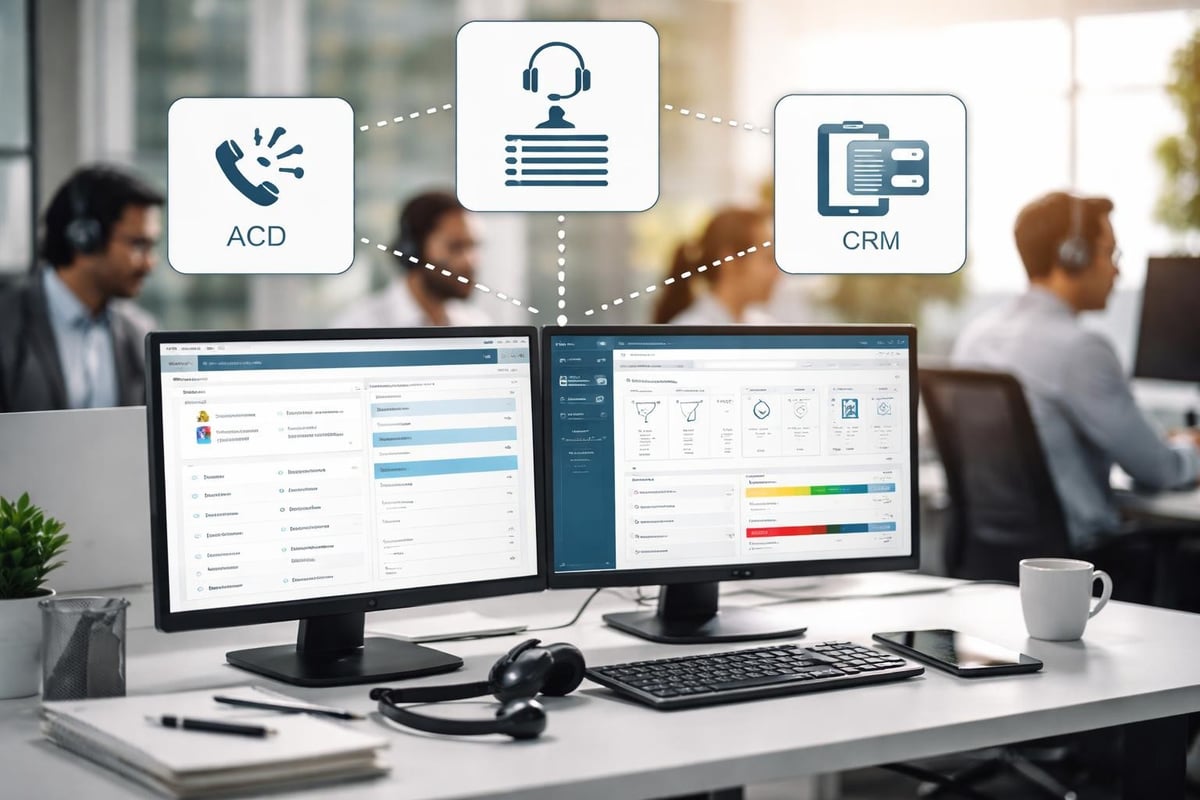
The technical foundation supporting an inbound and outbound call center has evolved dramatically with cloud computing, artificial intelligence, and advanced analytics. Modern platforms integrate multiple communication channels, automate routine tasks, and provide real-time performance visibility.
Cloud-based contact center solutions offer scalability and flexibility that traditional on-premise systems cannot match. Organizations can expand or contract capacity rapidly, support remote workforces across multiple locations, and access advanced features without significant capital investment. This proves particularly valuable for businesses experiencing rapid growth or seasonal volume fluctuations.
Critical Technology Components
Automatic call distribution systems intelligently route incoming calls based on factors including agent skills, customer value, wait times, and business rules. This optimization improves first-call resolution rates and reduces customer effort.
Interactive voice response technology handles routine inquiries without agent involvement, freeing human resources for complex interactions requiring judgment and empathy. Modern IVR systems incorporate natural language processing to understand conversational requests rather than requiring touch-tone navigation.
Predictive dialers maximize outbound agent productivity by automatically dialing multiple numbers and connecting agents only when live contacts answer. These systems filter busy signals, voicemails, and disconnected numbers while managing pacing to minimize agent idle time.
Customer relationship management integration provides agents with comprehensive customer context including purchase history, previous interactions, preferences, and outstanding issues. This information enables personalized service and reduces repetitive questioning that frustrates customers.
Workforce management software forecasts volume, creates optimal schedules, tracks adherence, and manages time-off requests. Advanced solutions incorporate machine learning to improve prediction accuracy and suggest scheduling adjustments based on emerging patterns.
Best Practices for Optimizing Inbound Call Center Performance
Excellence in inbound operations requires methodical attention to customer experience, agent engagement, and operational efficiency. Organizations that implement proven best practices for inbound call centers consistently outperform competitors on satisfaction metrics and retention rates.
First-call resolution stands as the paramount performance indicator. Resolving customer issues during the initial contact eliminates frustration, reduces operational costs, and strengthens customer relationships. Achieving high FCR rates requires comprehensive agent training, effective knowledge management systems, and appropriate empowerment to make decisions.
Strategies for Superior Inbound Service
Average handle time must be balanced carefully. While efficiency matters, rushing customers to meet time targets damages satisfaction and often creates repeat contacts that negate any efficiency gains. Focus on productive handle time that accomplishes resolution rather than arbitrary speed metrics.
Quality monitoring programs should evaluate representative sample interactions across all agents and shifts. Effective programs combine:
- Regular calibration sessions ensuring consistent evaluation standards
- Specific, actionable feedback delivered promptly after interactions
- Recognition of exceptional performances alongside improvement coaching
- Trend analysis identifying systemic issues requiring process changes
- Agent self-assessment opportunities promoting ownership and development
Customer satisfaction measurement through post-interaction surveys provides direct feedback on service quality. Response rates improve when surveys are brief, relevant, and administered through the customer’s preferred channel.
Agent engagement directly impacts customer experience. Organizations with high employee satisfaction consistently deliver superior customer service. Investment in career development, recognition programs, work-life balance, and inclusive culture pays dividends through reduced attrition and improved performance.
Maximizing Outbound Call Center Results and Conversion Rates
Outbound success depends on strategic planning, disciplined execution, and continuous optimization. The best practices for outbound call centers emphasize preparation, targeting, and persistent refinement of approaches based on performance data.
Campaign planning begins with clear objective definition. Whether generating leads, setting appointments, conducting surveys, or closing sales, specific goals enable appropriate script development, agent selection, and success measurement. Vague objectives produce inconsistent results and prevent meaningful performance analysis.
Data Quality and List Management
List quality directly determines outbound campaign effectiveness. Clean, accurate, targeted contact lists generate significantly higher connection and conversion rates than outdated or poorly segmented databases. Regular list hygiene removes disconnected numbers, updates contact information, and ensures compliance with regulatory requirements.
Segmentation enables personalized messaging that resonates with specific audience subsets. Grouping contacts by demographics, purchase history, engagement level, or behavioral patterns allows customized value propositions that improve response rates.
Contact timing substantially impacts connection probability and conversation quality. Research consistently shows certain days, times, and intervals between attempts optimize results. Testing different contact strategies and measuring outcomes identifies the patterns that work best for specific audiences and industries.
| Performance Metric | Definition | Target Range | Improvement Strategy |
|---|---|---|---|
| Contact Rate | Percentage of Dials Reaching Live Person | 20-30% | List Quality, Timing Optimization |
| Conversion Rate | Percentage of Contacts Achieving Objective | 5-15% | Script Refinement, Agent Training |
| Average Talk Time | Duration of Successful Conversations | 3-8 minutes | Value Proposition Clarity |
| Attempts per Lead | Contacts Before Success or Disqualification | 4-6 | Persistence Protocols |
Script development requires balancing structure with flexibility. Rigid scripts sound unnatural and prevent agents from responding authentically to prospect comments. Effective frameworks provide opening hooks, key talking points, objection responses, and closing techniques while allowing conversational adaptation.
Hybrid Models Combining Inbound and Outbound Capabilities
Many organizations operate hybrid models that leverage both inbound and outbound call center capabilities within integrated operations. This approach maximizes resource utilization, provides agents with varied work that reduces monotony, and enables complementary strategies that reinforce business objectives.
Blended agents handle both incoming customer service calls and outbound sales or retention campaigns. During periods of low inbound volume, these agents shift to outbound activities, maintaining productivity while ensuring adequate coverage for incoming requests. This flexibility improves operational efficiency and agent utilization rates.

Strategic Advantages of Integration
Customer retention programs particularly benefit from hybrid approaches. Inbound interactions provide opportunities to identify at-risk customers, upsell complementary products, or gather feedback. Outbound follow-up campaigns can address concerns, offer loyalty incentives, or maintain engagement with customers showing declining activity.
The differences and synergies between inbound and outbound call centers create opportunities for comprehensive customer relationship strategies. Organizations can respond to customer-initiated contacts while proactively reaching out to drive specific business outcomes.
Technology infrastructure supporting hybrid operations must accommodate both incoming and outgoing communication flows. Unified platforms that integrate all channels, automate workflow distribution, and provide consolidated reporting enable seamless operation regardless of call direction.
Agent scheduling in blended environments requires sophisticated workforce management. Systems must forecast both inbound volume and outbound campaign requirements, then create schedules that balance these competing demands while respecting agent skill sets and preferences.
Measuring Performance Across Different Operation Types
Metrics selection must align with operational objectives and call center type. Inbound and outbound call center operations require distinct key performance indicators that reflect their different purposes and customer interaction patterns.
Inbound metrics emphasize service quality, efficiency, and customer satisfaction:
- First Call Resolution Rate: Percentage of issues resolved during initial contact
- Average Speed to Answer: Time customers wait before reaching an agent
- Abandonment Rate: Percentage of callers who disconnect before reaching assistance
- Customer Satisfaction Score: Direct feedback on service quality
- Net Promoter Score: Likelihood of customer recommendation
Outbound metrics focus on productivity, conversion, and campaign effectiveness:
- Contact Rate: Percentage of dials reaching decision-makers
- Conversion Rate: Percentage of contacts achieving campaign objectives
- Revenue per Hour: Total sales value divided by agent hours
- Cost per Acquisition: Campaign costs divided by successful conversions
- List Penetration: Percentage of available contacts reached
Quality monitoring proves essential across both operation types. Random call recording, evaluation against standardized criteria, and regular coaching sessions maintain standards and identify improvement opportunities. Modern speech analytics technology automatically evaluates 100% of interactions, identifying compliance issues, customer sentiment, and agent performance patterns.
Compliance and Regulatory Considerations for Call Center Operations
Regulatory compliance represents a critical responsibility for any inbound and outbound call center. Violations result in substantial fines, reputational damage, and potential legal action. Organizations must maintain current knowledge of applicable regulations and implement robust compliance programs.
The Telephone Consumer Protection Act governs outbound calling practices in the United States, restricting automated dialing to cell phones without prior express consent, prohibiting calls before 8 AM or after 9 PM recipient local time, and requiring maintained do-not-call lists. Additional state regulations may impose stricter requirements.
Building Effective Compliance Programs
Payment Card Industry Data Security Standards apply to contact centers handling credit card information. Requirements include network security measures, data encryption, access controls, regular security testing, and comprehensive information security policies. Non-compliance exposes organizations to breach liability and processing privilege loss.
International operations face additional complexity from varied regulatory frameworks across jurisdictions. The General Data Protection Regulation in Europe imposes strict requirements on personal data processing, customer consent, data portability, and breach notification. Operations in the Philippines, El Salvador, South Africa, and other global locations must comply with local privacy and consumer protection laws.
Compliance programs should include:
- Regular training on applicable regulations and company policies
- Documented procedures for consent management and opt-out processing
- Technology controls preventing unauthorized data access or non-compliant calling
- Quality monitoring focused specifically on compliance requirements
- Incident response protocols for potential violations or data breaches
The Future Evolution of Call Center Operations
Emerging technologies continue reshaping how inbound and outbound call center operations function and deliver value. Artificial intelligence, advanced analytics, and automation enable capabilities that were impossible just years ago while transforming agent roles and customer expectations.
Conversational AI and virtual agents now handle increasingly complex interactions without human involvement. These systems understand natural language, access knowledge bases, complete transactions, and escalate appropriately when situations exceed their capabilities. As technology improves, the line between human and automated service continues blurring.
The integration of AI and analytics in call centers enables real-time agent assistance, predictive analytics for workforce planning, sentiment analysis during conversations, and automated quality monitoring. These capabilities improve both customer experience and operational efficiency.
Omnichannel integration expands beyond voice to seamlessly incorporate email, chat, social media, SMS, and video interactions. Customers expect consistent experiences regardless of channel, with context maintained across touchpoints. Modern platforms provide unified agent interfaces and consolidated customer journey visibility.
Remote and distributed workforce models have accelerated dramatically, enabled by cloud technology and secure connectivity. Organizations access broader talent pools, reduce facility costs, and provide employees with flexibility that improves retention. This shift requires enhanced virtual collaboration tools, remote performance monitoring, and adapted management approaches.
Predictive analytics identify at-risk customers, high-value prospects, optimal contact timing, and emerging trends before they become obvious. Machine learning models continuously improve accuracy by analyzing outcomes and refining predictions. These insights enable proactive strategies that prevent churn and maximize conversion opportunities.
Understanding the distinct characteristics, requirements, and best practices for inbound and outbound call center operations enables organizations to design strategies that maximize both customer satisfaction and business results. Whether you need responsive customer service capabilities, proactive sales outreach, or integrated hybrid solutions, Focus Services delivers high-performance contact center programs optimized for your specific objectives. With global delivery capabilities and AI-enabled workforce optimization, our teams help companies from startups to enterprises achieve exceptional customer experience and operational performance.
Schedule your Discovery Call Today – https://www.focusservices.com/contact/


