

Customer Support Inbound: The Complete Guide for 2026
Customer support inbound operations represent the frontline of customer relationships for businesses across every industry. As customers initiate contact through phone calls, emails, live chat, social media messages, and other channels, the quality and efficiency of inbound support directly shapes satisfaction, loyalty, and revenue outcomes. In 2026, businesses face mounting pressure to deliver seamless, personalized experiences while managing costs and scaling operations across global markets. The strategic management of customer support inbound functions has evolved from simple call answering to sophisticated, AI-enhanced operations that blend human expertise with automation.
Understanding Customer Support Inbound Operations
Customer support inbound encompasses all communication channels where customers initiate contact to seek assistance, resolve issues, make inquiries, or access services. Unlike outbound operations where businesses proactively reach customers, inbound support is reactive and demand-driven.
The scope of customer support inbound extends across multiple touchpoints. Traditional voice channels remain critical, with customers calling toll-free numbers for technical support, billing questions, product guidance, and complaint resolution. Digital channels have expanded rapidly, including email ticketing systems, live chat widgets, SMS messaging, social media direct messages, and self-service portals.
Core Components of Effective Inbound Support
Successful inbound operations require several foundational elements working in concert. Intelligent routing ensures customer inquiries reach the most qualified agents based on skill sets, language requirements, issue complexity, and customer value. Knowledge management systems provide agents with instant access to product information, troubleshooting guides, policy documentation, and historical customer data.
Workforce management balances staffing levels against predicted contact volumes, scheduling agents to minimize wait times during peak periods while controlling labor costs. Quality assurance programs monitor interactions, coach agents, and identify improvement opportunities through call recording, screen capture, and performance evaluation.

The technology infrastructure supporting customer support inbound has grown increasingly sophisticated. Cloud-based contact center platforms enable distributed workforces, seamless channel switching, and real-time analytics. Integration with customer relationship management (CRM) systems provides agents with complete customer context before conversations begin.
Optimizing Channel Mix and Customer Preferences
Today's customers expect choice in how they engage with support teams. According to Zendesk’s 2026 CX Trends research on contextual intelligence, businesses that offer seamless omnichannel experiences see measurably higher satisfaction scores and customer retention rates.
Voice remains the preferred channel for complex, urgent, or sensitive matters. Customers value the immediacy and personal connection of speaking with knowledgeable agents who can understand nuanced problems and provide tailored solutions. However, voice interactions carry higher costs and require careful handling to maintain quality standards.
Digital Channel Growth and Integration
Email ticketing systems excel for non-urgent inquiries requiring documentation or detailed explanations. Customers appreciate the asynchronous nature, allowing them to describe problems thoroughly without time pressure. Well-managed email operations include automated acknowledgments, clear SLA commitments, and proactive status updates.
Live chat has become essential for website visitors seeking quick answers during browsing or purchasing journeys. Chat enables multitasking for both customers and agents, supporting higher efficiency than voice. Integration with chatbots handles routine questions automatically, escalating complex issues to human agents with full conversation context.
| Channel | Best Use Cases | Response Expectations | Cost Per Contact |
|---|---|---|---|
| Voice | Urgent issues, complex problems, emotional situations | Immediate | High |
| Live Chat | Quick questions, purchase support, technical guidance | Under 2 minutes | Medium |
| Non-urgent inquiries, detailed explanations, documentation | 24-48 hours | Low | |
| Social Media | Public feedback, brand engagement, complaint escalation | Under 1 hour | Medium |
| SMS | Appointment reminders, status updates, simple confirmations | Minutes | Low |
Social media channels present unique opportunities and challenges for customer support inbound operations. Public visibility creates urgency, as delayed or poor responses damage brand reputation beyond the individual customer. However, effective social support demonstrates responsiveness and builds community trust.
Implementing AI and Automation Strategically
Artificial intelligence is reshaping customer support inbound operations without replacing human agents. Research from Forrester on AI’s impact on customer service workforces shows that successful deployments augment agent capabilities rather than substitute for them.
Chatbots and virtual assistants handle high-volume, repetitive inquiries automatically. Password resets, order status checks, account balance inquiries, and basic troubleshooting can be resolved without agent involvement. This deflection frees agents to focus on complex, high-value interactions requiring empathy and problem-solving skills.
Intelligent routing algorithms analyze customer data, interaction history, and inquiry content to predict issue type and optimal agent assignment. Machine learning models continuously improve routing accuracy based on resolution outcomes and customer feedback.
AI-Powered Agent Assistance
Real-time agent assistance tools provide suggested responses, relevant knowledge articles, and next-best-action recommendations during live interactions. These systems analyze conversation content, detect customer sentiment, and alert supervisors to escalating situations. Agents become more productive and confident, especially during onboarding periods.
Sentiment analysis monitors tone and emotion across voice and text channels. Detecting frustration, confusion, or satisfaction enables dynamic response adjustments and proactive intervention when conversations risk poor outcomes. Customer care automation delivers measurable improvements in first-contact resolution and customer satisfaction when properly implemented.
Speech analytics mines recorded calls to identify training opportunities, compliance risks, and emerging product issues. Automated quality scoring evaluates larger sample sizes than manual review, providing comprehensive performance visibility while reducing QA costs.
Measuring and Improving Inbound Performance
Effective management of customer support inbound operations depends on rigorous performance measurement. Key metrics provide visibility into efficiency, quality, and customer outcomes.
Essential Inbound Metrics
Average Handle Time (AHT) measures the duration of customer interactions including talk time, hold time, and after-call work. While shorter handle times improve efficiency, excessive pressure to reduce AHT damages quality and frustrates both agents and customers. Optimal AHT balances productivity with thorough issue resolution.
First Contact Resolution (FCR) tracks the percentage of inquiries resolved during initial contact without callbacks or escalations. High FCR correlates strongly with customer satisfaction and reduces overall contact volume. Improving FCR requires comprehensive agent training, robust knowledge systems, and appropriate empowerment.
Service Level defines the percentage of contacts answered within target timeframes, typically expressed as "80% of calls answered in 20 seconds" or similar standards. Consistent service level achievement requires accurate forecasting, effective scheduling, and real-time adherence monitoring. Customer service performance metrics provide frameworks for establishing appropriate targets aligned with customer expectations.
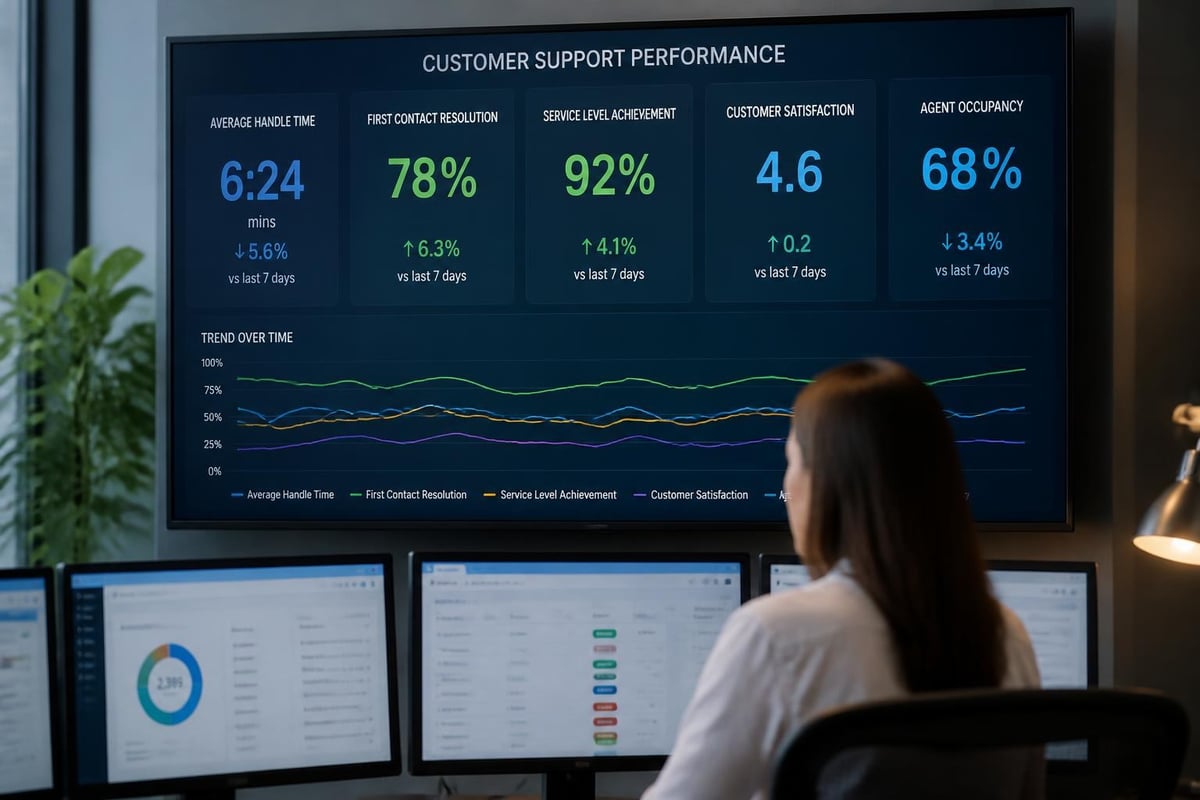
Customer Satisfaction (CSAT) and Net Promoter Score (NPS) measure customer perceptions of service quality. Post-interaction surveys capture immediate feedback, while relationship surveys assess overall sentiment. Both provide essential quality signals complementing operational efficiency metrics.
- Abandon Rate: Percentage of customers who disconnect before reaching an agent
- Average Speed of Answer (ASA): Mean wait time before agent connection
- Occupancy Rate: Percentage of agent time spent handling contacts versus idle
- Schedule Adherence: Agent compliance with scheduled work times
- Quality Score: Evaluation results from monitored interactions
Training and Developing High-Performing Agents
The effectiveness of customer support inbound operations ultimately depends on agent capabilities. Comprehensive training programs prepare agents for the technical knowledge, communication skills, and emotional resilience required for success.
Initial training curricula cover product knowledge, company policies, system navigation, and communication techniques. Research from Harvard Business Review on structuring customer service calls demonstrates that standardized call structures combined with personalization flexibility produce superior outcomes.
Ongoing Development and Coaching
Continuous learning sustains performance improvements and prevents skill degradation. Regular coaching sessions review recorded interactions, identify specific improvement opportunities, and reinforce best practices. Top performers often serve as peer mentors, accelerating development for newer agents.
Simulation exercises and role-playing scenarios build confidence for handling difficult situations. Agents practice de-escalation techniques, navigate complex system processes, and develop problem-solving approaches in safe environments before encountering real customers.
Cross-training across multiple channels and issue types increases workforce flexibility and engagement. Agents appreciate variety and career development opportunities, reducing attrition while improving operational agility. Organizations benefit from expanded scheduling options and reduced vulnerability to absenteeism.
Ensuring Security and Compliance
Customer support inbound operations handle sensitive information requiring rigorous security and compliance protocols. Payment card data, personal health information, financial records, and confidential account details demand protection against unauthorized access and breaches.
Payment Card Industry Data Security Standard (PCI DSS) compliance is mandatory for organizations accepting credit card payments via inbound channels. PCI Security Standards Council guidance for telephone-based transactions outlines requirements including secure transmission, limited data retention, and controlled agent access to card numbers.
Data privacy regulations including GDPR, CCPA, and industry-specific requirements govern customer information collection, storage, and usage. Customer support inbound operations must implement consent management, data minimization, and customer rights fulfillment processes.
Quality and Regulatory Standards
Call recording practices balance quality assurance needs with privacy requirements and consent regulations. Disclosure notifications, secure storage, retention policies, and access controls protect recorded interactions while enabling performance evaluation and dispute resolution.
Agent authentication and authorization controls restrict system access based on role requirements. Multi-factor authentication, session timeouts, and activity monitoring prevent unauthorized data access. Regular security training reinforces agent responsibilities for protecting customer information.
International quality standards provide frameworks for service excellence. ITU quality-of-service monitoring recommendations establish benchmarks for voice and real-time communication channels relevant to contact center operations.
Optimizing Workforce Management
Effective staffing represents one of the greatest challenges in customer support inbound operations. Overstaffing wastes resources and reduces profitability, while understaffing creates long wait times, abandoned contacts, and frustrated customers.
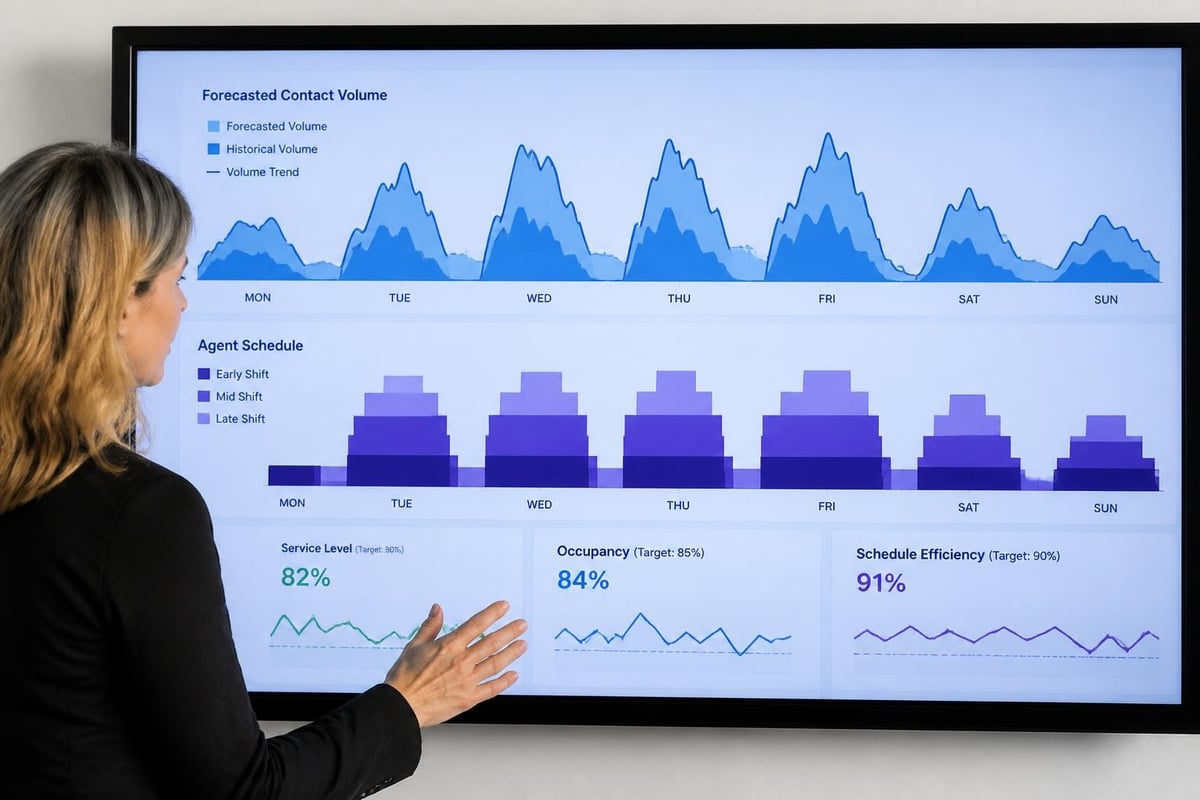
Forecasting predicts future contact volumes based on historical patterns, seasonal trends, marketing campaigns, and business events. Advanced models incorporate multiple variables including day of week, time of day, product launches, and external factors affecting demand.
Scheduling assigns agents to shifts matching forecasted volumes while accommodating agent preferences, labor regulations, and operational constraints. Optimization algorithms balance service level targets against labor costs, creating schedules that minimize overstaffing and understaffing throughout the day.
Real-Time Management and Flexibility
Intraday management responds to actual volumes deviating from forecasts. Supervisors monitor real-time metrics, adjust break schedules, request voluntary overtime, and reassign agents between channels to maintain service levels. Proactive intervention prevents small variances from escalating into service failures.
Flexible staffing models enhance responsiveness to volume fluctuations. Part-time agents, work-from-home arrangements, and global follow-the-sun operations provide scheduling options unavailable with traditional centralized models. Contact center agent deployment across multiple time zones enables extended service hours without excessive overtime costs.
Blended operations combine inbound and outbound work, allowing agents to switch between activities based on real-time demand. When inbound volumes are low, agents perform outbound calling, data entry, or training activities. This flexibility improves occupancy rates and workforce efficiency.
Designing for Contact Complexity
Not all customer support inbound interactions require equal effort or expertise. Academic research on contact complexity demonstrates that understanding and addressing variation in inquiry difficulty improves routing efficiency, agent satisfaction, and resolution outcomes.
Simple inquiries involving straightforward information requests or standard processes can be handled quickly by less experienced agents or automated systems. These contacts benefit from streamlined scripts, comprehensive knowledge bases, and minimal decision-making requirements.
Complex issues involving troubleshooting, multi-step processes, policy exceptions, or emotional situations require experienced agents with deep product knowledge and strong communication skills. These contacts justify longer handle times and specialized training investments.
Tiered Support Models
Multi-tier support structures route contacts appropriately based on complexity assessment. Tier 1 agents handle routine inquiries using established procedures and knowledge resources. Tier 2 specialists address technical problems requiring diagnostic skills and system expertise. Tier 3 experts resolve the most challenging issues, often working with product development or engineering teams.
Effective tier designs balance workload distribution with resolution efficiency. Too many tier 1 escalations create bottlenecks and longer resolution times. Insufficient tier differentiation underutilizes specialized expertise and increases training costs.
Skill-based routing matches inquiry characteristics with agent capabilities. Language proficiency, product expertise, technical certifications, and soft skills become routing criteria ensuring customers reach qualified agents. This precision improves first-contact resolution and reduces transfers.
Global Operations and Cultural Considerations
Multinational customer support inbound operations serve diverse customer populations across time zones, languages, and cultural contexts. Successful global programs balance consistency with localization, standardizing processes while respecting regional differences.
Language capabilities extend beyond basic translation to cultural fluency and regional dialect understanding. Native speakers build stronger rapport and detect nuanced meanings that non-native agents might miss. Service contact center deployments in multilingual markets require careful language matching and cultural training.
Cultural norms around communication styles, formality levels, and problem-resolution approaches vary significantly across regions. Agents serving international customers need cultural awareness training covering appropriate greetings, acceptable questions, decision-making preferences, and conflict resolution expectations.
Follow-the-Sun Support Models
Geographic distribution enables continuous service coverage without excessive overnight premiums or fatigue-related quality issues. As business hours end in one region, operations transition to sites in different time zones maintaining consistent service availability.
Effective follow-the-sun models require robust knowledge transfer processes. Detailed case notes, standardized documentation, and centralized knowledge systems ensure agents picking up ongoing issues have complete context. Regular communication between sites maintains alignment on policies, procedures, and customer priorities.
Technology Selection and Implementation
Choosing appropriate technology platforms shapes customer support inbound capabilities for years. Contact center as a service (CCaaS) solutions provide cloud-based infrastructure with flexible scaling, rapid deployment, and predictable costs. On-premises systems offer greater customization and control but require significant capital investment and ongoing maintenance.
Critical evaluation criteria include channel support, integration capabilities, reporting functionality, reliability standards, security features, and vendor viability. Platforms should support current requirements while accommodating future needs including new channels, AI capabilities, and workforce expansion.
Integration architecture connects contact center platforms with CRM systems, knowledge bases, order management systems, and other enterprise applications. Unified customer data enables personalized interactions and efficient issue resolution. API availability and integration tools determine implementation complexity and customization possibilities.
Reporting and analytics capabilities transform operational data into actionable insights. Historical reports track trends over time, real-time dashboards monitor current performance, and predictive analytics forecast future conditions. Self-service reporting tools empower supervisors and managers to extract needed information without IT dependency.
Outsourcing Considerations and Partner Selection
Many organizations outsource customer service operations to specialized providers offering economies of scale, technology investments, and operational expertise difficult to replicate internally. Successful outsourcing relationships require careful partner selection and ongoing governance.
Provider evaluation should assess relevant industry experience, geographic capabilities, technology platforms, security certifications, quality processes, and cultural fit. Site visits, reference checks, and pilot programs validate capabilities before major commitments.
Partnership Management
Clear service level agreements define performance expectations, measurement methodologies, reporting requirements, and remediation processes. Regular business reviews examine results, address issues, and identify improvement opportunities. Collaborative relationships treating outsourcing partners as extensions of internal teams produce superior outcomes compared to transactional vendor management.
Knowledge transfer processes ensure outsourced agents have the product understanding, system access, and policy awareness needed for effective customer support. Comprehensive training programs, ongoing communication, and shared quality standards maintain consistency across internal and external teams.
Mastering customer support inbound operations requires balancing technology investments, workforce development, process optimization, and customer-centric design. Organizations that excel in these areas build competitive advantages through superior customer experiences and operational efficiency. Focus Services delivers comprehensive call center outsourcing and BPO solutions with global operations, AI-enabled workforce optimization, and proven expertise in customer care programs. Whether you need to expand support capacity, reduce costs, or enhance service quality, our scalable solutions across the United States, El Salvador, the Philippines, and South Africa provide the infrastructure and expertise to transform your customer support inbound operations.