

BPO Is Call Center: Understanding the Connection
The relationship between business process outsourcing (BPO) and call centers often creates confusion for companies exploring outsourcing options. While many people use these terms interchangeably, understanding that bpo is call center operations combined with a broader spectrum of business functions helps organizations make informed decisions about their outsourcing strategy. This distinction matters when evaluating vendors, planning budgets, and aligning outsourced services with business objectives.
What the Statement "BPO Is Call Center" Really Means
The phrase "bpo is call center" reflects a common perception based on historical context and market reality. Business process outsourcing emerged as an industry largely through call center operations, which became the most visible and widely adopted form of outsourcing. When companies first began moving operations offshore in the 1990s and early 2000s, customer service and telemarketing call centers dominated the landscape.
Today's reality shows a more nuanced picture. Call centers represent a significant subset of BPO services, but BPO encompasses much more. The statement holds partial truth because many BPO providers started as call center specialists and still generate substantial revenue from voice-based customer interactions.
The Spectrum of BPO Services
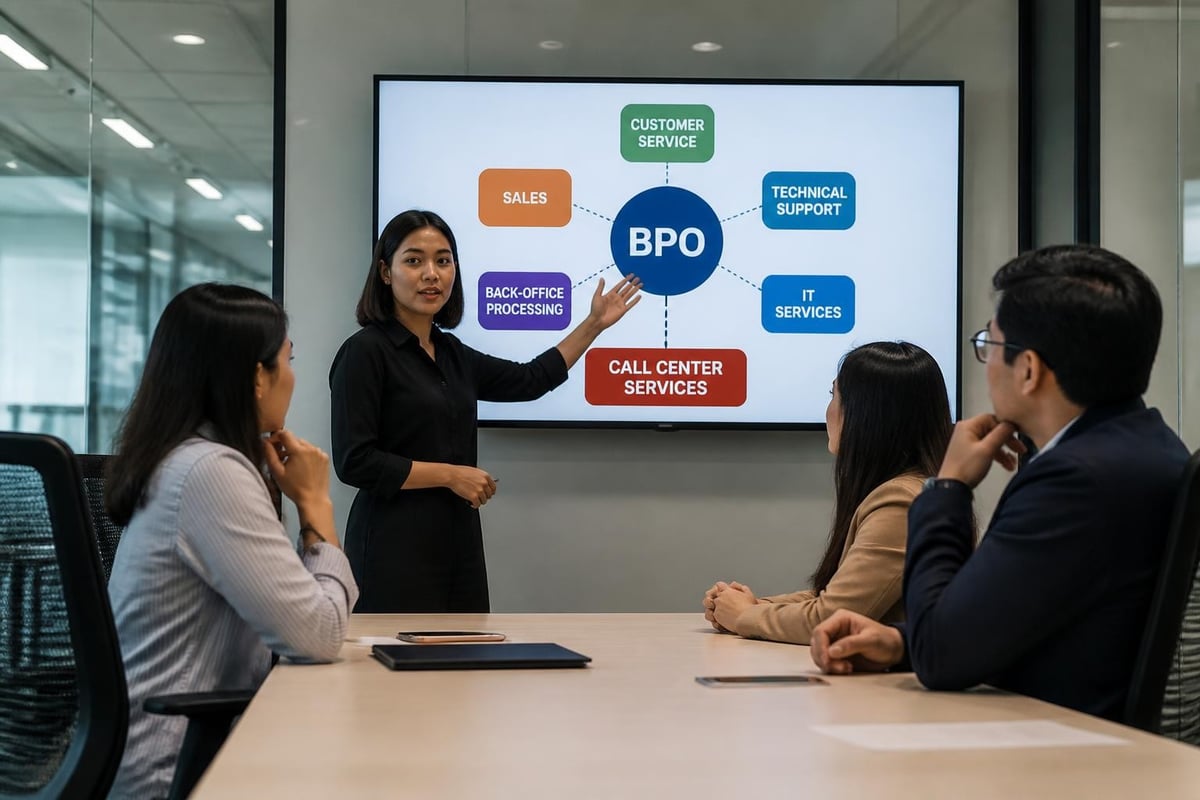
Business process outsourcing divides into several categories:
- Customer service and support operations
- Sales and lead generation functions
- Technical support and help desk services
- Back-office processing (finance, HR, data entry)
- IT services and application management
- Analytics and business intelligence
Call centers fall primarily within the first three categories, representing front-office operations that involve direct customer interaction. According to contact center outsourcing research, these customer-facing functions remain the most frequently outsourced business processes across industries.
How Call Centers Function Within BPO Operations
Understanding that bpo is call center plus additional services helps clarify vendor capabilities and service models. Modern BPO providers structure their operations to deliver integrated solutions that extend beyond traditional phone-based support.
Voice and Non-Voice Channels
Contemporary call centers-often rebranded as contact centers-manage multiple communication channels:
| Channel Type | Common Applications | Skill Requirements |
|---|---|---|
| Voice calls | Customer service, sales, collections | Strong verbal communication, accent neutrality |
| Email support | Detailed inquiries, documentation requests | Written communication, research skills |
| Live chat | Real-time web support, quick questions | Fast typing, multitasking ability |
| Social media | Public relations, complaint resolution | Brand awareness, discretion |
| SMS/messaging | Appointment reminders, order updates | Concise communication, automation knowledge |
This multichannel approach transforms the traditional notion of what a call center delivers. Focus Services exemplifies this evolution by offering comprehensive customer care programs that integrate voice, digital, and AI-enabled support channels.
Technology Integration in Modern Call Centers
The technology stack supporting today's call center operations within BPO environments includes advanced platforms that were unimaginable a decade ago. Cloud-based infrastructure enables geographic distribution, while artificial intelligence enhances agent productivity and customer experience.
Workforce optimization tools represent a critical differentiator. These systems manage scheduling, forecast call volume, monitor quality, and provide real-time coaching. The CCaaS platforms landscape shows how cloud delivery models have transformed contact center deployment, making enterprise-grade capabilities accessible to BPO providers of all sizes.
The Economic Model Behind BPO Call Centers
When evaluating whether bpo is call center economics at play, businesses must understand the cost structures and value propositions that make outsourcing attractive. The financial benefits extend beyond simple labor arbitrage.
Cost Components and Savings
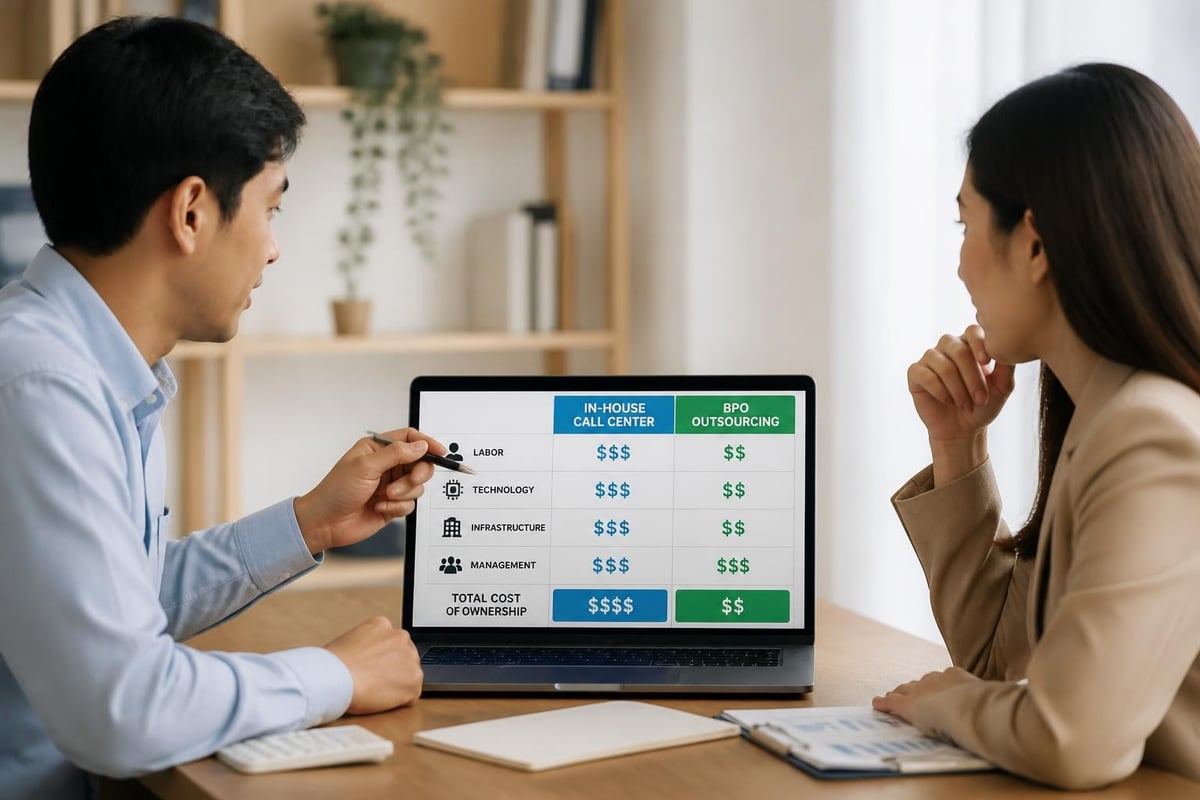
Geographic wage differentials remain a primary driver, but the total cost of ownership calculation includes numerous factors:
- Direct labor costs (wages, benefits, taxes)
- Infrastructure expenses (facilities, equipment, technology)
- Management and quality assurance overhead
- Training and development programs
- Technology licensing and maintenance
- Compliance and security investments
Organizations typically achieve 30-60% cost reduction by partnering with established BPO call center providers who spread fixed costs across multiple clients. Economies of scale allow providers to invest in superior technology and talent development programs that individual companies cannot justify internally.
Geographic Distribution and Market Dynamics
The global footprint of BPO call centers reflects strategic decisions about cost, talent, language capabilities, and proximity to end customers. Major outsourcing destinations have developed distinct specializations:
The Philippines dominates English-language customer service due to neutral accents, high education levels, and cultural affinity with Western markets. The World Bank highlights how digital services exports, particularly BPO and call center operations, drive economic development and employment in the country.
Latin American locations like El Salvador offer nearshore advantages for North American companies, including time zone alignment, cultural proximity, and bilingual capabilities for English and Spanish support.
Operational Excellence in BPO Call Centers
Recognizing that bpo is call center performance multiplied by operational discipline helps explain why specialized providers consistently outperform captive operations. Best practices in workforce management, quality assurance, and continuous improvement create measurable advantages.
Capacity Planning and Scalability
Strategic contact center capacity planning enables BPO providers to absorb demand fluctuations without the hiring and layoff cycles that plague internal operations. Sophisticated forecasting models predict volume patterns across time zones, seasons, and product lifecycles.
Flexibility benefits include:
- Rapid scaling for product launches or seasonal peaks
- Geographic redundancy for business continuity
- 24/7/365 coverage across global time zones
- Specialized expertise for complex product lines
The sales outsourcing capabilities that many BPO providers offer demonstrate how call center infrastructure supports both inbound service and outbound revenue generation within integrated operations.
Quality Assurance and Performance Metrics
BPO call centers implement rigorous quality programs that exceed typical internal standards. Multiple evaluation layers ensure consistency:
| Metric Category | Key Indicators | Target Benchmarks |
|---|---|---|
| Efficiency | Average Handle Time, First Call Resolution | AHT 5-8 min, FCR >75% |
| Quality | Quality Assurance scores, Customer Satisfaction | QA >90%, CSAT >4.2/5 |
| Availability | Service Level, Occupancy Rate | SL 80/20, Occ 75-85% |
| Outcomes | Net Promoter Score, Resolution Rate | NPS >30, Res >85% |
Advanced analytics platforms identify performance trends, training opportunities, and process improvement possibilities that drive continuous enhancement. Customer service efficiency improvements compound over time as BPO providers refine processes across their entire client base.
Strategic Considerations When Bpo Is Call Center Focused
Companies selecting BPO partners for call center operations face critical decisions that impact customer experience, brand perception, and operational risk. A structured evaluation process mitigates common pitfalls.
Vendor Selection Criteria
Beyond price comparison, assess these dimensions:
- Industry specialization and vertical expertise
- Technology platform capabilities and roadmap
- Geographic footprint and language coverage
- Security certifications and compliance frameworks
- Cultural alignment and communication effectiveness
- References and case studies from similar companies
Market research on contact center outsourcing reveals that successful engagements correlate strongly with vendor selection rigor and clear performance expectations from project inception.
Data Protection and Regulatory Compliance
When bpo is call center handling sensitive customer information, data protection becomes paramount. Outsourcing introduces data processing relationships that trigger specific regulatory obligations under privacy frameworks like GDPR, CCPA, and industry-specific regulations.
Critical compliance considerations include:
- Data processing agreements that clearly define controller and processor roles
- Security controls aligned with ISO 27001, SOC 2, or PCI-DSS standards
- Cross-border data transfer mechanisms and legal basis
- Incident response procedures and breach notification protocols
- Audit rights and ongoing compliance verification
The ICO provides comprehensive guidance on data protection obligations when outsourcing to processors, emphasizing that organizations remain accountable for data protection even when processing occurs through third parties. Contracts must address sub-processor management, data retention, and deletion obligations.

Technology Transformation in BPO Call Centers
The assertion that bpo is call center operations increasingly means bpo is AI-augmented call center operations. Artificial intelligence, automation, and advanced analytics fundamentally reshape how providers deliver services.
AI and Automation Applications
Modern BPO call centers deploy artificial intelligence across multiple operational areas:
- Virtual agents and chatbots handling routine inquiries before human escalation
- Speech analytics monitoring 100% of calls for quality, compliance, and insights
- Predictive routing matching customers to optimal agents based on needs and skills
- Real-time agent assistance suggesting responses and next-best actions during interactions
- Automated quality monitoring evaluating interactions against defined criteria
These technologies don't replace human agents but amplify their effectiveness. The combination of automation for routine tasks and skilled agents for complex situations creates superior economics and customer experience compared to either approach alone.
Omnichannel Integration and Customer Journey Management
Understanding that bpo is call center plus digital channel management reflects the modern customer reality. People switch between phone, email, chat, and social media expecting seamless experiences and consistent information.
Omnichannel platforms unify:
- Customer identity and history across channels
- Agent desktop interfaces and workflows
- Routing logic and skill-based assignment
- Performance analytics and reporting
- Knowledge bases and content management
This integration requires sophisticated technology and operational discipline that specialized BPO providers develop through serving multiple clients with diverse requirements.
Measuring Success in BPO Call Center Partnerships
The recognition that bpo is call center partnership success hinges on defining and tracking appropriate metrics from engagement inception. Misaligned expectations account for most outsourcing disappointments.
Balanced Scorecard Approach
Effective performance measurement balances efficiency, quality, customer outcomes, and business results:
Operational efficiency metrics ensure cost-effectiveness but shouldn't dominate scorecards at the expense of quality. Average handle time targets must allow sufficient interaction time to resolve issues properly.
Quality and compliance indicators protect brand reputation and regulatory standing. Mystery shopping, side-by-side monitoring, and calibration sessions maintain consistent quality standards across provider locations.
Customer experience measures including satisfaction scores, effort scores, and Net Promoter Scores capture the end-user perspective that ultimately determines program success.
Business outcome metrics tie call center performance to revenue, retention, and strategic objectives. For sales programs, conversion rates and revenue per contact matter more than call volume. For service operations, first-call resolution and repeat contact rates indicate true effectiveness.
Continuous Improvement and Innovation
The best BPO call center relationships function as strategic partnerships where providers contribute industry insights, process innovations, and technology advancements. Regular business reviews examine performance trends, discuss market changes, and identify improvement opportunities.
Mature partnerships implement:
- Quarterly business reviews with executive participation
- Monthly operational reviews focused on metrics and trends
- Weekly tactical coordination addressing immediate issues
- Real-time dashboards providing continuous visibility
- Annual strategic planning sessions for capability development
This governance structure ensures that bpo is call center collaboration evolving with business needs rather than static vendor management. About Focus Services demonstrates how a partner approach across four continents delivers consistent quality while adapting to local market requirements and client-specific needs.
Future Directions for BPO and Call Center Convergence
The evolution of how bpo is call center operations will continue accelerating through 2026 and beyond. Several trends shape the industry's trajectory and create opportunities for businesses leveraging outsourced solutions.
Hybrid Delivery Models
Pure offshore, nearshore, or onshore strategies give way to hybrid approaches that optimize across cost, quality, and strategic considerations. Global providers maintain presence in multiple geographies, routing interactions based on complexity, language, compliance requirements, and customer value.
Emerging model variations include:
- At-home agents supplementing traditional centers for flexibility and disaster recovery
- Gig economy integration for specialized skills or extreme volume peaks
- Follow-the-sun support spanning time zones for continuous availability
- Dedicated teams versus shared resources based on volume and specialization needs
Industry Verticalization
Generic call center capabilities no longer satisfy demanding clients. BPO providers develop deep expertise in specific industries-healthcare, financial services, technology, retail-building specialized knowledge, compliance frameworks, and best practices.
This verticalization creates value through faster onboarding, reduced error rates, and proactive insights that generalist providers cannot match. Industry-specific training programs, certifications, and career paths attract and retain talent with relevant backgrounds.
Outcome-Based Pricing Evolution
Traditional per-hour or per-contact pricing models gradually shift toward outcome-based structures that align provider and client incentives. Performance-based compensation, risk-sharing arrangements, and gain-sharing models transform BPO relationships from transactional vendor management to strategic partnerships.
Alternative pricing structures include:
- Fixed fees with performance bonuses for exceeding targets
- Per-resolution pricing that rewards efficiency and first-call resolution
- Revenue-share models for sales and retention programs
- Customer lifetime value optimization with shared gains
These models require sophisticated analytics, transparent reporting, and mutual trust but deliver superior results when properly structured.
Understanding that bpo is call center operations plus broader business process capabilities helps organizations make informed outsourcing decisions aligned with strategic objectives. The convergence of traditional call center services with advanced technology, multichannel capabilities, and outcome-focused partnerships creates opportunities for companies to enhance customer experience while controlling costs. Focus Services combines global delivery capabilities across the United States, El Salvador, the Philippines, and South Africa with AI-enabled workforce optimization and specialized industry expertise to help businesses scale support operations efficiently while maintaining exceptional service quality-contact us to explore how strategic outsourcing can accelerate your customer service and sales objectives.