

IT Help Desk Services: A Complete 2026 Guide
Modern businesses depend on technology to deliver products, serve customers, and maintain competitive advantage. When technical issues disrupt operations, every minute of downtime translates to lost revenue and diminished customer confidence. IT help desk services have evolved from simple troubleshooting hotlines into sophisticated technical support ecosystems that combine human expertise with intelligent automation. These services provide the critical infrastructure that keeps companies running smoothly across time zones, languages, and technical complexity levels. Understanding how to structure, optimize, and scale these operations has become essential for organizations navigating the demands of 2026.
The Foundation of Modern IT Help Desk Services
Contents
- 1 The Foundation of Modern IT Help Desk Services
- 2 Implementing Automation and AI Enhancement
- 3 Performance Metrics That Drive Continuous Improvement
- 4 Building High-Performance Support Teams
- 5 The Strategic Case for Outsourcing IT Help Desk Services
- 6 Selecting the Right Help Desk Software Platform
- 7 Knowledge Management as a Strategic Asset
- 8 Security Considerations for Help Desk Operations
- 9 Remote Work Impact on IT Help Desk Services
- 10 Cost Optimization Without Sacrificing Quality
- 11 Preparing IT Help Desk Services for Future Demands
IT help desk services represent the front line of technical support, handling everything from password resets to complex system failures. These operations function as the single point of contact between end users and IT departments, managing incident reports, service requests, and technical inquiries through multiple communication channels.
The fundamental architecture of effective it help desk services includes several core components that work in concert. Ticket management systems track every request from submission through resolution, creating accountability and visibility. Knowledge bases provide self-service resources that reduce ticket volume while empowering users to solve common issues independently. Service level agreements (SLAs) establish clear performance benchmarks that align support delivery with business expectations.
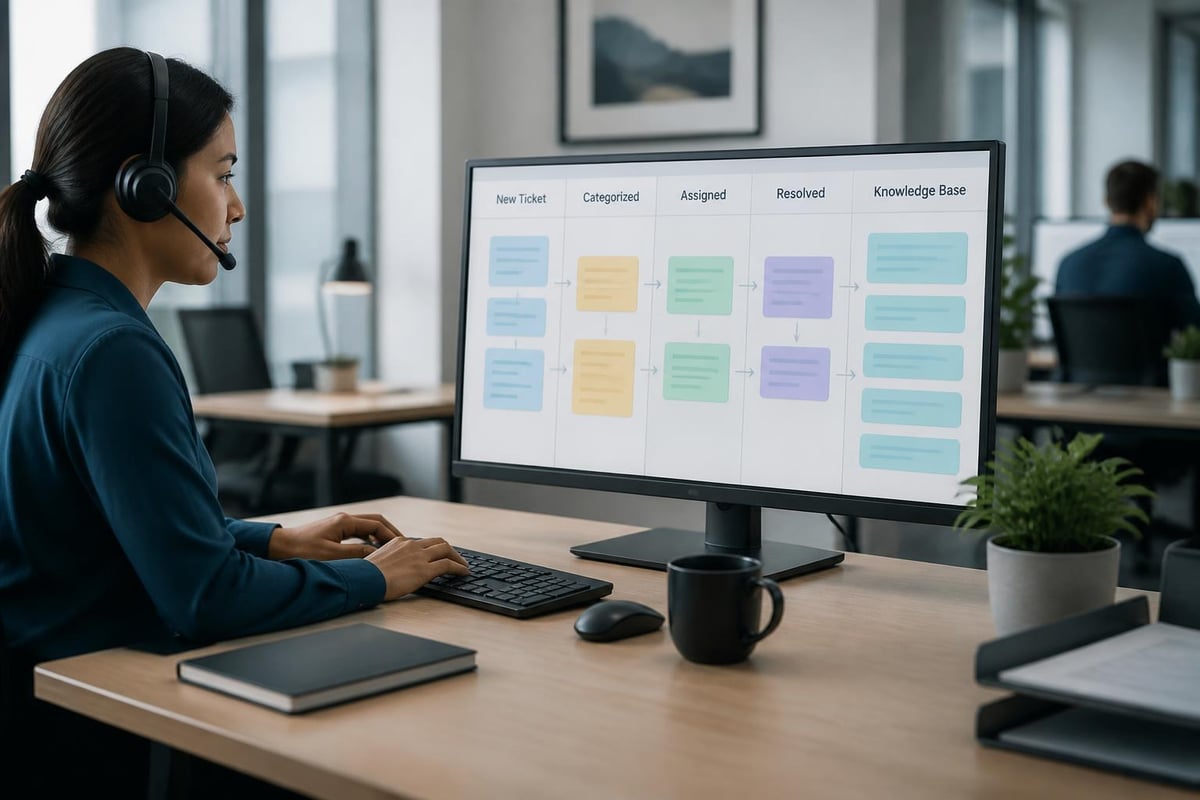
Building on this foundation requires understanding the different support tiers that distribute workload based on complexity. Tier 1 support handles initial contact and resolves common issues using established procedures. Tier 2 specialists address more technical problems requiring deeper system knowledge. Tier 3 experts tackle complex incidents involving multiple systems or requiring custom solutions. This tiered structure ensures that resources align with problem complexity, maximizing efficiency while controlling costs.
Multi-Channel Support Infrastructure
Modern it help desk services must accommodate how users naturally seek assistance. Phone support remains critical for urgent issues requiring immediate attention. Email ticketing provides documentation and allows asynchronous communication across time zones. Live chat delivers real-time assistance without voice interaction. Self-service portals empower users to find answers independently.
Each channel requires different staffing models, technology investments, and performance metrics. Organizations implementing help desk best practices recognize that channel selection impacts both user satisfaction and operational cost. The most effective operations integrate these channels into unified systems that maintain conversation history regardless of how users switch between contact methods.
Implementing Automation and AI Enhancement
Automation has transformed what it help desk services can accomplish with existing resources. Chatbots handle routine inquiries 24/7, reducing wait times and freeing human agents for complex issues. Automated ticket routing analyzes request content and directs problems to appropriate specialists based on keywords, historical patterns, and current workload distribution.
Predictive analytics identify recurring problems before they escalate into major incidents. Auto-remediation scripts resolve common issues like storage cleanup or service restarts without human intervention. Intelligent knowledge base search surfaces relevant articles based on natural language queries rather than exact keyword matches.
The implementation roadmap for automation follows a logical progression:
- Analyze ticket data to identify high-volume, low-complexity requests suitable for automation
- Document resolution procedures for selected ticket types with detailed decision trees
- Deploy chatbot capabilities for straightforward scenarios with clear resolution paths
- Monitor automation performance and adjust logic based on escalation patterns
- Expand automation scope incrementally while maintaining quality standards
- Train human agents to work alongside automated systems rather than replacing judgment with scripts
Research on information retrieval techniques for IT support demonstrates how advanced algorithms improve the relevance of automated recommendations, helping support teams resolve issues faster with better accuracy.
Performance Metrics That Drive Continuous Improvement
Measuring it help desk services performance requires balancing efficiency metrics with quality indicators. Organizations often focus exclusively on cost reduction while overlooking metrics that predict customer satisfaction and long-term operational health.
| Metric Category | Key Indicators | Strategic Value |
|---|---|---|
| Speed | First response time, average resolution time, ticket backlog | Measures operational efficiency and resource adequacy |
| Quality | First contact resolution, customer satisfaction score, reopened tickets | Indicates effectiveness of solutions and agent knowledge |
| Efficiency | Cost per ticket, automation rate, self-service adoption | Tracks resource utilization and process optimization |
| Capacity | Ticket volume trends, peak time patterns, agent utilization | Guides staffing decisions and infrastructure planning |
First contact resolution (FCR) stands out as particularly valuable because it correlates strongly with user satisfaction while reducing overall support costs. When agents resolve issues during the initial interaction, users avoid repeated contacts and the help desk eliminates duplicate work. Improving FCR requires comprehensive agent training, accessible knowledge resources, and empowerment to make decisions without excessive escalation.
Customer satisfaction scores (CSAT) provide direct feedback on service quality, though timing matters significantly. Surveys sent immediately after ticket closure capture fresh impressions but may miss issues that emerge later. Delayed surveys provide better quality assessment but suffer from lower response rates.
Setting Effective Service Level Agreements
SLAs define the commitment between IT help desk services and the business units they support. Well-crafted SLAs balance ambitious performance targets with realistic resource constraints. They specify response times based on ticket priority, establish escalation procedures for breached deadlines, and define business hours versus after-hours support coverage.
Implementing clear SLAs helps align support delivery with business priorities rather than treating all requests equally. Critical production outages demand immediate response regardless of time or day. Standard service requests follow normal business hours processing. Low-priority enhancement requests queue behind more urgent work.
The most effective SLAs include measurable targets that stakeholders understand and support teams can consistently achieve. Overly aggressive targets create constant failure, damaging morale and credibility. Conservative targets waste resources on excessive staffing while failing to drive performance improvement.
Building High-Performance Support Teams
Technology and processes provide the framework, but people deliver the actual support experience. Recruiting, training, and retaining talented help desk professionals requires deliberate strategies that address the unique challenges of technical support roles.
Technical aptitude forms the baseline requirement, but communication skills often determine success. Support agents must translate technical concepts into language that non-technical users understand, demonstrate patience with frustrated callers, and maintain professionalism under pressure. The combination proves surprisingly rare, making talent development critical.

Comprehensive training programs address both technical knowledge and interpersonal effectiveness:
- System-specific training covers the applications, infrastructure, and tools that agents will support
- Troubleshooting methodology teaches systematic diagnostic approaches rather than random trial-and-error
- Communication workshops develop active listening, empathy, and clear explanation techniques
- Scenario-based practice builds confidence handling difficult situations before they arise with actual users
- Continuous learning keeps skills current as systems evolve and new technologies emerge
Career development paths combat the high turnover that plagues many IT help desk services. Creating advancement opportunities from entry-level support through specialized roles and leadership positions helps retain institutional knowledge while rewarding performance excellence.
The Strategic Case for Outsourcing IT Help Desk Services
Organizations face persistent pressure to reduce costs while improving service quality across all business functions. Many companies find that managing it help desk services internally diverts resources from core competencies while struggling to match the expertise and efficiency that specialized providers deliver.
Outsourcing transforms fixed costs into variable expenses that scale with actual demand. It provides access to proven processes, advanced technologies, and experienced management without requiring internal investment in help desk infrastructure. Geographic distribution across multiple time zones enables true 24/7 coverage without expensive night shift premiums or weekend staffing challenges.
For businesses seeking comprehensive support operations, customer care outsourcing extends beyond basic technical troubleshooting to encompass the full customer experience across multiple channels and interaction types.
Evaluating Outsourcing Partners
Selecting an outsourcing provider requires examining capabilities that extend beyond simple cost comparison. Industry experience indicates whether providers understand sector-specific technical environments and user expectations. Technology platforms determine integration capabilities with existing systems and future scalability options. Quality assurance processes reveal how providers maintain consistent service delivery across large agent populations.
| Evaluation Criteria | Why It Matters | Key Questions |
|---|---|---|
| Technical Expertise | Determines ability to handle complex issues | What certifications do agents hold? What is the escalation path for difficult problems? |
| Scalability | Ensures capacity for growth and seasonal peaks | How quickly can you add agent capacity? What are minimum volume commitments? |
| Security & Compliance | Protects sensitive data and meets regulatory requirements | What security certifications do you maintain? How do you handle data privacy? |
| Cultural Fit | Impacts communication quality and brand alignment | How do you train agents on client culture? What is your approach to quality monitoring? |
Geographic location creates tradeoffs between cost, language proficiency, and cultural alignment. Customer services outsourcing companies operating in multiple regions provide flexibility to balance these factors based on specific business requirements and customer demographics.
Selecting the Right Help Desk Software Platform
Technology infrastructure determines what IT help desk services can accomplish and how efficiently they operate. The help desk software market offers dozens of platforms ranging from basic ticket tracking to comprehensive IT service management (ITSM) suites.
Core functionality that every platform should provide includes ticket creation and tracking, agent assignment and workload management, knowledge base integration, reporting and analytics, and SLA monitoring with automated alerts. Beyond these basics, organizations must evaluate features based on their specific operational requirements.
Integration capabilities matter enormously for operational efficiency. Help desk systems that connect with email, chat platforms, phone systems, monitoring tools, and asset management databases eliminate duplicate data entry while providing agents with complete context. Reviews of leading help desk software highlight how integration depth varies significantly across platforms, impacting both implementation complexity and long-term operational efficiency.
Cloud-based platforms dominate new deployments because they eliminate infrastructure management overhead while providing automatic updates and global accessibility. However, highly regulated industries sometimes require on-premises deployment to maintain complete data control.
Customization Versus Configuration
Help desk platforms differ significantly in how they balance flexibility with simplicity. Highly customizable systems adapt to unique workflows and specialized requirements but require significant implementation effort and ongoing maintenance. Preconfigured platforms deploy quickly with industry best practices built in but may force process compromises when requirements diverge from standard assumptions.
Most organizations benefit from platforms that offer workflow configuration through graphical interfaces rather than requiring custom code. This approach provides meaningful flexibility while keeping modifications manageable for business users rather than requiring developer resources for every adjustment.
Knowledge Management as a Strategic Asset
The knowledge base represents the accumulated wisdom of every problem solved and every issue encountered. Effective it help desk services treat knowledge management as a strategic priority rather than an administrative afterthought.
Structured documentation converts tribal knowledge into searchable resources that new agents can access immediately. Solution articles provide step-by-step resolution procedures that reduce variation in support quality. Known issue notifications prevent agents from wasting time troubleshooting problems with identified workarounds. FAQ collections enable self-service for common questions that don’t require personalized assistance.
Building valuable knowledge bases requires consistent processes for capturing and organizing information:
- Create templates that standardize article structure for consistency and completeness
- Establish workflows requiring agents to document solutions for novel problems
- Implement review cycles that ensure accuracy and remove outdated content
- Track article usage to identify gaps where documentation would reduce ticket volume
- Solicit user feedback on article helpfulness to guide improvement efforts
- Promote high-value articles through multiple channels to increase awareness

The most sophisticated organizations apply best practices for building self-service resources by analyzing resolved tickets to identify patterns where documentation prevents future contacts. This proactive approach reduces ticket volume while improving user satisfaction by enabling immediate problem resolution.
Security Considerations for Help Desk Operations
IT help desk services access sensitive systems and confidential information while assisting users, creating security vulnerabilities that malicious actors actively exploit. Social engineering attacks specifically target help desk agents because successful impersonation provides access to password resets, system changes, and confidential data.
Multi-factor authentication for help desk actions prevents unauthorized changes even when attackers convince agents they are legitimate users. Call-back verification requires agents to contact users at registered numbers before processing sensitive requests. Audit logging tracks every action for compliance and incident investigation. Privileged access management limits which agents can perform high-risk operations.
Training programs must address security awareness alongside technical skills. Agents need to recognize common attack patterns, follow verification procedures even under pressure, and escalate suspicious requests rather than prioritizing convenience over security. Regular phishing simulations and security refresher training maintain awareness as threats evolve.
Compliance requirements for healthcare, financial services, and other regulated industries impose additional constraints on how it help desk services handle data. HIPAA compliance requires specific safeguards for protected health information. PCI DSS standards govern handling of payment card data. GDPR mandates control processing of European resident information. Help desk operations must incorporate these requirements into standard procedures rather than treating compliance as separate from normal operations.
Remote Work Impact on IT Help Desk Services
The shift toward distributed workforces fundamentally changed what it help desk services support and how they deliver assistance. Supporting remote employees requires different capabilities than serving users in centralized office environments where technicians can provide hands-on assistance.
Remote desktop tools enable agents to view user screens and control systems to diagnose issues that users struggle to describe. Asset management systems track device configurations and software installations across distributed endpoints. VPN troubleshooting becomes routine as connectivity issues multiply. Home network support extends beyond traditional IT boundaries as work-from-home setups impact productivity.
The geographic distribution of users eliminates proximity advantages that once helped smaller regional help desks compete with larger centralized operations. When all support occurs remotely regardless of location, organizations gain flexibility to consolidate teams, leverage global talent pools, and provide extended coverage without multiple physical facilities.
Cost Optimization Without Sacrificing Quality
Financial pressure to reduce IT help desk services costs tempts organizations to cut corners that ultimately damage service quality and increase total cost of ownership. Effective cost optimization focuses on eliminating waste while preserving or enhancing the support experience.
Self-service adoption reduces ticket volume for routine requests without eliminating support availability for complex issues. Automation of repetitive tasks eliminates manual effort that adds no value. Knowledge base investment prevents the same problems from consuming resources repeatedly. Proactive monitoring identifies issues before users encounter them, reducing reactive support demand.
Staffing optimization balances coverage requirements against utilization rates. Many help desks maintain excess capacity during slow periods because they staff for peak demand. Flexible staffing models using part-time employees or outsourced providers allow capacity to flex with actual demand patterns. Workload forecasting based on historical patterns enables better scheduling that matches resources to anticipated ticket volumes.
Technology consolidation eliminates redundant tools that create integration overhead and require separate training. Organizations often accumulate multiple ticketing systems, monitoring platforms, and communication tools through acquisitions or departmental purchases. Standardizing on integrated platforms reduces complexity while lowering license costs.
Preparing IT Help Desk Services for Future Demands
Technology evolution continuously reshapes what IT help desk services support and how they operate. Organizations must anticipate emerging requirements while building adaptable foundations that accommodate unpredictable change.
Artificial intelligence will automate increasingly sophisticated support tasks, shifting human agents toward empathy-driven interactions and complex problem solving that machines cannot replicate. Internet of Things device proliferation expands the support surface beyond traditional computers and phones to include sensors, smart equipment, and connected infrastructure. Cloud application diversity creates integration challenges as businesses adopt specialized SaaS solutions rather than monolithic enterprise systems.
The most forward-thinking organizations invest in agent capabilities that remain valuable regardless of technology changes. Critical thinking skills apply across different platforms and problems. Communication excellence matters whether supporting legacy systems or emerging technologies. Customer focus drives satisfaction independent of technical tools. Building teams around these enduring capabilities creates resilience against technological disruption while positioning help desk operations as strategic assets rather than cost centers.
Modern IT help desk services combine technology, process, and people into support operations that keep businesses running while controlling costs and maintaining quality standards. Organizations that implement proven best practices while staying current with emerging capabilities build competitive advantages through superior operational efficiency and user satisfaction. Focus Services helps companies optimize their technical support operations through global teams, advanced automation, and proven methodologies that deliver measurable performance improvements. Whether you need to scale existing capabilities, reduce costs, or transform support quality, our expertise in call center outsourcing and customer care programs provides the foundation for sustainable operational excellence.
