

Sales Support: Driving Revenue Through Strategic Enablement
Modern sales organizations face unprecedented complexity. Between managing customer relationships, navigating sophisticated buying processes, and meeting aggressive revenue targets, sales professionals need more than raw talent to succeed. They need structured, strategic sales support that removes friction from every stage of the sales cycle. Companies that invest in comprehensive support infrastructure consistently outperform competitors, not because their salespeople work harder, but because they work smarter with the right resources, information, and operational backing at their fingertips.
The Foundation of High-Performance Sales Operations
Contents
- 1 The Foundation of High-Performance Sales Operations
- 2 Technology Stack Optimization for Maximum Impact
- 3 Operational Excellence Through Process Standardization
- 4 Data Analytics and Performance Intelligence
- 5 Training and Continuous Development Programs
- 6 Territory and Compensation Management
- 7 Cross-Functional Collaboration and Communication
- 8 The Strategic Impact of Sales Support Investment
- 9 Scaling Support Operations for Growth
- 10 Building a Culture of Support Excellence
Sales support encompasses all the people, processes, and technology that enable sales teams to focus on what they do best: building relationships and closing deals. This infrastructure handles everything from lead qualification and data management to proposal generation and post-sale coordination.
The core functions include:
- Administrative task management and documentation
- Sales collateral development and distribution
- CRM data hygiene and reporting
- Territory planning and account assignment
- Quote generation and contract processing
- Customer onboarding coordination
The distinction between sales support and sales enablement often creates confusion. While enablement focuses on training, content creation, and strategic seller development, sales support handles operational execution and day-to-day activities that keep the pipeline moving. Both functions work synergistically, but support teams concentrate on removing tactical barriers that slow down revenue generation.
Building the Right Team Structure
Organizations structure their sales support differently based on size, industry, and complexity. Startups might rely on one operations coordinator supporting the entire team, while enterprises build specialized departments with dozens of professionals handling specific functions.
| Organization Size | Typical Structure | Key Responsibilities |
|---|---|---|
| Startup (1-10 reps) | 1 operations coordinator | CRM management, basic reporting, administrative tasks |
| Growth Stage (10-50 reps) | 3-5 dedicated specialists | Lead routing, data analytics, sales ops, enablement coordination |
| Enterprise (50+ reps) | Full department with managers | Specialized teams for operations, analytics, compensation, tools administration |
The most effective teams position sales support as strategic partners rather than administrative assistants. This shift in mindset transforms support from order-takers to proactive problem-solvers who identify bottlenecks before they impact revenue.

Technology Stack Optimization for Maximum Impact
Technology forms the backbone of modern sales support operations. The right tools multiply team effectiveness, while poorly integrated systems create chaos and frustration that drags down performance across the board.
Essential Platform Categories
CRM and Data Management
Every sales organization runs on customer relationship management software, but effective support teams go beyond basic contact tracking. They implement data governance policies, establish field standardization protocols, and create automated workflows that eliminate manual data entry. Clean, accessible data becomes the foundation for accurate forecasting, territory optimization, and targeted coaching.
Proposal and Document Automation
Sales representatives spend an average of 440 hours annually creating proposals and customizing presentations. Document automation platforms reduce this time by 60-70% through templates, dynamic content insertion, and approval workflows. Support teams maintain content libraries, update pricing structures, and ensure all customer-facing materials reflect current branding and messaging standards.
Companies seeking to scale their operations often find that customer care outsourcing partnerships provide the infrastructure needed to handle increasing volume without proportional headcount growth, allowing internal teams to focus on strategic initiatives rather than routine processing.
Integration and Workflow Design
Disconnected systems force representatives to toggle between platforms, re-enter information, and waste time searching for data. Strategic sales enablement requires seamless information flow between tools, with support teams architecting integrations that eliminate friction points.
Modern integration approaches include:
- API-based connections between core platforms (CRM, marketing automation, customer service)
- Middleware solutions that enable no-code workflow automation
- Data warehouses that centralize information for cross-platform reporting
- Single sign-on systems that streamline access management
The most sophisticated organizations build “tech stacks” where each tool serves a specific purpose and shares data automatically with related systems. Support teams document these connections, train users on capabilities, and troubleshoot issues before they disrupt sales activities.
Operational Excellence Through Process Standardization
Inconsistent processes create unpredictable results. When every salesperson follows their own approach to qualification, proposal development, or customer handoff, management loses visibility and customers experience varying service quality. Sales support teams drive standardization without stifling creativity.
Lead Management and Qualification Frameworks
Structured lead routing ensures every opportunity receives appropriate attention. Support teams establish criteria-based assignment rules that consider factors like deal size, geographic territory, product expertise, and current workload distribution. Automated routing eliminates delays and political disputes over lead ownership.
Qualification frameworks provide consistent evaluation standards:
- BANT (Budget, Authority, Need, Timeline) for traditional enterprise sales
- MEDDIC (Metrics, Economic Buyer, Decision Criteria, Decision Process, Identify Pain, Champion) for complex B2B environments
- CHAMP (Challenges, Authority, Money, Prioritization) for solution-focused selling
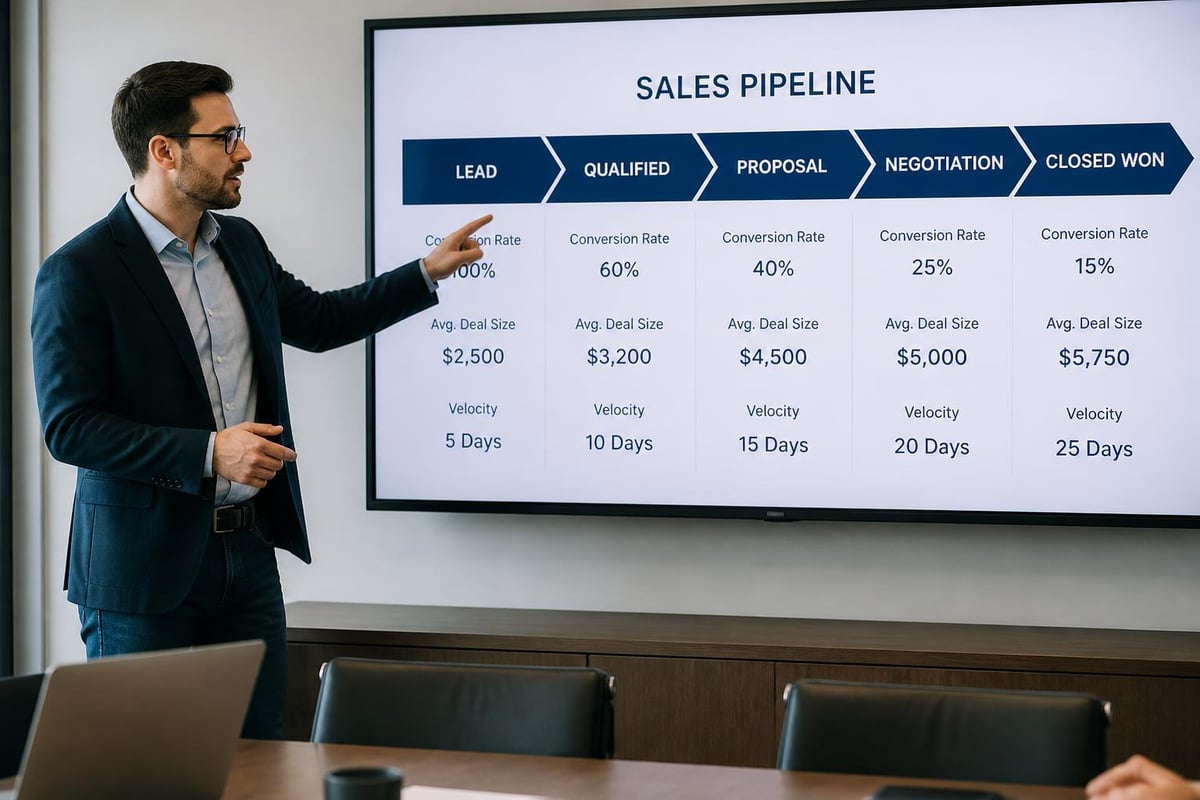
Support teams train representatives on these methodologies, build qualification fields into CRM systems, and generate reports that identify coaching opportunities when deals stall at specific stages.
Data Analytics and Performance Intelligence
Numbers tell stories that gut feelings miss. Sales support teams transform raw activity data into actionable intelligence that drives strategic decisions and tactical improvements across the organization.
Key Performance Indicators Worth Tracking
| Metric Category | Specific KPIs | Strategic Value |
|---|---|---|
| Activity Metrics | Calls per day, emails sent, meetings booked | Identify productivity patterns and coaching needs |
| Pipeline Health | Stage conversion rates, pipeline velocity, deal age | Forecast accuracy and bottleneck identification |
| Revenue Metrics | Win rate, average deal size, sales cycle length | Territory performance and quota attainment tracking |
| Customer Metrics | Customer acquisition cost, lifetime value, retention rate | Long-term business health and pricing strategy |
Advanced analytics move beyond backward-looking reports to predictive modeling. Machine learning algorithms identify patterns in historical data that signal deal risk, predict close probability, and recommend optimal next actions. Support teams implementing AI-powered sales assistance provide representatives with real-time guidance during customer conversations, dramatically improving conversion rates.
Reporting Cadence and Dashboard Design
Different audiences need different information at different frequencies. Sales support teams create reporting ecosystems that serve everyone from individual contributors to C-suite executives.
Daily dashboards show real-time pipeline updates and activity tracking for frontline managers. Weekly reports highlight trend analysis and pipeline progression for team leads. Monthly business reviews present strategic metrics, forecast accuracy, and competitive intelligence for senior leadership.
The best dashboards follow a simple principle: show what matters, hide what doesn’t. Cluttered reports with dozens of metrics create confusion rather than clarity. Support teams work with stakeholders to identify the 5-7 numbers that truly drive decision-making, then design clean visualizations that make those numbers immediately accessible.
Training and Continuous Development Programs
Even the most talented salespeople need ongoing skill development to keep pace with evolving buyer expectations, new product offerings, and competitive market dynamics. Effective sales support teams understand that training isn’t a one-time onboarding event but a continuous development journey.
Onboarding New Representatives
First impressions matter. Comprehensive onboarding programs accelerate time-to-productivity and establish professional habits that last throughout careers. Support teams coordinate multi-week programs that cover:
- Company culture and values (Week 1)
- Product knowledge and competitive positioning (Week 2-3)
- Sales methodology and process (Week 3-4)
- Systems training and shadowing (Week 4-6)
- Supervised selling with coaching feedback (Week 7-8)
Structured onboarding reduces ramp time by 30-40% compared to informal “figure it out yourself” approaches. Support teams create checklists, schedule training sessions, assign mentors, and track completion metrics to ensure consistency across all new hires.
Ongoing Skills Enhancement
Markets change. Products evolve. Competitors introduce new capabilities. Static skill sets become obsolete quickly in dynamic business environments. Building empowered sales teams requires regular training on emerging topics, new methodologies, and advanced techniques.
Monthly training topics might include:
- Industry trend analysis and market intelligence
- New product feature demonstrations
- Objection handling for common competitive scenarios
- Advanced negotiation tactics
- Digital selling and virtual presentation skills
Support teams leverage various formats beyond traditional classroom sessions. Microlearning modules, peer learning circles, role-playing exercises, and certification programs create engaging development experiences that stick. The most effective programs tie training completion to performance incentives, making continuous learning a cultural expectation rather than optional activity.
Territory and Compensation Management
Fair territory assignment and transparent compensation plans directly impact motivation, retention, and revenue production. Sales support teams handle the complex analytics and administration that keep these systems running smoothly.
Geographic and Account Segmentation
Strategic territory design balances opportunity distribution while minimizing travel time and maximizing account coverage. Support teams analyze factors including:
- Geographic market potential and density
- Existing customer concentration
- Vertical industry clustering
- Historical performance data
- Representative experience and capacity
Annual territory reviews realign boundaries based on changing market conditions, business priorities, and team composition. Transparency in the reassignment process reduces political friction and maintains trust between management and field teams.
Commission Structure Administration
Nothing demotivates salespeople faster than compensation errors or opaque calculation methods. Support teams establish clear documentation of commission structures, automate calculation processes where possible, and maintain detailed records that enable rapid dispute resolution.
Modern compensation approaches move beyond simple percentage-of-revenue models to incorporate strategic behaviors:
- Accelerators for exceeding quota thresholds
- SPIFs (Sales Performance Incentive Funds) for strategic product focus
- Multi-year bonuses for customer retention and expansion
- Team-based rewards for collaborative selling environments
Administrative excellence in this area requires meticulous data tracking, regular audits for accuracy, and clear communication channels for questions and concerns. Research demonstrates that salespeople with strong customer orientation deliver better long-term results, making compensation design a strategic lever for encouraging relationship-building behaviors rather than purely transactional selling.
How modern sales compensation structures combine base salary, variable commission, accelerators, bonuses, and SPIFs to align behavior with strategic objectives
Cross-Functional Collaboration and Communication
Sales doesn’t operate in isolation. Success requires seamless coordination with marketing, product development, customer success, finance, and operations. Sales support teams serve as connective tissue between departments, facilitating information flow and resolving conflicts before they impact customers.
Marketing Alignment and Lead Handoff
The transition from marketing-qualified lead to sales-accepted lead represents a critical handoff point where many opportunities fall through cracks. Support teams establish service-level agreements that define qualification criteria, response time expectations, and feedback loops.
Effective handoff protocols include:
- Automated lead routing based on predefined criteria
- Real-time notifications to assigned representatives
- Standardized lead scoring that marketing and sales agree upon
- Regular pipeline review meetings between teams
- Closed-loop reporting on lead quality and conversion
When sales and marketing operate as coordinated revenue teams rather than separate silos, companies experience 36% higher customer retention and 38% higher win rates compared to organizations with misaligned departments.
Customer Success Transition Management
The post-sale handoff from sales to customer success determines whether new customers achieve their desired outcomes or churn within the first year. Organizations exploring ways to optimize their support operations recognize that smooth transitions require detailed documentation, warm introductions, and clear accountability.
Support teams create transition templates that capture critical information including implementation timelines, stakeholder contacts, success metrics, and any commitments made during the sales process. This documentation prevents miscommunication and ensures customer success teams have everything needed to deliver exceptional onboarding experiences.
The Strategic Impact of Sales Support Investment
Organizations that treat sales support as a strategic function rather than administrative overhead consistently outperform competitors. The return on investment manifests through multiple channels that compound over time.
Quantifiable business outcomes include:
- 20-30% reduction in sales cycle length through process optimization
- 15-25% increase in quota attainment through better enablement
- 40-50% decrease in administrative time burden on representatives
- 10-15% improvement in forecast accuracy through better data hygiene
- 30-40% faster new hire ramp time with structured onboarding
Beyond these measurable metrics, strong support infrastructure improves seller satisfaction and retention. Top performers stay longer when they have the resources needed to succeed rather than fighting internal friction. Recruitment becomes easier when the organization develops a reputation for supporting its sales teams properly.
Scaling Support Operations for Growth
As companies expand from startup to growth stage to enterprise scale, sales support requirements evolve dramatically. What worked with ten representatives breaks down completely with fifty. Strategic leaders anticipate these transitions and invest ahead of current needs.
Growth Stage Transitions
| Growth Phase | Team Size | Support Investment Priority |
|---|---|---|
| Startup | 1-10 reps | Basic CRM, simple processes, one coordinator |
| Early Growth | 10-25 reps | Sales ops manager, automation tools, standardized workflows |
| Expansion | 25-75 reps | Specialized support roles, advanced analytics, enablement function |
| Enterprise | 75+ reps | Full operations department, custom integrations, strategic planning |
Many organizations discover that outsourcing certain support functions provides flexibility during rapid growth phases. Leading companies in various industries partner with specialized providers who bring expertise, technology, and scalable capacity without the overhead of building everything internally.
Technology Evolution Path
Initial technology investments focus on basic functionality and ease of use. As sophistication increases, organizations layer on advanced capabilities that deliver incremental value without disrupting core workflows.
The typical evolution follows this pattern:
- Foundation phase: Core CRM, email, calendar integration
- Automation phase: Workflow tools, document generation, reporting dashboards
- Intelligence phase: Predictive analytics, AI assistance, advanced forecasting
- Optimization phase: Custom integrations, machine learning, real-time guidance
Best practices in sales enablement emphasize building technology stacks incrementally rather than implementing everything simultaneously. Support teams manage vendor relationships, coordinate implementations, and ensure adoption through training and change management.
Building a Culture of Support Excellence
Technology and processes only deliver results when people embrace them. The most effective sales support teams cultivate organizational cultures where asking for help is encouraged, continuous improvement is expected, and operational excellence is celebrated alongside revenue achievement.
Cultural elements that drive support effectiveness:
- Executive sponsorship that positions support as strategic rather than tactical
- Regular feedback loops where sellers inform support priorities
- Recognition programs celebrating support team contributions to wins
- Collaborative mindset that values problem-solving over blame assignment
- Innovation encouragement rewarding process improvements and efficiency gains
When sales representatives view support teams as trusted partners rather than bureaucratic obstacles, magic happens. Information flows freely, problems get solved quickly, and the entire organization moves faster toward shared revenue goals.
Building world-class sales support infrastructure requires strategic vision, operational discipline, and ongoing investment in people, processes, and technology. Organizations that prioritize these capabilities create sustainable competitive advantages that compound over time through improved efficiency, better customer experiences, and higher revenue per representative. Focus Services delivers comprehensive call center outsourcing and BPO solutions that enable growing companies to scale their sales and customer support operations with proven expertise across global markets, allowing your internal teams to focus on strategy while we handle operational excellence.
