

Agent Customer Care: AI Agents Boost CSAT in 2026
The landscape of agent customer care has fundamentally shifted in 2026, driven by artificial intelligence technologies that amplify human capabilities rather than replace them. Call centers are no longer choosing between human agents and AI systems. Instead, leading organizations are deploying AI agents as intelligent assistants that work alongside human representatives to deliver superior customer experiences. This hybrid approach is producing measurable improvements in customer satisfaction scores (CSAT) while simultaneously reducing operational costs and agent burnout. For businesses evaluating outsourcing partners or optimizing existing contact center operations, understanding how AI agents enhance traditional customer care delivery has become essential to maintaining competitive advantage.
Listen to our podcast: https://www.focusservices.com/podcasts/customer-care-ai-agents/
The Evolution of Agent Customer Care in the AI Era
Contents
- 1 The Evolution of Agent Customer Care in the AI Era
- 2 Measurable CSAT Improvements Through AI Agent Integration
- 3 Training and Onboarding Acceleration
- 4 Handling Difficult Customer Interactions
- 5 Omnichannel Consistency and AI Orchestration
- 6 Performance Metrics and Continuous Improvement
- 7 Balancing Automation and Human Connection
- 8 Implementing AI Agents in Existing Operations
- 9 Future-Proofing Agent Customer Care Strategy
- 10 Measuring Return on Investment
Traditional contact centers have long struggled with inconsistent service quality, high training costs, and agent turnover rates that disrupt customer experience. Human agents face immense pressure to resolve issues quickly while maintaining empathy and accuracy across hundreds of daily interactions. AI agents are now addressing these fundamental challenges by providing real-time support that elevates every customer interaction.
Modern AI agents function as intelligent co-pilots that analyze conversations in real time, surface relevant knowledge base articles, suggest optimal responses, and flag potential escalation scenarios before they deteriorate. This technology doesn’t eliminate the human element that customers value. Instead, it removes friction from the support process and empowers agents to focus on relationship-building rather than information retrieval.
How AI Agents Transform Daily Operations
The operational impact of AI-enhanced agent customer care becomes evident across multiple dimensions of contact center performance:
- Instant knowledge access: AI agents search entire documentation libraries in milliseconds, delivering precise answers while human agents maintain conversational flow
- Quality assurance automation: Every interaction receives consistent evaluation against predetermined standards, eliminating sampling bias
- Sentiment analysis: Real-time emotional intelligence alerts supervisors to distressed customers requiring immediate intervention
- Multilingual support: Translation and cultural context assistance expand service capabilities without proportional staffing increases
These capabilities create a foundation for sustained CSAT improvements that traditional training programs struggle to achieve. According to research on AI customer care viability, organizations implementing AI support systems report significant gains in both service speed and consistency.

Measurable CSAT Improvements Through AI Agent Integration
Customer satisfaction scores provide the clearest evidence of AI agent impact on service quality. Organizations that integrate AI assistance into their agent customer care workflows consistently report CSAT increases ranging from 12% to 28% within the first six months of deployment. These gains stem from several interconnected factors that address root causes of customer frustration.
Resolution speed represents the most immediate CSAT driver that AI agents influence. When human agents receive instant access to troubleshooting protocols, account history, and product specifications, average handle time decreases while first-call resolution rates climb. Customers experience faster issue resolution without feeling rushed or transferred between departments.
The Data Behind Customer Satisfaction Gains
| CSAT Metric | Pre-AI Baseline | Post-AI Implementation | Improvement |
|---|---|---|---|
| First Call Resolution | 68% | 84% | +16 points |
| Average Handle Time | 8.2 minutes | 6.1 minutes | -26% |
| Customer Effort Score | 3.8/5 | 4.6/5 | +21% |
| Net Promoter Score | 32 | 51 | +19 points |
These improvements reflect fundamental changes in how agent customer care operates when AI removes barriers to excellent service delivery. The reduction in customer effort particularly influences satisfaction scores, as buyers increasingly prioritize convenience over other service attributes.
Consistency across interactions represents another critical CSAT factor that AI agents dramatically improve. Human agents naturally vary in knowledge depth, communication style, and problem-solving approaches. AI systems ensure every customer receives accurate information regardless of which agent handles their inquiry. This standardization eliminates the frustrating experience of receiving contradictory information from different representatives on subsequent contacts.
Training and Onboarding Acceleration
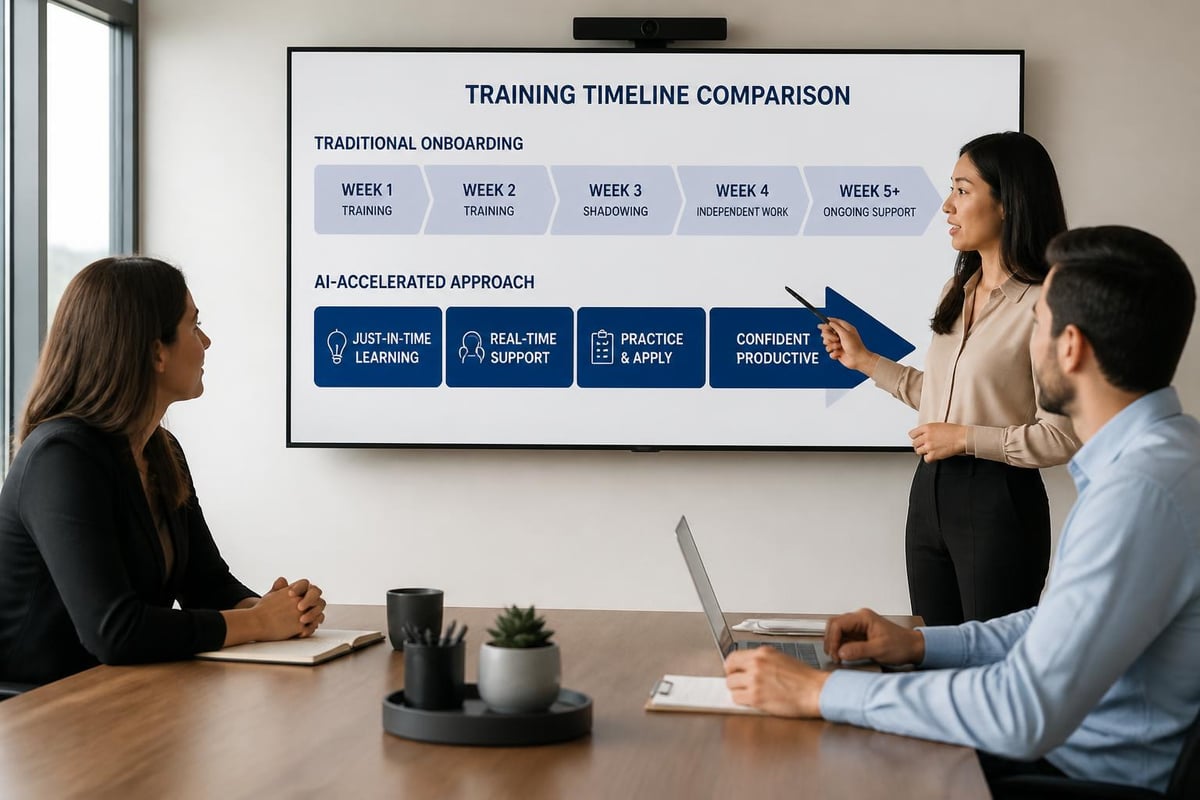
The traditional agent customer care training cycle extends across weeks or months, during which new hires gradually build product knowledge and develop communication skills. AI agents compress this timeline by providing just-in-time learning during actual customer interactions. New representatives gain confidence faster when they know intelligent systems will prevent critical errors and suggest appropriate responses.
Training efficiency gains translate directly into improved CSAT scores because customers interact with capable agents sooner. The typical performance gap between novice and experienced representatives narrows considerably when AI assistance provides institutional knowledge to every team member. Organizations deploying AI-enhanced training report 40% faster time-to-proficiency for new hires.
Structured Onboarding with AI Support
- Initial product exposure: AI agents surface relevant information as trainees handle supervised calls, reinforcing knowledge retention
- Real-time correction: Systems identify procedural errors immediately and suggest corrections before customers notice
- Performance analytics: Detailed interaction analysis reveals specific skill gaps requiring targeted coaching
- Gradual independence: AI assistance scales down as agents demonstrate competency in specific areas
- Continuous learning: Ongoing knowledge updates reach all agents simultaneously through AI systems
This structured approach ensures service quality remains high even during periods of rapid team expansion. For businesses scaling operations through call center outsourcing companies, AI-assisted training represents a competitive differentiator that maintains brand consistency across global teams.
The best practices for training agents to deliver great customer service emphasize First Call Resolution as a primary focus area. AI agents directly support this objective by ensuring representatives have comprehensive information access during every interaction.
Handling Difficult Customer Interactions
Angry or frustrated customers present the greatest challenge to maintaining high CSAT scores in agent customer care environments. These emotionally charged interactions require agents to balance empathy with efficiency while navigating company policies that may not fully satisfy customer demands. AI agents provide crucial support during these high-stakes moments.
Sentiment analysis capabilities alert agents and supervisors to escalating frustration before customers explicitly threaten to cancel service or leave negative reviews. This early warning system enables proactive intervention strategies that de-escalate tension. AI systems also suggest de-escalation language patterns proven effective in similar situations, giving agents confidence to address difficult conversations.
The guidance on dealing with angry customers emphasizes staying calm and using active listening techniques. AI agents reinforce these behaviors by monitoring conversation flow and prompting agents to pause, summarize customer concerns, and demonstrate understanding before proposing solutions.
De-escalation Support Features
- Emotion detection: Voice and text analysis identifies frustration, anger, or disappointment in real time
- Response suggestions: Context-aware recommendations for empathetic acknowledgment phrases
- Policy flexibility alerts: Systems identify opportunities for exceptions or goodwill gestures within authorized parameters
- Supervisor escalation: Automatic flagging of interactions requiring management intervention
- Follow-up scheduling: Coordinated callback systems ensure promised actions occur on time
These capabilities transform difficult interactions from CSAT liabilities into opportunities for relationship strengthening. Customers who experience effective problem resolution after initial frustration often become more loyal than those who never encounter issues.
Omnichannel Consistency and AI Orchestration
Modern customers expect seamless experiences across voice, chat, email, SMS, and social media channels. Maintaining consistent agent customer care quality across these diverse platforms challenges even well-trained teams. AI agents excel at orchestrating omnichannel support by maintaining conversation context and customer history regardless of communication method.
When a customer initiates contact via chat, escalates to phone, and follows up through email, AI systems ensure each agent has complete interaction history and current issue status. This continuity eliminates the frustrating experience of repeatedly explaining problems to different representatives. Understanding what omnichannel customer service means reveals why this seamless approach drives CSAT improvements.
Focus Services delivers omnichannel customer care outsourcing designed to support growing brands across voice, chat, email, SMS, and social media channels, with dedicated contact center teams operating as a seamless extension of businesses to provide consistent support across every touchpoint.
Channel-Specific AI Adaptations
| Channel | AI Agent Function | CSAT Impact |
|---|---|---|
| Voice | Real-time transcription, sentiment analysis, knowledge surfacing | Faster resolution, reduced transfers |
| Chat | Suggested responses, auto-complete, link insertion | Shorter wait times, accurate information |
| Draft generation, tone analysis, priority routing | Professional consistency, timely responses | |
| Social Media | Brand voice adherence, public sentiment monitoring | Reputation protection, engagement quality |
The orchestration layer ensures agents maintain appropriate communication styles for each channel while delivering factually consistent information. A customer receiving formal email responses and conversational chat interactions experiences coherent support rather than fragmented service from seemingly unrelated teams.

Performance Metrics and Continuous Improvement
AI agents generate unprecedented visibility into agent customer care performance through comprehensive interaction analysis. Every conversation becomes a data source for identifying improvement opportunities, validating training effectiveness, and recognizing top performers. This analytical capability drives continuous CSAT enhancement through evidence-based optimization.
Traditional quality assurance programs evaluate small interaction samples due to manual review constraints. AI systems analyze 100% of customer contacts, identifying patterns that sample-based approaches miss. Managers gain insights into common customer pain points, frequently asked questions requiring better documentation, and specific agents needing targeted coaching.
The customer service tips for better support include establishing clear guidelines and ensuring comprehensive product knowledge. AI analytics reveal precisely where guidelines require clarification and which knowledge gaps most frequently impact customer satisfaction.
Key Performance Indicators Enhanced by AI
- Average handle time trends: Identify efficiency improvements without sacrificing quality
- Transfer rate analysis: Reveal knowledge gaps requiring additional training
- CSAT correlation factors: Determine which behaviors most strongly predict satisfaction
- Compliance adherence: Ensure regulatory requirements met across all interactions
- Script effectiveness: Compare conversational approaches to optimize communication strategies
This measurement infrastructure supports data-driven management decisions rather than intuition-based interventions. When CSAT scores decline for specific interaction types, managers can quickly identify contributing factors and implement targeted solutions.
Balancing Automation and Human Connection
The most successful agent customer care implementations recognize that AI agents should enhance rather than eliminate human judgment and empathy. Customers value efficiency but also need genuine understanding during complex or emotional situations. The optimal balance automates routine tasks while preserving human connection for moments that matter.
Simple inquiries like password resets, order status checks, and basic troubleshooting can be fully automated through AI agents without negatively impacting CSAT. These routine interactions represent 60-70% of typical contact center volume. Automating this work frees human agents to focus on complex problems requiring critical thinking and emotional intelligence.
Best practices for improving customer experience in call centers emphasize training agents for empathy and active listening. AI systems amplify these human skills by removing administrative burdens and providing information support that allows agents to concentrate on relationship-building rather than data retrieval.
Interaction Routing Intelligence
- Complexity assessment: AI evaluates incoming contacts and routes simple issues to automated systems
- Customer value recognition: High-lifetime-value customers receive priority human agent access
- Emotional state detection: Frustrated customers bypass automation and reach empathetic representatives
- Skill-based matching: Specialized inquiries route to agents with relevant expertise
- Preference learning: Systems remember individual customer channel and communication style preferences
This intelligent routing ensures customers receive appropriate support levels based on their specific needs and situations. The efficiency gains from automation fund investments in premium human support for interactions where personal connection drives satisfaction.
Implementing AI Agents in Existing Operations
Transitioning from traditional agent customer care to AI-enhanced operations requires careful change management to maintain service quality during implementation. Organizations that rush deployment without adequate preparation often experience temporary CSAT declines as agents adapt to new workflows. Successful implementations follow structured approaches that prioritize agent buy-in and incremental capability rollout.
Agent resistance represents the primary implementation challenge, as team members may perceive AI systems as job threats rather than productivity tools. Effective change leadership emphasizes how AI assistance makes jobs easier and more rewarding by eliminating frustrating aspects of customer service work. When agents understand that technology handles repetitive tasks while they focus on meaningful problem-solving, adoption accelerates.
The comprehensive call center best practices guide recommends setting clear goals and emphasizing communication during operational changes. These principles apply directly to AI agent implementation projects.
Phased Implementation Approach
| Phase | Duration | Focus Areas | Success Metrics |
|---|---|---|---|
| Pilot | 4-6 weeks | Single team, limited features | Agent satisfaction, technical stability |
| Expansion | 8-12 weeks | Additional teams, enhanced capabilities | CSAT trends, efficiency gains |
| Optimization | Ongoing | Refinement based on performance data | ROI achievement, quality consistency |
This staged approach allows organizations to validate technology effectiveness, refine configurations based on actual usage patterns, and build organizational confidence before full-scale deployment. Early wins from pilot programs create momentum and demonstrate tangible benefits to skeptical stakeholders.
Future-Proofing Agent Customer Care Strategy
The trajectory of AI development suggests that agent assistance capabilities will continue advancing rapidly throughout 2026 and beyond. Organizations building agent customer care strategies must balance current needs with future technology evolution. Flexible platforms that accommodate emerging capabilities without requiring complete replacement protect long-term investments.
Interoperability with existing contact center infrastructure represents a critical selection criterion for AI agent solutions. Systems that integrate seamlessly with current CRM platforms, workforce management tools, and quality assurance applications deliver faster time-to-value than those requiring extensive customization. The AI agent solutions landscape continues evolving as providers enhance integration capabilities and expand feature sets.
Looking ahead, natural language processing improvements will enable more sophisticated conversation understanding, while predictive analytics will help agents anticipate customer needs before explicit requests occur. Organizations establishing AI-enhanced agent customer care foundations today position themselves to adopt these advancing capabilities as they mature.
Emerging Capabilities on the Horizon
- Proactive outreach: AI identifies at-risk customers and suggests preventive contact strategies
- Emotional intelligence advancement: More nuanced detection of complex emotional states beyond basic sentiment
- Personalization at scale: Individual customer preference learning and communication style adaptation
- Cross-functional coordination: Integration with sales, technical support, and billing systems for comprehensive assistance
- Continuous learning systems: AI agents that improve through interaction observation without manual programming
These developments will further compress the performance gap between average and exceptional agent customer care delivery. Early adopters who build organizational competency in AI-augmented service now will capture competitive advantages that late movers struggle to replicate.
Measuring Return on Investment
Finance and operations leaders evaluating AI agent investments require clear ROI projections based on realistic assumptions. The business case for enhanced agent customer care extends beyond direct cost savings to include revenue protection through improved retention and expansion opportunities from satisfied customers. Comprehensive analysis captures both tangible and strategic value.
Hard cost reductions emerge from improved efficiency metrics. When average handle time decreases by 25% through AI assistance, contact centers handle more volume with existing staff or reduce headcount through attrition. Quality improvements reduce repeat contacts, further lowering operational costs. Training expense reductions compound these savings as new agents reach productivity faster.
CSAT improvement value proves more difficult to quantify but represents substantial financial impact. Research consistently demonstrates that satisfied customers exhibit higher retention rates, generate more referrals, and show greater willingness to purchase additional products or services. A 15-point CSAT increase might translate into 5% better retention, producing millions in preserved revenue for mid-sized operations.
ROI Calculation Framework
- Efficiency savings: Reduced AHT × hourly cost × annual interaction volume
- Quality cost avoidance: Decreased repeat contacts × cost per interaction
- Training expense reduction: Faster time-to-proficiency × new hire volume × training cost
- Revenue preservation: CSAT improvement × retention impact × customer lifetime value
- Capacity expansion: Additional volume handled without proportional cost increase
Most organizations implementing AI-enhanced agent customer care achieve payback within 12-18 months, with ongoing annual returns exceeding 200% of initial investment. These economics explain the rapid adoption rates across call center operations in competitive industries.
AI agents are fundamentally transforming agent customer care by amplifying human capabilities and driving measurable CSAT improvements across contact center operations. Organizations that strategically implement these technologies gain competitive advantages through superior service quality, operational efficiency, and workforce optimization. Focus Services combines AI-enabled workforce optimization with global contact center expertise to help companies deliver exceptional customer experiences while controlling costs, whether you’re scaling startup operations or optimizing enterprise programs across multiple markets.

Leave a Reply
Want to join the discussion?Feel free to contribute!