

Complete Call Center Job Description Guide for 2026
A well-crafted call center job description serves as the foundation for building high-performing customer service teams. Whether you're a business leader looking to expand your support operations or an HR professional tasked with recruiting top talent, understanding the nuances of this role is essential for success. In today's competitive market, a comprehensive job description not only attracts qualified candidates but also sets clear expectations that drive performance and reduce turnover. This guide explores the critical components, responsibilities, qualifications, and best practices for creating effective call center job descriptions.
Essential Components of a Call Center Job Description
Creating an effective call center job description requires a structured approach that covers all critical aspects of the role. The document should provide clarity on daily responsibilities, performance expectations, and growth opportunities within the organization.
Position Overview and Title
The position title should accurately reflect the role's scope and seniority level. Common titles include Call Center Representative, Customer Service Representative, Contact Center Agent, or Customer Support Specialist. This detailed overview of call center representative roles emphasizes the importance of clear position naming conventions.
A strong overview paragraph immediately communicates the role's purpose within the organization. Rather than generic statements, specify how the position contributes to customer satisfaction, revenue generation, or operational efficiency. For businesses scaling their operations through customer care outsourcing services, this context helps candidates understand their impact.
Core Responsibilities and Daily Tasks
The responsibilities section forms the heart of any call center job description. This component should outline both routine duties and special assignments that representatives might encounter.
Primary Customer Interaction Duties:
- Answering inbound calls from customers seeking assistance, information, or support
- Making outbound calls for sales, follow-ups, surveys, or appointment scheduling
- Responding to customer inquiries via email, chat, and social media channels
- Documenting all customer interactions accurately in CRM systems
- Resolving customer complaints with professionalism and efficiency
Administrative and Technical Tasks:
- Meeting daily, weekly, and monthly performance metrics
- Participating in ongoing training sessions and team meetings
- Following established scripts and communication protocols
- Escalating complex issues to supervisors or specialized teams
- Maintaining knowledge of products, services, and company policies

Organizations offering outbound call center solutions should specify whether the role emphasizes sales, lead generation, or appointment setting. This transparency helps candidates determine role fit and reduces early turnover.
Required Qualifications and Skills
An effective call center job description balances essential requirements with preferred qualifications. This approach widens the candidate pool while maintaining quality standards.
Educational Background and Experience
Most call center positions require a high school diploma or equivalent, though some specialized roles may require additional education. Experience requirements typically range from entry-level to two years of customer service experience, depending on the role's complexity.
| Experience Level | Typical Requirements | Common Titles |
|---|---|---|
| Entry-Level | 0-6 months | Call Center Representative, Customer Service Associate |
| Intermediate | 6 months – 2 years | Senior Representative, Support Specialist |
| Advanced | 2-5 years | Team Lead, Quality Assurance Specialist |
| Leadership | 5+ years | Supervisor, Manager, Operations Director |
For companies exploring BPO partnership opportunities, understanding these experience tiers helps match candidates to appropriate positions within the organization's structure.
Technical Competencies
Modern call centers require proficiency with various technologies and platforms. A comprehensive call center job description should specify required technical skills:
- Computer literacy: Typing speed (typically 35-50 WPM), navigation of multiple software applications
- CRM systems: Salesforce, Zendesk, or proprietary customer management platforms
- Communication tools: Multi-line phone systems, VoIP technology, chat platforms
- Data entry: Accurate information input with attention to detail
- Basic troubleshooting: Ability to resolve minor technical issues independently
These various call center roles demonstrate how technical requirements vary across positions. Representatives supporting travel call center outsourcing operations, for example, may need familiarity with booking systems and reservation platforms.
Soft Skills and Personal Attributes
Technical capabilities alone don't guarantee success in call center environments. The most effective representatives possess strong interpersonal and emotional intelligence skills.
Communication Excellence:
- Clear verbal communication with proper pronunciation and grammar
- Active listening skills to understand customer needs fully
- Written communication proficiency for email and chat support
- Ability to adapt tone and approach based on customer personality
- Multilingual capabilities for diverse customer bases
Problem-Solving and Critical Thinking:
- Analytical skills to diagnose customer issues quickly
- Creative thinking to find solutions within policy guidelines
- Decision-making ability for time-sensitive situations
- Resourcefulness when standard procedures don't apply
Emotional Intelligence and Resilience:
- Patience when dealing with frustrated or upset customers
- Empathy to understand customer perspectives and concerns
- Stress management to maintain composure during high-volume periods
- Positive attitude that persists through challenging interactions
Performance Metrics and Expectations
A transparent call center job description includes specific performance metrics that representatives will be measured against. This clarity helps candidates assess whether they can meet expectations and provides a foundation for ongoing evaluation.
Key Performance Indicators
Different organizations prioritize different metrics based on their business objectives. Common KPIs include:
Efficiency Metrics:
- Average Handle Time (AHT): Target time to complete customer interactions
- First Call Resolution (FCR): Percentage of issues resolved without follow-up
- Call abandonment rate: Percentage of callers who hang up before reaching an agent
- After-call work time: Duration spent on post-call documentation
Quality Metrics:
- Customer Satisfaction Score (CSAT): Direct feedback on interaction quality
- Net Promoter Score (NPS): Likelihood of customers recommending the company
- Quality assurance scores: Performance on monitored calls
- Compliance adherence: Following scripts, regulations, and protocols
Productivity Metrics:
- Calls per hour or day: Volume of customer interactions handled
- Schedule adherence: Percentage of time logged in and available
- Occupancy rate: Ratio of active work time to total logged-in time
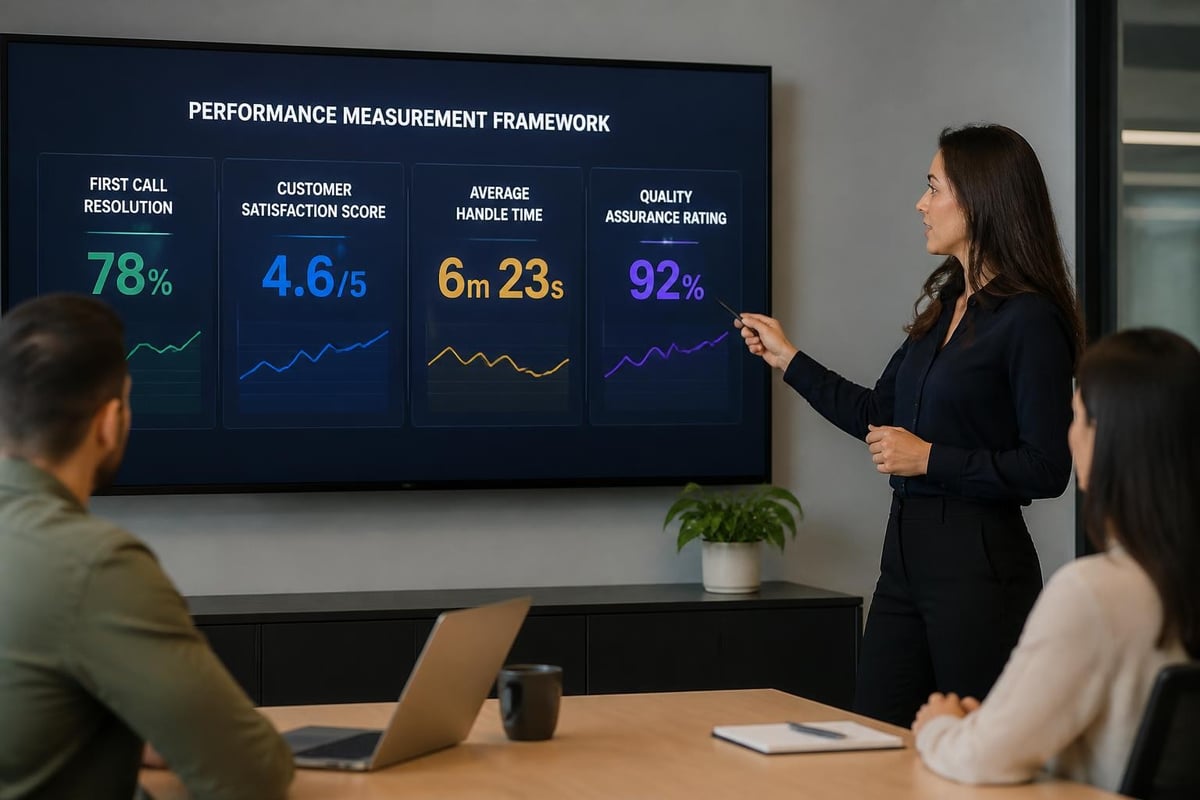
Including these expectations in your call center job description sets realistic performance standards from the outset. Organizations utilizing AI-enabled workforce optimization can leverage technology to support representatives in meeting these benchmarks.
Work Environment and Schedule Requirements
Transparency about working conditions helps candidates make informed decisions about role suitability. This comprehensive look at call center jobs highlights the importance of clearly communicating environmental factors.
Physical and Environmental Considerations
- Workstation setup: Desk-based position with computer, headset, and phone equipment
- Noise levels: Moderate to high ambient noise in shared office environments
- Sedentary nature: Extended periods sitting with occasional standing breaks
- Remote options: Availability of work-from-home or hybrid arrangements
- Physical demands: Ability to wear headsets for extended periods, minimal lifting required
Scheduling Expectations
Call center operations often require coverage beyond standard business hours. A complete call center job description should specify:
Shift Patterns:
- Standard shifts (morning, afternoon, evening, overnight)
- Rotating schedules with varying start times
- Weekend and holiday availability requirements
- On-call or standby expectations
- Shift bidding processes based on seniority
Flexibility Requirements:
- Overtime availability during peak periods
- Short-notice schedule changes to meet business needs
- Seasonal volume fluctuations requiring adjusted hours
- Training periods that may differ from regular schedules
Compensation and Benefits Structure
While some organizations prefer separate compensation discussions, including salary ranges and benefits in your call center job description attracts more qualified candidates and demonstrates transparency.
Salary and Wage Information
Compensation varies significantly based on geography, experience, and role specialization. Providing ranges helps set appropriate expectations:
| Position Type | Typical Hourly Range | Annual Equivalent |
|---|---|---|
| Entry-Level Representative | $14 – $18 | $29,000 – $37,000 |
| Experienced Representative | $18 – $24 | $37,000 – $50,000 |
| Specialized Representative | $22 – $30 | $46,000 – $62,000 |
| Team Lead/Supervisor | $28 – $38 | $58,000 – $79,000 |
Benefits and Incentives
Comprehensive benefits packages strengthen your call center job description's appeal:
- Health coverage: Medical, dental, and vision insurance options
- Retirement plans: 401(k) matching or pension programs
- Paid time off: Vacation days, sick leave, and personal days
- Performance bonuses: Individual and team-based incentive programs
- Career development: Training programs, tuition reimbursement, advancement opportunities
- Work-life balance: Flexible scheduling, remote work options, employee assistance programs
Career Growth and Development Opportunities
The most compelling call center job descriptions emphasize advancement potential and professional development. This career outlook for call center representatives shows the importance of growth pathways in attracting top talent.
Advancement Pathways
Clearly defined career progression motivates employees and reduces turnover:
Lateral Development:
- Cross-training in different product lines or services
- Specialization in technical support, sales, or retention
- Movement between inbound and outbound teams
- Transfer to back office BPO operations for variety
Vertical Advancement:
- Entry-level representative
- Senior representative or subject matter expert
- Quality assurance analyst or trainer
- Team lead or supervisor
- Operations manager or director
Training and Skill Development
Professional development programs demonstrate organizational investment in employees:
- Initial onboarding: Comprehensive product knowledge and system training
- Ongoing education: Regular updates on new products, policies, and technologies
- Soft skills development: Communication, conflict resolution, and leadership training
- Certification programs: Industry-recognized credentials that enhance marketability
- Mentorship opportunities: Pairing with experienced representatives for guidance
Organizations partnering with providers like Focus Services benefit from established training frameworks that accelerate representative readiness and performance.
Industry-Specific Considerations
Tailoring your call center job description to industry requirements ensures candidates understand the unique demands of your business sector.
Specialized Knowledge Requirements
Different industries require specific expertise:
- Healthcare: HIPAA compliance, medical terminology, insurance processing
- Financial services: PCI compliance, financial regulations, fraud detection
- Technology: Product troubleshooting, technical terminology, remote support tools
- Retail/E-commerce: Order processing, returns management, inventory systems
- Travel and hospitality: Booking systems, destination knowledge, itinerary management
Regulatory and Compliance Factors
Certain industries impose additional requirements on call center representatives:
Licensing and Certifications:
- Insurance sales licenses for representatives selling coverage
- Financial services registrations for investment-related discussions
- Healthcare certifications for medical advice or triage services
- Industry-specific training completion requirements
Compliance Obligations:
- Do Not Call registry adherence for outbound campaigns
- Recording disclosure requirements for call monitoring
- Data privacy regulations (GDPR, CCPA) for customer information
- Fair debt collection practices for collections operations

Application Process and Next Steps
The final section of your call center job description should guide interested candidates through the application process and set expectations for hiring timeline.
Required Application Materials
Specify exactly what candidates should submit:
- Completed online application form
- Current resume highlighting relevant experience
- Cover letter explaining interest and qualifications (if required)
- References from previous employers (quantity specified)
- Work authorization documentation
- Assessment or skills tests as applicable
Hiring Process Overview
Transparency about the recruitment process helps candidates prepare:
- Initial screening: Resume review and phone screening (1-3 days)
- Assessment phase: Skills testing, typing tests, or personality assessments (3-5 days)
- First interview: Phone or video interview with recruiter or hiring manager (5-7 days)
- Second interview: In-person or panel interview with operations team (7-10 days)
- Background check: Employment verification, criminal background, drug screening (10-14 days)
- Job offer: Conditional offer and onboarding coordination (14-21 days)
This comprehensive job description resource provides additional guidance on structuring the application section effectively.
Equal Opportunity Statement
Every call center job description should include a commitment to equal employment opportunity:
"We are an equal opportunity employer and value diversity in our workforce. We do not discriminate on the basis of race, religion, color, national origin, gender, sexual orientation, age, marital status, veteran status, or disability status. All employment decisions are based on qualifications, merit, and business need."
Best Practices for Optimizing Job Descriptions
Creating an exceptional call center job description requires attention to language, formatting, and strategic positioning.
Writing Style and Tone
- Use active voice and action verbs to describe responsibilities
- Avoid jargon or acronyms without explanation
- Keep sentences concise and scannable
- Use bullet points for easy reading
- Maintain consistent formatting throughout
Length and Detail Balance
The ideal call center job description provides comprehensive information without overwhelming readers. Aim for:
- 600-1,000 words total length
- 5-8 key responsibilities
- 4-6 required qualifications
- 3-5 preferred qualifications
- Clear section headers for easy navigation
SEO and Distribution Strategy
Optimize your job description for search engines and job boards:
- Include relevant keywords naturally (call center, customer service, representative)
- Use location-specific terms for local hiring
- Post on major job boards and company career pages
- Share on social media platforms and professional networks
- Update regularly to maintain visibility and relevance
Understanding typical call center organizational structures helps position roles appropriately within your company hierarchy.
Crafting a comprehensive call center job description requires balancing detailed role expectations with appealing career opportunities to attract top talent. By clearly outlining responsibilities, qualifications, performance metrics, and growth potential, organizations build stronger teams that deliver exceptional customer experiences. Focus Services provides scalable call center outsourcing solutions across the United States, El Salvador, the Philippines, and South Africa, helping businesses build high-performing customer service teams with proven recruitment and training frameworks. Whether you're expanding existing operations or launching new customer care programs, partnering with experienced providers ensures you have the talent and infrastructure to succeed.