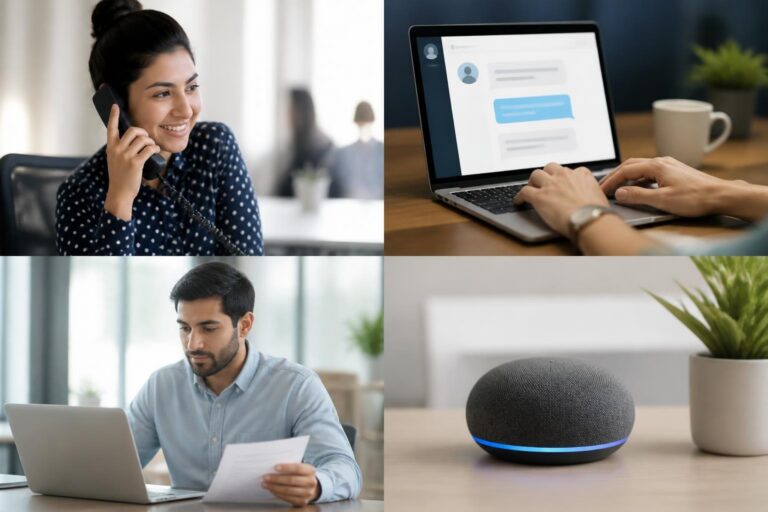

Call Center Jobs From Home: Remote Roles to Apply For
Call center jobs from home are real, widely available, and usually open to applicants with a high school diploma, a quiet space, a reliable internet connection and a working headset. Most remote agent roles fall into four categories: inbound customer care, technical support, outbound sales and back-office support, with pay that generally tracks the national median for customer service representatives. This guide covers what the roles involve, what employers expect, what the market looks like in 2026, and the equipment and employer programs worth considering before you apply.
What remote call center roles involve
A remote call center role is a customer-facing position handled from a home office, using company-provided software and a secure connection. Agents answer or place calls, resolve issues, process orders and document each interaction in a CRM.
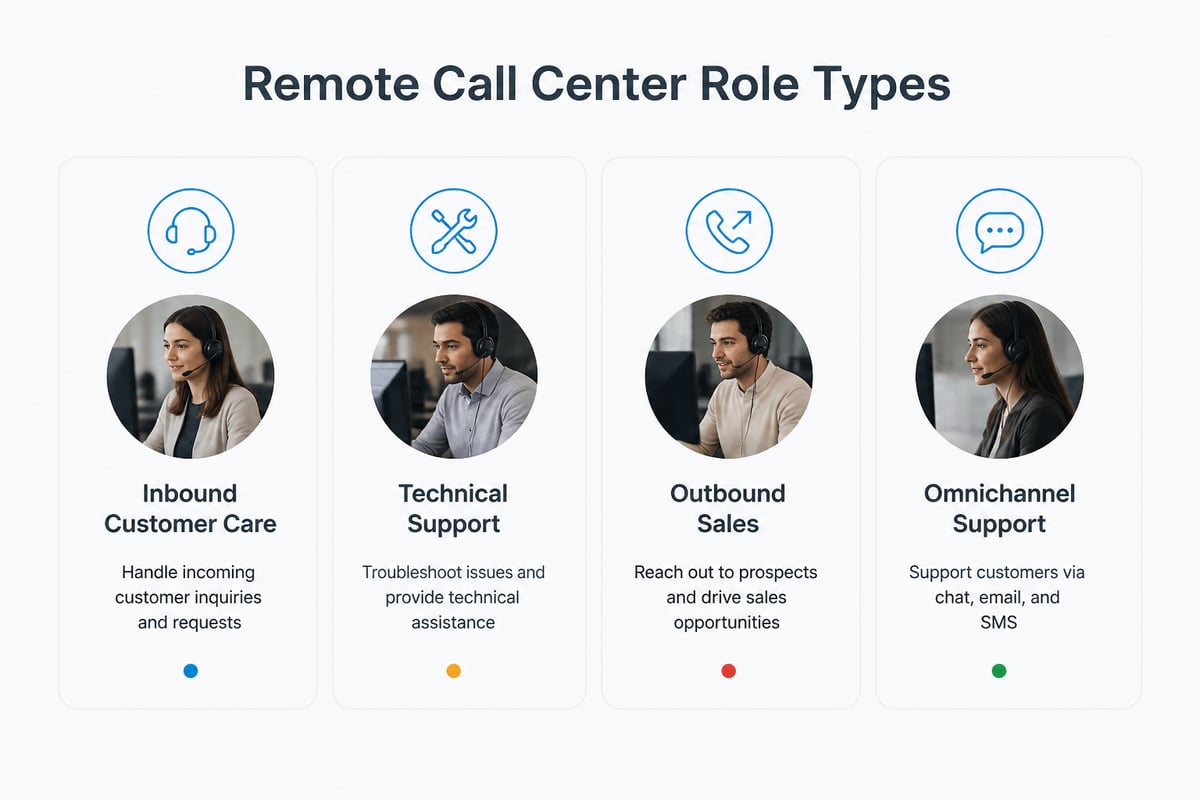
The main role types differ in pace and skill requirements:
- Inbound customer care: answering billing, account and service questions for telecom, utility, travel, financial services or e-commerce brands.
- Technical support: troubleshooting devices, software or connectivity, often with scripted diagnostic flows.
- Outbound sales and lead generation: placing calls, qualifying prospects and setting appointments, usually with a commission or bonus structure.
- Omnichannel support: handling chat, email, SMS and social messaging alongside or instead of voice.
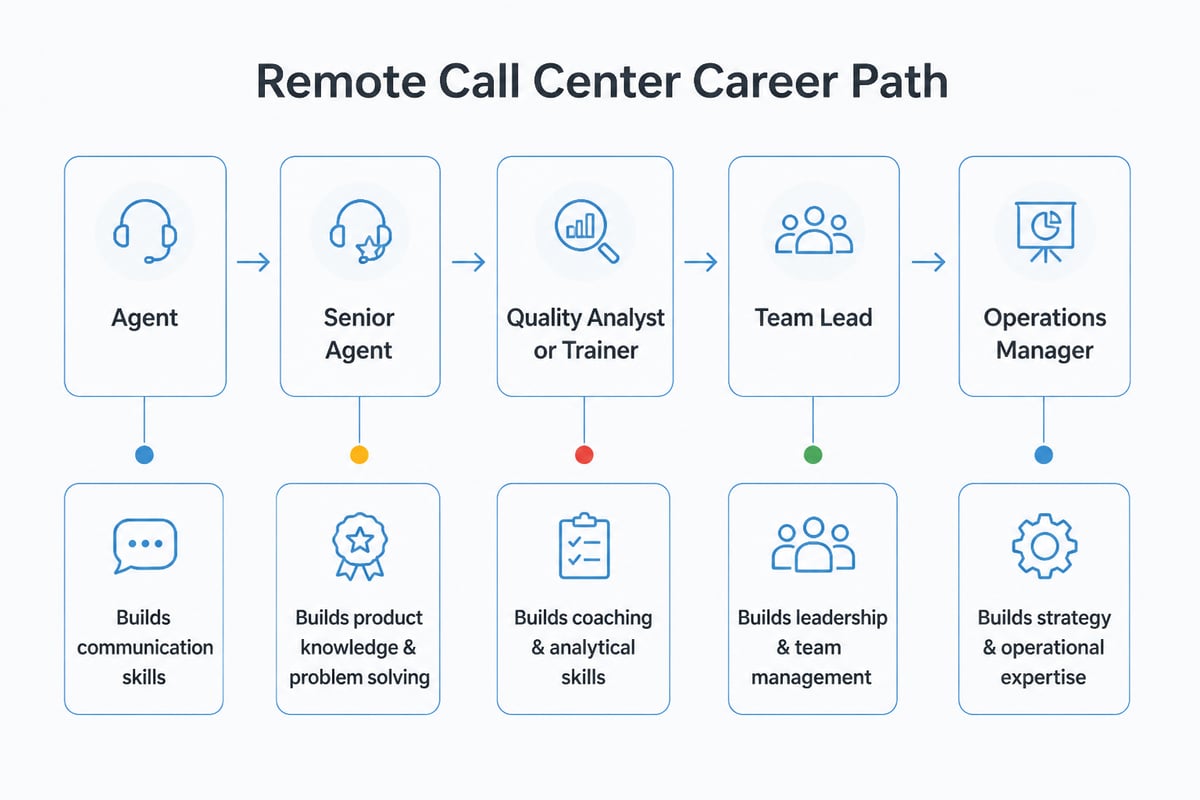
Many employers also hire for quality assurance, workforce management and team lead positions, which are common next steps for agents with a year or more of tenure. Focus Services publishes a call center job description that shows how these duties are typically defined.
What call center jobs from home pay and how the market looks in 2026
Pay for remote agents generally follows the broader customer service representative market. The U.S. Bureau of Labor Statistics reports a median annual wage of $44,770, or $21.53 per hour, in May 2025. Actual hourly rates vary by industry, language skills, shift and whether the role carries a sales incentive.
The same source shows a market that is shrinking but still large. The occupation held about 2,666,000 jobs in 2025, and employment is projected to decline 5% from 2025 to 2035. Even so, about 289,500 openings are projected each year on average over that period, driven largely by workers leaving the occupation or moving to other roles.
For applicants, the practical reading is that openings remain plentiful while automation absorbs routine contacts. Agents who handle complex, emotionally sensitive or revenue-generating conversations are the least exposed to that shift.
Requirements to apply
Entry barriers are low, which is why these roles attract career changers and first-time remote workers. According to the Bureau of Labor Statistics, customer service representatives typically need a high school diploma or equivalent, related work experience is not required, and employers generally provide short-term on-the-job training.
Employers screening remote candidates commonly look for:
- Clear spoken English, and bilingual ability (often English and Spanish) for premium roles
- Typing speed and comfort navigating several screens at once
- A private, quiet workspace and a wired or strong Wi-Fi connection
- Availability for scheduled shifts, including evenings or weekends
- Reliable computer hardware that meets the employer's security standards
Some employers supply equipment; others expect agents to bring their own headset. That makes the choice of headset a practical part of your application readiness.
Headsets and employer programs worth considering
The items below cover the headsets agents most often buy for home use, plus two outsourcing programs relevant to the employers that hire remote agents. Prices are approximate and may have changed since the research was done.
1. Plantronics Blackwire C3220 USB-A Headset
The Plantronics Blackwire C3220 is a wired USB-A headset built for call-heavy work at an entry-level price. It weighs 92 g and uses a unidirectional noise-cancelling boom microphone. The approximate price is $37.00. Because the unidirectional microphone is designed to pick up the voice directly in front of it, it helps limit background sound such as a television in the next room, which matters on recorded customer calls. The wired USB-A connection also avoids battery management and pairing steps, so the headset works as soon as it is plugged in. A laptop that offers only USB-C ports would need an adapter.
- Best suited to: budget-conscious remote agents who need a lightweight wired headset for call-heavy work and are covering the cost themselves.
- Verdict: the most economical way to meet a typical employer headset requirement.
2. Jabra Evolve2 30 SE Wired Headset
The Jabra Evolve2 30 SE is a lightweight wired headset that connects by USB-A and USB-C, which covers most laptops without an adapter. It weighs 125 g, uses two-microphone technology and includes a boom-flip mute. The approximate price is $75.75. The boom-flip mute lets an agent silence the microphone by raising the boom arm, a quick physical gesture that is easier than hunting for an on-screen button mid-call. Having both connector types suits agents who switch between a personal laptop and an employer-issued machine. The two-microphone design is aimed at keeping the agent's voice clear when household noise is present.
- Best suited to: agents who prefer a lightweight wired headset for frequent calls and work across different computers.
- Verdict: a step up in microphone handling and connector flexibility for a moderate price.
3. Jabra Evolve2 65 MS Wireless Headset
The Jabra Evolve2 65 MS is a premium wireless headset that pairs through a USB-A Link380a dongle. It weighs 175 g, uses a three-microphone noise-cancelling array and offers a 37-hour battery. The approximate price is $244.99. At 37 hours, the battery can cover several full workdays between charges, so a quick top-up on a Friday evening is enough to carry an agent through a typical week. The wireless connection allows an agent to stand, stretch or step away briefly without dropping a call, which helps during long queues. At 175 g it is the heaviest option here, so comfort over an eight-hour shift is worth confirming before buying.
- Best suited to: remote agents on long shifts who want freedom to move and need strong noise control in a shared household.
- Verdict: the strongest all-day comfort and battery option here, at a price most agents will only pay if their employer reimburses it.
4. Jabra Engage 55 SE
The Jabra Engage 55 SE is a DECT wireless headset used with a Link 400 adapter. It offers 13 hours of talk time, open-office microphone qualification and hearing safeguards. Its current price is not confirmed here. DECT is a dedicated wireless standard commonly chosen for contact center headsets, and it is a different approach from the Bluetooth-style pairing found on many consumer products. The open-office microphone qualification signals that the microphone is intended for environments with competing voices, which also applies to a home shared with family. The hearing safeguards address the cumulative exposure that comes with full-time call work, and 13 hours of talk time comfortably covers a standard shift.
- Best suited to: call-intensive agents who need wireless range and clear microphone performance in busy environments.
- Verdict: a dependable choice for agents who prioritize range and hearing protection over price.
5. Customer Care Outsourcing from Focus Services
Customer Care Outsourcing is a service in which dedicated teams handle omnichannel support across voice, chat, email, SMS and social media. For job seekers, programs like this reflect the kind of work outsourced remote agents perform. For employers in telecom, utilities, travel, financial services and e-commerce, it is a way to add high-volume support capacity. Focus Services has more than 30 years in the sector and serves companies across Fortune 100 clients, with delivery centers aligned to U.S. business hours or to cost and timezone needs. An applicant reading the service description can infer the daily work: billing questions, account changes and service issues arriving across several channels, often within one shift. For hiring companies, the practical decision is which channels to cover first and which hours need live agents. Matching delivery center location to customer timezone is a common way to control cost without sacrificing coverage.
- Best suited to: mid-market and enterprise teams that need high-volume customer care coverage across several channels.
- Verdict: a fit for companies scaling a support operation, not for individual buyers. Details are on the Customer Care Outsourcing page.
6. Sales Call Center Outsourcing from Focus Services
Sales Call Center Outsourcing covers inbound, outbound, lead generation and appointment setting programs run by dedicated sales teams. It is relevant to anyone weighing outbound sales roles, because it shows how structured sales programs operate. For the businesses that buy it, the program can scale from 5 agents to enterprise-scale deployments, with dedicated leadership accountable for operations and AI-driven workforce optimization working alongside experienced human agents. For applicants, the four program types map to distinct jobs: inbound agents take orders and questions, outbound agents qualify prospects, and appointment setters hand warm leads to field or closing teams. A company with seasonal demand, such as travel or e-commerce, can start small at 5 seats and add capacity as volume grows. Dedicated leadership matters because sales programs depend on consistent coaching and call review to hold conversion rates steady.
- Best suited to: companies in e-commerce, financial services and travel that want a managed sales team without building one in-house.
- Verdict: appropriate for organizations that need sales coverage from 5 seats upward. Program specifics are on the Sales Call Center Outsourcing page.
Side-by-side comparison
| Item | Type | Key specs | Approx. price | Best for |
|---|---|---|---|---|
| Plantronics Blackwire C3220 | Wired headset | 92 g, USB-A, noise-cancelling boom mic | $37.00 | Budget-conscious agents |
| Jabra Evolve2 30 SE | Wired headset | 125 g, USB-A and USB-C, two mics, boom-flip mute | $75.75 | Frequent calls on varied computers |
| Jabra Evolve2 65 MS | Wireless headset | 175 g, three mics, 37-hour battery | $244.99 | Long shifts, premium comfort |
| Jabra Engage 55 SE | DECT wireless headset | 13-hour talk time, Link 400 adapter | Not shown in search results | Range and hearing safeguards |
| Customer Care Outsourcing | Service | Voice, chat, email, SMS, social | Contact provider | High-volume support programs |
| Sales Call Center Outsourcing | Service | Inbound, outbound, lead generation, appointment setting | Contact provider | Managed sales teams |
How to find and apply for remote openings
Start where the work is posted: employer career pages, outsourcing providers and general job boards filtered to remote. Outsourcing companies hire in volume, so they often run continuous recruiting. Focus Services lists its own call center careers and a dedicated page on call center work from home.
A practical application sequence:
- Prepare a one-page resume that highlights customer-facing experience, typing speed and any second language.
- Confirm your internet speed and test your headset before any recorded or live interview.
- Apply to several roles at once, since hiring cycles are short and training classes fill.
- Ask about shift schedules, paid training, equipment policy and the performance metrics used in reviews.
Making a remote setup work long term
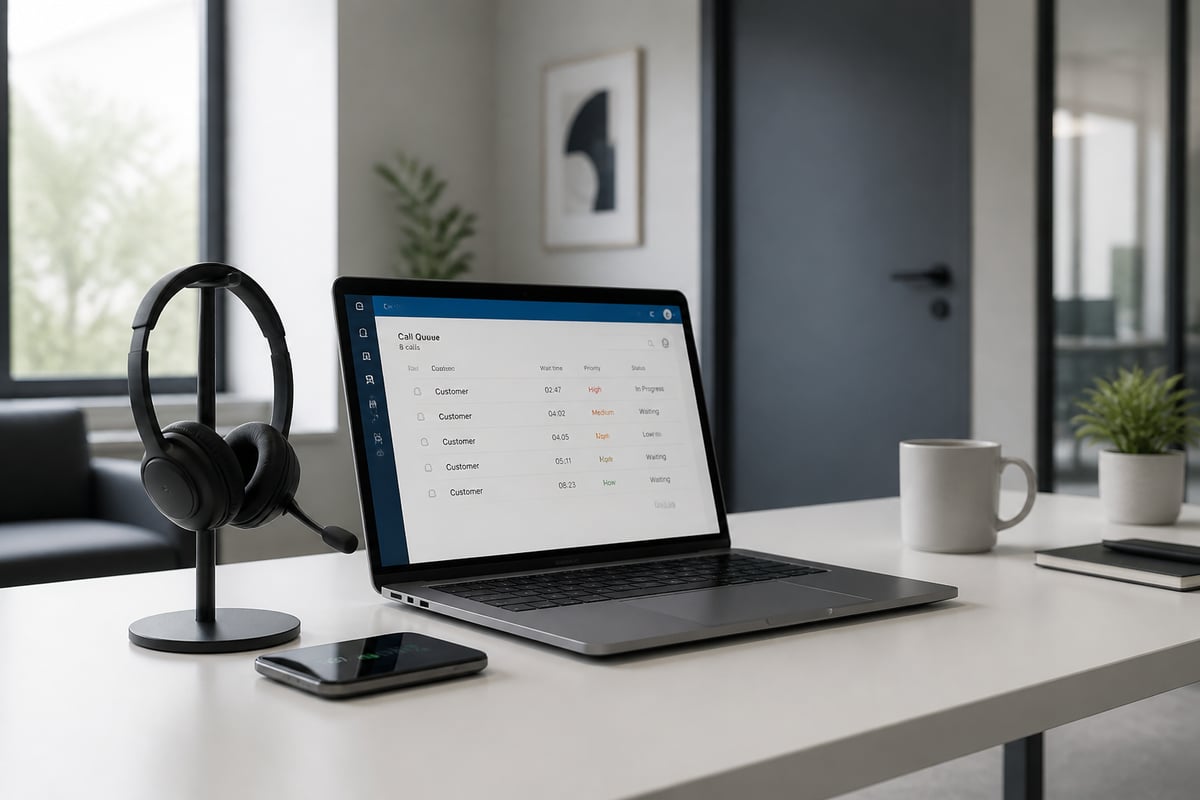
Home-based agents are measured on the same quality and efficiency metrics as on-site teams, so the environment matters. Programs commonly pair call monitoring with call center quality assurance reviews and structured coaching. Keeping a dedicated workspace, a consistent schedule and backup connectivity reduces dropped calls and missed shifts.
Agents who document results, such as resolution rates or customer satisfaction scores, are better positioned for team lead, trainer and quality roles. The Focus Services overview of its offerings also shows the range of functions, from customer care to technical support and back-office work, that exist beyond the front-line queue.
Common challenges and how to handle them
Remote agents report the same issues repeatedly, and most have practical fixes.
- Isolation: schedule regular check-ins with a team lead or peer group.
- Noise and interruptions: a noise-cancelling microphone, a closed door and posted shift hours help.
- Burnout from difficult calls: use breaks fully and ask for coaching on de-escalation.
- Technical failures: keep a backup connection, such as a phone hotspot, and know the employer's escalation path.
If you are hiring rather than applying, your next step is to define the call volume, channels and hours you need covered, then request a staffing model that matches them. Focus Services can help, from Customer Care Outsourcing for omnichannel support to dedicated sales teams, with delivery centers in the United States, El Salvador, the Philippines and South Africa, and you can Schedule a Discovery Call with the team to discuss a program built around your volumes and timezone needs.