

Customer Service and Outsourcing: A Strategic Guide
The relationship between customer service and outsourcing has evolved dramatically over the past decade. What once represented a simple cost-cutting measure has transformed into a sophisticated strategic lever that companies use to enhance customer experience, access specialized talent, and achieve operational flexibility. In 2026, businesses face mounting pressure to deliver exceptional support across multiple channels while managing escalating labor costs and staffing challenges. This reality has positioned outsourcing not as a compromise but as a competitive advantage for organizations willing to partner strategically with the right providers.
Understanding the Modern Landscape of Customer Service and Outsourcing
Contents
- 1 Understanding the Modern Landscape of Customer Service and Outsourcing
- 2 Evaluating Quality Standards in Outsourced Customer Service
- 3 Selecting the Right Outsourcing Partner
- 4 Implementing Successful Transitions
- 5 Leveraging Technology for Enhanced Performance
- 6 Managing Cultural Alignment and Brand Consistency
- 7 Measuring Return on Investment
- 8 Addressing Common Concerns and Misconceptions
- 9 Optimizing Long-Term Partnership Performance
- 10 Scaling Operations with Strategic Outsourcing
Customer service and outsourcing intersect at a critical point where business economics meet customer expectations. The global market for contact center outsourcing reached unprecedented levels in 2025, with projections indicating continued growth through 2030. This expansion reflects a fundamental shift in how executives view external partnerships.
Traditional objections centered on quality concerns and brand control have given way to data-driven conversations about performance metrics, technology integration, and customer satisfaction improvements. Companies now recognize that specialized outsourcing providers often deliver superior results compared to internal teams, particularly when scaling operations or expanding into new markets.
Key Drivers Behind Outsourcing Decisions
Several factors converge to make outsourcing an attractive option for customer service operations:
- Cost optimization that extends beyond labor arbitrage to include infrastructure, technology, and training investments
- Access to specialized expertise in specific industries, customer segments, or support channels
- Scalability that allows rapid expansion or contraction based on seasonal demand or business growth
- Geographic coverage enabling 24/7 support across multiple time zones and languages
- Technology access to enterprise-grade platforms without capital expenditure
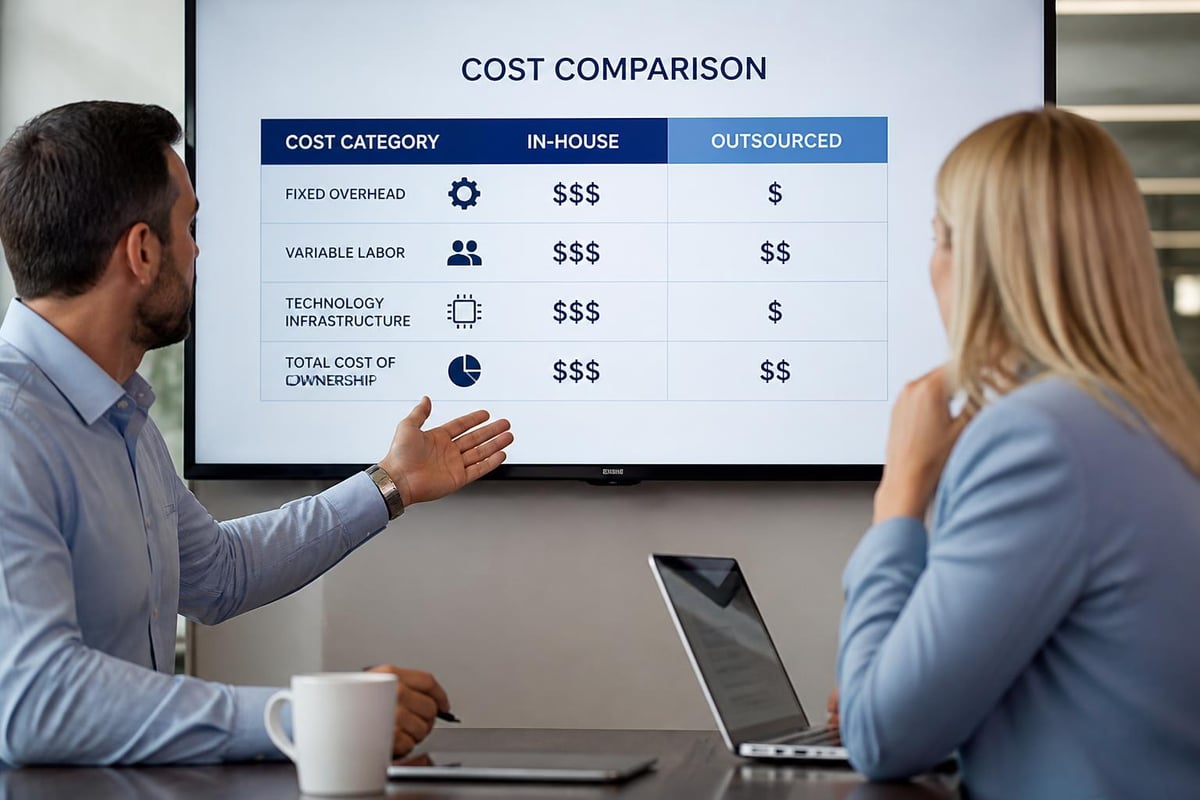
The financial case remains compelling. Internal contact center operations typically require significant fixed costs in real estate, technology licenses, management overhead, and human resources infrastructure. Outsourcing converts these fixed costs into variable expenses that flex with business needs.
Evaluating Quality Standards in Outsourced Customer Service
Quality concerns represent the most significant barrier preventing companies from pursuing customer service and outsourcing partnerships. These concerns are not unfounded, as poorly executed outsourcing arrangements can damage customer relationships and brand reputation. However, maintaining high-quality customer service when outsourcing requires deliberate planning rather than avoiding outsourcing altogether.
The foundation of quality outsourcing begins with clearly defined standards and measurable expectations. Vague directives about “good service” create inconsistency and frustration on both sides of the partnership. Instead, successful arrangements specify exact metrics, response protocols, escalation procedures, and brand voice guidelines.
Establishing Performance Benchmarks
Effective quality control requires quantifiable metrics that both parties understand and accept. Consider implementing these measurement frameworks:
| Metric Category | Key Indicators | Target Ranges |
|---|---|---|
| Response Time | First response speed, resolution time | Under 60 seconds, under 24 hours |
| Quality Scores | QA monitoring, customer satisfaction | Above 90%, above 4.5/5.0 |
| Efficiency | Handle time, first contact resolution | 6-8 minutes, above 75% |
| Availability | Service level, abandonment rate | 80/20 standard, under 5% |
These benchmarks should align with your internal performance history and industry standards. Unrealistic targets create frustration and turnover within outsourced teams, ultimately degrading the customer experience you seek to protect.
Methods to maintain quality control extend beyond metrics to include regular calibration sessions, mystery shopping programs, and joint quality reviews. The most successful partnerships treat quality as a collaborative objective rather than a compliance exercise.
Selecting the Right Outsourcing Partner
The provider selection process determines whether customer service and outsourcing deliver strategic value or operational headaches. This decision warrants executive attention and rigorous evaluation, as switching costs and relationship disruption make vendor changes expensive and disruptive.
Critical Selection Criteria
Start by assessing providers across multiple dimensions beyond price per contact. A comprehensive guide to outsourcing customer service emphasizes the importance of cultural alignment, technology capabilities, and industry experience.
Geographic considerations influence both cost structure and service delivery. Nearshore locations like El Salvador offer cultural alignment and time zone overlap with North American markets, while offshore destinations like the Philippines provide cost advantages and multilingual capabilities. South African operations excel in serving EMEA markets with native English speakers and cultural familiarity.
Technology infrastructure separates sophisticated providers from basic call centers. Modern customer service requires omnichannel capabilities spanning voice, chat, email, SMS, and social media. Customer Care Outsourcing solutions must integrate seamlessly with your existing CRM, ticketing systems, and knowledge bases to provide agents with complete customer context.
Industry expertise accelerates onboarding and reduces training investment. Providers with experience in your sector understand regulatory requirements, common customer issues, and industry-specific terminology. This background enables faster ramp times and higher quality from day one.

Consider creating a weighted scoring system that reflects your priorities:
- Cultural and brand alignment (25%)
- Technology platform and integration capabilities (20%)
- Relevant industry experience and expertise (20%)
- Cost structure and pricing transparency (15%)
- Geographic presence and language capabilities (10%)
- Scalability and flexibility (10%)
This structured approach prevents decisions based solely on cost while ensuring critical success factors receive appropriate consideration.
Implementing Successful Transitions
The transition from internal to outsourced customer service operations represents a critical risk window where customer experience can deteriorate if not managed properly. A comprehensive outsourcing checklist helps ensure no essential elements get overlooked during implementation.
Phased Rollout Strategies
Successful implementations rarely attempt full cutover in a single transition. Instead, they employ phased approaches that limit risk and enable course correction:
- Pilot program with limited volume or specific product lines
- Shadow period where outsourced team handles contacts while internal team monitors
- Gradual volume transfer increasing week by week based on performance
- Channel-by-channel migration starting with chat or email before voice
- Geographic segmentation launching in specific regions before full deployment
Each phase should include defined success criteria and off-ramps if performance falls below acceptable thresholds. This disciplined approach protects customer experience while building confidence in the partnership.
Knowledge Transfer Best Practices
The quality of knowledge transfer directly impacts agent performance and customer satisfaction. Many organizations underestimate the depth of tribal knowledge their internal teams possess about products, customers, and processes.
Effective knowledge transfer involves multiple formats and reinforcement mechanisms. Written documentation provides reference material but rarely captures nuance and context. Live training sessions enable questions and clarification but don’t scale well. Recorded sessions offer repeatability for new hires but lack interactivity.
The optimal approach combines all three methods with ongoing knowledge updates as products, policies, and procedures evolve. Assign subject matter experts from your internal team to maintain regular contact with outsourced supervisors, providing real-time guidance on complex situations and emerging issues.
Leveraging Technology for Enhanced Performance
Customer service and outsourcing partnerships achieve optimal results when supported by appropriate technology infrastructure. The gap between leading and lagging providers often comes down to their investment in workforce optimization tools, quality monitoring systems, and customer engagement platforms.
Workforce Optimization Tools
Modern contact centers rely on sophisticated workforce management systems that forecast volume, schedule agents, and optimize staffing levels in real-time. These platforms use historical data and predictive algorithms to match capacity with demand, reducing wait times during peaks while controlling costs during valleys.
Quality monitoring extends beyond random call sampling to include speech analytics that evaluate 100% of customer interactions. These systems identify compliance risks, training opportunities, and process improvements that human monitoring would miss due to volume constraints. Sentiment analysis detects customer frustration before situations escalate, enabling proactive intervention.
Artificial Intelligence Integration
AI-enabled capabilities are transforming how outsourced teams operate and deliver value. Chatbots and virtual assistants handle routine inquiries, freeing human agents for complex situations requiring empathy and judgment. Agent assist tools provide real-time suggestions during customer conversations, improving first-contact resolution and reducing handle time.
| Technology Category | Primary Benefits | Implementation Complexity |
|---|---|---|
| Speech Analytics | 100% interaction review, trend identification | Medium |
| Agent Assist | Real-time guidance, faster resolution | Medium-High |
| Chatbots | 24/7 availability, routine inquiry automation | High |
| Workforce Management | Optimal staffing, cost control | Medium |
| Quality Monitoring | Consistent evaluation, coaching insights | Low-Medium |
When evaluating potential partners, assess not just their current technology stack but their roadmap for future capabilities. The pace of innovation in customer service technology means that today’s cutting-edge quickly becomes tomorrow’s baseline expectation.
Managing Cultural Alignment and Brand Consistency
Brand voice and cultural alignment present unique challenges in customer service and outsourcing relationships. Customers should experience consistent interactions whether speaking with internal employees or outsourced agents. Achieving this consistency requires deliberate effort in training, feedback, and ongoing calibration.

Developing Comprehensive Brand Guidelines
Generic communication guidelines produce generic customer interactions. Instead, create detailed brand voice documentation that goes beyond “be friendly” to provide specific examples of preferred language, tone variations for different situations, and cultural context that informs decision-making.
Include actual customer interaction examples demonstrating both excellent and poor brand alignment. These reference points help agents understand subtle distinctions that written descriptions struggle to convey. Update these materials regularly based on customer feedback and quality monitoring insights.
Continuous Calibration Processes
Brand standards evolve as companies grow, products change, and customer expectations shift. Static training creates drift between internal and outsourced teams over time. Combat this through regular calibration sessions where both teams evaluate the same interactions and discuss scoring differences.
These sessions serve dual purposes: ensuring consistent quality standards while identifying areas where guidelines need clarification or updating. Best practices for contact centers emphasize the importance of ongoing training and quality alignment rather than one-time onboarding events.
Successful companies extend calibration beyond quality teams to include actual agents from both internal and outsourced operations. This cross-pollination builds relationships, shares best practices, and reinforces the message that all team members represent a unified brand regardless of employment structure.
Measuring Return on Investment
Executives evaluating customer service and outsourcing partnerships demand clear evidence of value delivery. The business case must extend beyond simple cost comparison to include quality improvements, capacity gains, and strategic flexibility that outsourcing enables.
Comprehensive ROI Framework
Calculate total cost of ownership for both internal and outsourced operations including these often-overlooked factors:
Internal Operations:
- Direct labor costs (wages, benefits, payroll taxes)
- Facilities expense (real estate, utilities, maintenance)
- Technology licensing and infrastructure
- Management and support staff
- Recruitment, training, and attrition replacement
- Quality monitoring and workforce optimization tools
Outsourced Operations:
- Per-contact or per-hour fees
- Implementation and transition costs
- Ongoing management and oversight
- Technology integration expenses
- Contract management and vendor relations
Beyond cost analysis, measure operational improvements that outsourcing enables. Call center outsourcing companies deliver value through faster scaling, extended coverage hours, specialized expertise, and technology access that internal operations struggle to match.
Track customer experience metrics before and after outsourcing implementation. Customer satisfaction scores, net promoter scores, and customer effort scores provide objective evidence of service quality. Research shows that strategic outsourcing partnerships often improve these metrics by providing specialized expertise and better resource allocation.
Addressing Common Concerns and Misconceptions
Despite growing acceptance, customer service and outsourcing still faces persistent misconceptions that prevent some organizations from exploring valuable partnerships. Understanding and addressing these concerns helps executives make informed decisions based on facts rather than outdated assumptions.
Quality Control Concerns
The belief that outsourced service inherently delivers lower quality than internal teams doesn’t withstand scrutiny. Quality depends on provider selection, implementation excellence, and ongoing management rather than employment structure. Many outsourcing providers specialize in specific industries or service types, developing expertise that generalist internal teams cannot match.
Academic research on optimal request resolution policies in outsourced environments demonstrates that properly structured partnerships with appropriate quality controls deliver service levels comparable to or exceeding internal operations. The key lies in treating the outsourcing partner as an extension of your team rather than an external vendor.
Data Security and Compliance
Concerns about data protection and regulatory compliance deserve serious consideration, particularly in regulated industries like healthcare, financial services, and telecommunications. However, reputable outsourcing providers invest heavily in security infrastructure, compliance certifications, and staff training that many companies cannot justify for internal operations.
Evaluate potential partners on their security credentials, compliance history, and contractual protections. Request documentation of SOC 2 audits, PCI DSS compliance, HIPAA certifications, or other relevant standards. Review data handling procedures, employee screening processes, and incident response protocols.
Loss of Control
The perception that outsourcing means surrendering control over customer experience stems from poorly structured partnerships rather than outsourcing itself. Modern service level agreements include detailed performance metrics, quality standards, and governance structures that provide transparency and accountability.
Successful relationships establish regular business reviews, joint improvement initiatives, and collaborative problem-solving rather than arms-length vendor management. This partnership approach maintains strategic control while leveraging the provider’s operational expertise.
Optimizing Long-Term Partnership Performance
The initial implementation represents just the beginning of a customer service and outsourcing relationship. Sustained value delivery requires ongoing optimization, relationship management, and continuous improvement initiatives that evolve with business needs and market conditions.
Performance Review Cadence
Establish structured review cycles at multiple intervals:
- Daily huddles addressing immediate operational issues and volume fluctuations
- Weekly operations reviews examining key metrics, quality trends, and scheduling adjustments
- Monthly business reviews analyzing performance against targets and identifying improvement opportunities
- Quarterly strategic sessions aligning on roadmap priorities, technology investments, and capacity planning
- Annual partnership assessments evaluating relationship health, contract terms, and long-term strategy
This layered approach ensures tactical issues receive immediate attention while strategic alignment gets appropriate executive focus. Documentation of decisions, action items, and performance trends creates accountability and enables progress tracking over time.
Continuous Improvement Methodology
Apply structured improvement frameworks to systematically enhance performance. Six Sigma, Lean, and other process improvement methodologies work effectively in outsourced environments when both parties commit to the discipline.
Focus improvement efforts on areas with measurable customer impact rather than arbitrary efficiency gains. Reducing average handle time by thirty seconds matters little if it increases repeat contacts or customer frustration. Conversely, investing in first-contact resolution typically generates positive ROI through reduced total cost per issue and improved customer satisfaction.
Share improvement benefits equitably between client and provider to maintain alignment and motivation. Gain-sharing arrangements that reward efficiency improvements, quality enhancements, or customer satisfaction gains create win-win dynamics that drive sustained performance.
Scaling Operations with Strategic Outsourcing
Growth companies face particular challenges in customer service delivery as volume increases faster than their ability to recruit, train, and manage internal teams. Understanding what customer service outsourcing offers in terms of scalability and flexibility helps growing businesses maintain service quality during expansion.
Seasonal and Promotional Support
Many businesses experience dramatic volume fluctuations driven by seasonality, marketing campaigns, or product launches. Building internal capacity for peak periods creates inefficiency during normal operations, while understaffing peaks damages customer experience and revenue.
Outsourcing partners absorb this volatility through flexible capacity models that ramp up or down based on actual demand. This elasticity protects customer experience during peaks while controlling costs during valleys, enabling aggressive marketing and promotional strategies without service degradation risks.
Geographic Expansion Strategies
Entering new markets typically requires local language support and cultural understanding that internal teams lack. Rather than building distributed contact center operations in each geography, companies leverage outsourcing partners with existing presence and local expertise.
This approach accelerates market entry, reduces capital requirements, and minimizes execution risk. If the market proves unsuccessful, unwinding an outsourcing relationship creates far less disruption than closing facilities and terminating employees.
Customer service and outsourcing represents a strategic partnership opportunity rather than a simple cost reduction tactic when approached with appropriate planning, partner selection, and ongoing management. Organizations that invest in finding the right provider, establishing clear expectations, and maintaining collaborative relationships achieve superior customer experience at lower total cost than either poorly executed outsourcing or inefficient internal operations. Focus Services combines global delivery capabilities across the United States, El Salvador, the Philippines, and South Africa with AI-enabled workforce optimization and deep industry expertise to help companies from startups to enterprises deliver exceptional customer experiences at scale. Whether you need to expand capacity, improve quality metrics, or access specialized expertise, the right outsourcing partnership transforms customer service from a cost center into a competitive advantage.

Leave a Reply
Want to join the discussion?Feel free to contribute!