

Outsourcing of Customer Service: A Strategic Guide
The modern business landscape demands efficient, scalable customer support solutions that can adapt to fluctuating demand while maintaining quality standards. Companies across industries are increasingly exploring the outsourcing of customer service as a strategic lever to enhance operational efficiency, reduce overhead costs, and access specialized expertise. This comprehensive guide examines the critical factors businesses must consider when evaluating customer service outsourcing partnerships, from selecting the right geographic locations to implementing quality control measures that protect brand reputation.
Understanding the Strategic Value of Customer Service Outsourcing
The outsourcing of customer service represents more than a cost-cutting measure. It functions as a strategic business decision that can transform how organizations deliver support across multiple channels and time zones.
Key advantages include:
- Access to specialized talent pools with multilingual capabilities
- Scalability to handle seasonal demand fluctuations
- Extended operational hours across global time zones
- Reduced infrastructure and technology investments
- Focus on core business competencies while experts handle support
Modern outsourcing partnerships extend beyond traditional voice support. According to contact center outsourcing best practices, businesses now leverage partners for omnichannel support encompassing email, chat, social media, and emerging platforms. This comprehensive approach ensures consistent customer experiences regardless of communication channel.
Geographic diversification plays a critical role in risk mitigation. Organizations with operations spanning multiple countries can maintain business continuity during regional disruptions, natural disasters, or political instability affecting specific locations.

Cost Structure Analysis
Financial considerations remain central to outsourcing decisions. Organizations typically achieve 30-50% cost reductions compared to maintaining equivalent in-house operations, though actual savings vary based on multiple factors.
| Cost Component | In-House | Outsourced | Savings Potential |
|---|---|---|---|
| Labor | $45,000-65,000/agent annually | $18,000-35,000/agent annually | 40-60% |
| Infrastructure | $500,000+ initial investment | Shared/minimal | 70-90% |
| Technology | $200,000+ annually | Included in service fee | 50-80% |
| Training | $3,000-5,000/agent | Provider-managed | 60-75% |
| Management | Full overhead | Reduced supervision | 40-50% |
The outsourcing of customer service enables businesses to convert fixed costs into variable expenses, creating financial flexibility that aligns spending with actual demand patterns. This transformation proves particularly valuable for companies experiencing seasonal peaks or rapid growth trajectories.
Selecting the Right Geographic Partner
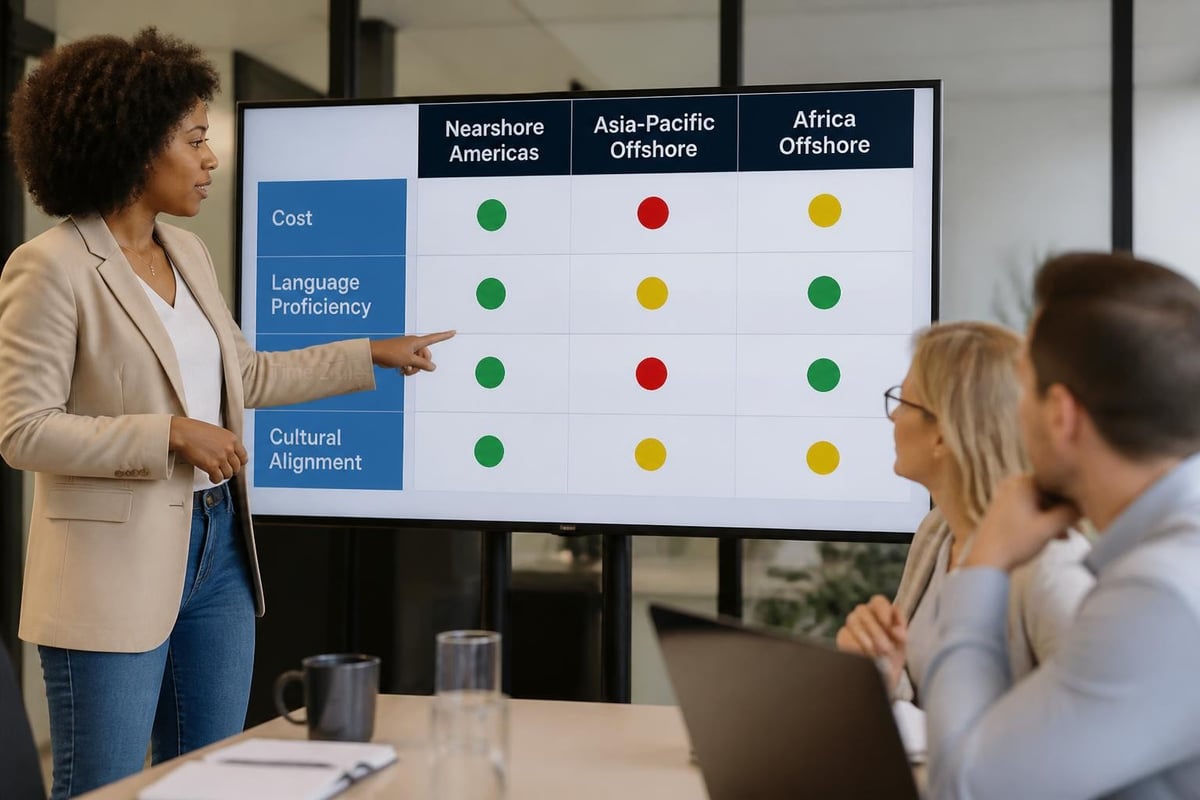
Location selection significantly influences operational success, customer satisfaction, and return on investment. Each geographic region offers distinct advantages and challenges that businesses must evaluate against their specific requirements.
Nearshore Outsourcing Advantages
Nearshore locations such as El Salvador provide compelling benefits for North American businesses. Minimal time zone differences facilitate real-time collaboration, simplified management oversight, and seamless escalation processes. Cultural alignment typically results in better customer rapport and reduced training complexity.
Nearshore benefits include:
- Compatible business hours for synchronous communication
- Similar cultural references and communication styles
- Easier quality monitoring through direct oversight
- Reduced travel costs for on-site visits
- Proximity for emergency response situations
Offshore Strategic Opportunities
Offshore destinations including the Philippines and South Africa offer access to highly educated, English-proficient talent pools at competitive rates. These markets have developed mature business process outsourcing ecosystems with robust infrastructure supporting complex operations.
The benefits and challenges of offshore customer support demonstrate how businesses can achieve significant cost advantages while accessing specialized skills in technical support, multilingual service, and industry-specific knowledge domains.
Organizations must balance cost considerations against potential challenges including accent differences, cultural nuances, and coordination complexities across significant time zone gaps.
Quality Management and Performance Optimization
Maintaining service quality represents the paramount concern when implementing the outsourcing of customer service. Robust quality assurance frameworks protect brand reputation while ensuring consistent customer experiences.
Essential Quality Metrics
Organizations should establish comprehensive performance measurement systems tracking both quantitative and qualitative indicators:
| Metric Category | Key Performance Indicators | Target Benchmarks |
|---|---|---|
| Efficiency | Average Handle Time, First Contact Resolution | <6 minutes, >75% |
| Quality | Quality Assurance Scores, Customer Satisfaction | >90%, >4.2/5.0 |
| Accessibility | Service Level, Abandon Rate | >80/20, <5% |
| Revenue Impact | Conversion Rate, Upsell Success | Industry-specific |
| Agent Performance | Adherence, Attrition Rate | >95%, <20% annually |
Regular calibration sessions between internal quality teams and outsourcing partners ensure alignment on evaluation standards. According to expert analysis of outsourcing customer service, successful partnerships incorporate joint quality review processes with shared accountability for outcomes.
Technology Integration Requirements
Seamless technology integration determines operational efficiency. Modern customer service outsourcing requires sophisticated platforms supporting:
- Cloud-based CRM systems accessible across geographic locations
- Unified agent desktops consolidating customer information
- Real-time reporting dashboards providing transparency
- AI-powered tools for agent assistance and automation
- Secure data transmission complying with regional regulations
The integration of AI-driven customer service automation creates opportunities for enhanced efficiency while allowing human agents to focus on complex, high-value interactions requiring emotional intelligence and creative problem-solving.
Workforce Development and Training Excellence
Superior customer service depends on well-trained, engaged agents who understand products, processes, and brand values. The outsourcing of customer service succeeds when partners invest in comprehensive workforce development programs.
Initial training programs should encompass:
- Product knowledge: Deep understanding of features, benefits, and use cases
- Systems proficiency: Competency across all required platforms and tools
- Soft skills development: Communication, empathy, and conflict resolution
- Brand alignment: Understanding company values, voice, and customer promise
- Compliance education: Regulatory requirements and data protection standards
Ongoing development maintains skill relevance as products evolve and customer expectations shift. Forward-thinking organizations implement continuous learning cultures with regular upskilling opportunities, career advancement pathways, and customer care call center career development programs that reduce attrition while building expertise.
Cultural Integration Strategies
Successful outsourcing partnerships transcend transactional vendor relationships. Cultural integration creates unified teams working toward shared objectives despite geographic separation.
Effective integration practices include regular video conferences connecting internal and outsourced teams, annual in-person meetings building personal relationships, shared celebration of achievements across locations, and transparent communication about business challenges and strategic priorities.

Industry-Specific Outsourcing Considerations
Different industries face unique customer service challenges requiring specialized approaches. The outsourcing of customer service must adapt to sector-specific requirements, regulations, and customer expectations.
Travel and Hospitality Support
The travel industry presents distinct challenges including booking complexity, time-sensitive issue resolution, and emotional customers facing disrupted plans. Specialized travel call center outsourcing solutions require agents trained in GDS systems, fare rules, and supplier policies while maintaining empathy during stressful situations.
Critical capabilities include:
- 24/7/365 availability matching global travel patterns
- Multilingual support for international travelers
- Integration with booking platforms and supplier systems
- Crisis management protocols for weather events or disruptions
- Expertise in loyalty programs and premium customer handling
Financial Services Requirements
Financial institutions face stringent regulatory compliance requirements, security protocols, and customer privacy expectations. Outsourcing partners must demonstrate:
- PCI-DSS compliance for payment card data handling
- SOC 2 Type II certification validating security controls
- Agent background screening and bonding
- Secure facility access controls and monitoring
- Encrypted communication channels and data storage
Healthcare and Pharmaceutical Support
HIPAA compliance governs healthcare customer service interactions in the United States. The outsourcing of customer service in this sector demands specialized training on privacy regulations, secure handling of protected health information, and understanding of medical terminology and insurance processes.
Risk Mitigation and Business Continuity
Comprehensive risk management protects business operations and customer relationships when implementing outsourced customer service models.
Common Risk Categories
| Risk Type | Potential Impact | Mitigation Strategies |
|---|---|---|
| Data Security | Regulatory penalties, brand damage | Encryption, access controls, audits |
| Service Disruption | Revenue loss, customer attrition | Geographic redundancy, backup systems |
| Quality Degradation | Satisfaction decline, reputation harm | Robust QA, performance incentives |
| Cultural Misalignment | Customer frustration, escalations | Training, cultural integration programs |
| Vendor Dependency | Limited flexibility, switching costs | Multi-vendor strategy, contract terms |
Business continuity planning addresses potential disruptions through geographic distribution of operations, redundant technology infrastructure, documented disaster recovery procedures, regular testing of backup systems, and clear escalation protocols for crisis situations.
According to projections for outsourcing customer support in 2026, successful organizations implement multi-location strategies that distribute risk while maintaining operational consistency across sites.
Contract Structure and Governance Models
Well-structured agreements establish clear expectations, accountability mechanisms, and frameworks for ongoing partnership management. The outsourcing of customer service requires contracts addressing service levels, pricing models, performance incentives, technology requirements, and termination provisions.
Pricing Model Options
Organizations can select from multiple pricing structures based on their specific needs and volume predictability:
Per-minute billing offers flexibility for variable volumes but can create misaligned incentives encouraging longer handle times. Per-contact pricing provides predictability but may not account for interaction complexity variations. Full-time equivalent (FTE) models deliver dedicated capacity with aligned incentives for efficiency.
Hybrid approaches combining base capacity fees with volume-based overages often provide optimal balance between predictability and flexibility.
Performance-Based Incentives
Linking financial terms to performance outcomes aligns partner incentives with business objectives. Effective structures include quality score multipliers affecting base rates, customer satisfaction bonuses for exceeding targets, efficiency rewards for productivity improvements, and retention incentives for reducing customer churn.
Implementation Best Practices
Successful transitions to outsourced customer service models require methodical planning, phased execution, and continuous optimization. Organizations should approach implementation as a strategic transformation rather than a simple vendor switch.
Transition Planning Framework
- Assessment phase: Document current processes, identify improvement opportunities, define success metrics
- Partner selection: Evaluate capabilities, conduct site visits, verify references, assess cultural fit
- Program design: Develop training curricula, create quality frameworks, establish technology integrations
- Pilot launch: Start with limited scope, gather learnings, refine processes before scaling
- Full deployment: Gradual volume ramp, continuous monitoring, regular optimization reviews
Maintaining internal expertise during transition prevents knowledge loss and ensures effective ongoing governance. Resources from comprehensive guides to customer service outsourcing emphasize retaining strategic oversight even while operational execution shifts to partners.
Change Management Considerations
Internal stakeholders require preparation for new operating models. Transparent communication about outsourcing rationale, involvement of key team members in partner selection and program design, clear definition of retained versus outsourced responsibilities, and celebration of early wins build organizational support for transformation initiatives.
Emerging Trends Reshaping Customer Service Outsourcing
The customer service landscape continues evolving with technological advancement, changing customer preferences, and global workforce dynamics. Organizations must anticipate these trends when developing outsourcing strategies.
Artificial intelligence integration augments human agents through chatbots handling routine inquiries, sentiment analysis identifying customer emotions, predictive analytics anticipating needs, and automated quality monitoring at scale. According to detailed analysis of customer service outsourcing trends, the most effective implementations combine AI efficiency with human empathy for complex situations.
Omnichannel complexity requires unified customer experiences across voice, email, chat, social media, messaging apps, and emerging platforms. The outsourcing of customer service must encompass all channels with consistent quality and seamless transitions between touchpoints.
Work-from-home models expanded dramatically and continue reshaping geographic considerations, talent accessibility, and cost structures. Hybrid approaches combining facility-based and remote agents provide flexibility while maintaining quality controls.
Specialized vertical expertise creates competitive differentiation as generic customer service becomes commoditized. Partners demonstrating deep industry knowledge, regulatory understanding, and customer insight command premium positioning.
Measuring Return on Investment
Quantifying outsourcing value extends beyond simple cost comparisons. Comprehensive ROI analysis incorporates multiple dimensions including direct cost savings from reduced labor and infrastructure, efficiency gains through improved metrics and processes, revenue impact from enhanced customer experience and retention, and strategic value from redirected internal resources to core competencies.
Evaluation timeframes should extend beyond initial implementation costs to steady-state operations. First-year expenses including transition costs, redundant staffing during ramp, and initial inefficiencies often obscure longer-term value creation.
The most successful outsourcing relationships evolve from tactical vendor engagements into strategic partnerships driving continuous improvement, innovation, and competitive advantage through customer service excellence.
Strategic implementation of customer service outsourcing delivers measurable business value through cost optimization, operational scalability, and access to specialized expertise across global markets. Success requires thoughtful partner selection, robust quality frameworks, and ongoing relationship management that aligns incentives and maintains brand standards. Focus Services provides comprehensive call center outsourcing solutions across the Americas, Asia, and Africa, combining geographic diversity with AI-enabled workforce optimization to help businesses enhance customer experiences while achieving operational efficiency. Contact our team to explore how tailored outsourcing strategies can transform your customer service operations.