

Customer Support in Call Center Outsourcing 2026: A Complete Guide
The phrase customer support represents more than a simple repetition. It embodies the dual nature of modern service delivery, where organizations must support both their customers and the support teams that serve them. In 2026, companies face unprecedented challenges as customer expectations rise, technology evolves rapidly, and the competitive landscape demands excellence across every interaction. Organizations that master this dual focus create sustainable advantages, driving customer loyalty while maintaining operational efficiency and agent satisfaction.
Understanding the Dual Nature of Modern Support Operations
Contents
- 1 Understanding the Dual Nature of Modern Support Operations
- 2
- 3 Strategic Approaches to Multi-Layered Support Excellence
- 4 AI Integration and Human Expertise Balance
- 5 Global Outsourcing Considerations for Support Operations
- 6 Training and Development Programs
- 7 Performance Management and Quality Assurance
- 8 Data Analytics and Continuous Improvement
- 9 Customer Self-Service Enablement
- 10 Emerging Trends Reshaping Support Operations
Customer support reflects a critical business reality: successful service organizations must invest equally in customer-facing operations and internal support infrastructure. This approach recognizes that exceptional customer experiences stem from well-supported, properly trained, and technologically empowered support teams.
The Customer-Facing Dimension
The first layer of customer support involves direct interactions with end users. These touchpoints include phone calls, chat sessions, email exchanges, and social media interactions. Each channel requires specific expertise, appropriate technology, and consistent quality standards. Companies that excel in this dimension understand that every interaction shapes brand perception and influences customer lifetime value.
Modern customers expect immediate responses, personalized solutions, and seamless experiences across all channels. According to customer service best practices, organizations must focus on comprehensive agent training and performance analysis to meet these expectations consistently.
The Internal Support Infrastructure
The second layer focuses on supporting the support team itself. This includes providing agents with robust technology platforms, comprehensive knowledge bases, ongoing training programs, and performance management systems. Organizations that neglect this internal dimension experience high turnover rates, inconsistent service quality, and declining customer satisfaction scores.

Successful contact centers invest in workforce optimization tools, quality assurance programs, and agent wellness initiatives. These investments directly impact the quality of customer interactions, creating a virtuous cycle of improvement and satisfaction.
Strategic Approaches to Multi-Layered Support Excellence
Building effective customer support systems requires strategic planning, technology integration, and cultural commitment. Organizations must balance automation with human expertise, standardization with personalization, and efficiency with quality.
Omnichannel Integration Strategies
Modern customers move fluidly between communication channels, expecting consistent experiences regardless of how they contact support. An omnichannel strategy unifies these touchpoints, allowing agents to access complete customer histories and continue conversations seamlessly across platforms.
Key components of successful omnichannel integration include:
- Unified customer data platforms that consolidate information from all channels
- Intelligent routing systems that direct inquiries to the most qualified agents
- Real-time collaboration tools that enable agents to consult specialists without transferring customers
- Cross-channel analytics that identify trends and improvement opportunities
Organizations implementing comprehensive omnichannel strategies report significant improvements in first-contact resolution rates and customer satisfaction scores. The integration eliminates frustrating experiences where customers must repeat information when switching channels.
Technology Platform Selection and Implementation
Choosing the right technology stack represents one of the most critical decisions in building customer support capabilities. Helpdesk software solutions centralize support requests and enhance efficiency through automation and analytics, providing the foundation for scalable operations.
| Technology Category | Primary Function | Business Impact |
|---|---|---|
| CRM Systems | Customer data management | Personalized service delivery |
| Helpdesk Platforms | Request tracking and routing | Faster resolution times |
| Knowledge Management | Self-service content delivery | Reduced support volume |
| Workforce Management | Scheduling and forecasting | Optimized staffing levels |
| Quality Assurance | Interaction monitoring | Consistent service quality |
The implementation process requires careful planning, comprehensive training, and ongoing optimization. Organizations should prioritize systems that integrate smoothly with existing infrastructure while providing flexibility for future enhancements.
AI Integration and Human Expertise Balance
Artificial intelligence has transformed customer support operations, offering capabilities that enhance both customer experiences and agent performance. However, successful implementations maintain an appropriate balance between automation and human interaction.
Intelligent Automation Applications
AI technologies excel at handling routine inquiries, routing complex issues, and providing agents with real-time guidance. Recent customer service trends indicate that AI agents significantly impact customer satisfaction when deployed strategically alongside human expertise.
Effective AI applications in customer support include:
- Chatbots for initial triage – Automated systems handle basic inquiries and collect information before human handoff
- Predictive routing – Machine learning algorithms match customers with the best-suited agents based on issue complexity and agent expertise
- Sentiment analysis – Real-time emotion detection helps prioritize urgent cases and flag customers needing special attention
- Knowledge recommendations – AI suggests relevant solutions to agents during customer interactions, reducing research time
Organizations must recognize that while AI customer care shows viability, it works best when complementing rather than replacing human agents.

Preserving Human Connection
Despite technological advances, customers still value human interaction for complex issues, emotional situations, and relationship building. Maintaining human touch in customer experience remains essential even as AI adoption increases.
Smart organizations use AI to eliminate tedious tasks, freeing agents to focus on interactions requiring empathy, creativity, and complex problem-solving. This approach improves both customer satisfaction and agent job satisfaction, creating superior outcomes across all stakeholder groups.
Global Outsourcing Considerations for Support Operations
Many organizations enhance their customer support customer support capabilities through strategic outsourcing partnerships. Global providers offer cost efficiencies, scalability, and specialized expertise that complement internal operations.
Geographic Distribution Advantages
Distributing support operations across multiple geographic locations provides several strategic benefits:
- 24/7 coverage – Teams in different time zones ensure round-the-clock availability without expensive overnight shifts
- Language capabilities – Native speakers deliver culturally appropriate support in multiple languages
- Risk mitigation – Geographic diversity protects against localized disruptions from natural disasters or infrastructure failures
- Cost optimization – Labor arbitrage opportunities reduce operational expenses while maintaining service quality
Organizations partnering with global call center outsourcing providers gain access to established infrastructure, trained workforces, and proven management systems without significant capital investment.
Quality Management in Distributed Teams
Maintaining consistent service quality across distributed teams requires robust quality assurance programs, standardized processes, and strong communication channels. Successful outsourcing relationships establish clear performance metrics, regular reporting cadences, and collaborative improvement processes.
| Quality Metric | Target Range | Measurement Frequency |
|---|---|---|
| First Contact Resolution | 70-85% | Daily |
| Average Handle Time | Industry-specific | Real-time |
| Customer Satisfaction Score | 4.0+/5.0 | Per interaction |
| Net Promoter Score | 50+ | Monthly |
| Agent Attrition Rate | Below 30% annually | Quarterly |
These metrics provide objective measures of performance while identifying improvement opportunities. Regular calibration sessions ensure consistent quality assessment across all locations and team members.
Training and Development Programs
Effective customer support operations depend on comprehensive training programs that develop both technical skills and interpersonal capabilities. Investment in agent development pays dividends through improved performance, reduced turnover, and enhanced customer satisfaction.
Initial Onboarding Frameworks
New agent onboarding establishes the foundation for long-term success. Comprehensive programs typically span four to six weeks, covering product knowledge, system proficiency, communication skills, and company culture.
Effective onboarding includes:
- Product and service deep dives with hands-on practice
- System navigation and workflow training in simulated environments
- Communication skills development through role-playing exercises
- Shadowing experienced agents during live customer interactions
- Gradual transition to independent work with close supervision
Organizations that invest in thorough onboarding programs experience lower attrition rates and faster time-to-proficiency for new hires.
Continuous Learning Initiatives
The most successful customer support organizations treat training as an ongoing process rather than a one-time event. Continuous learning programs adapt to evolving products, changing customer expectations, and emerging technologies.
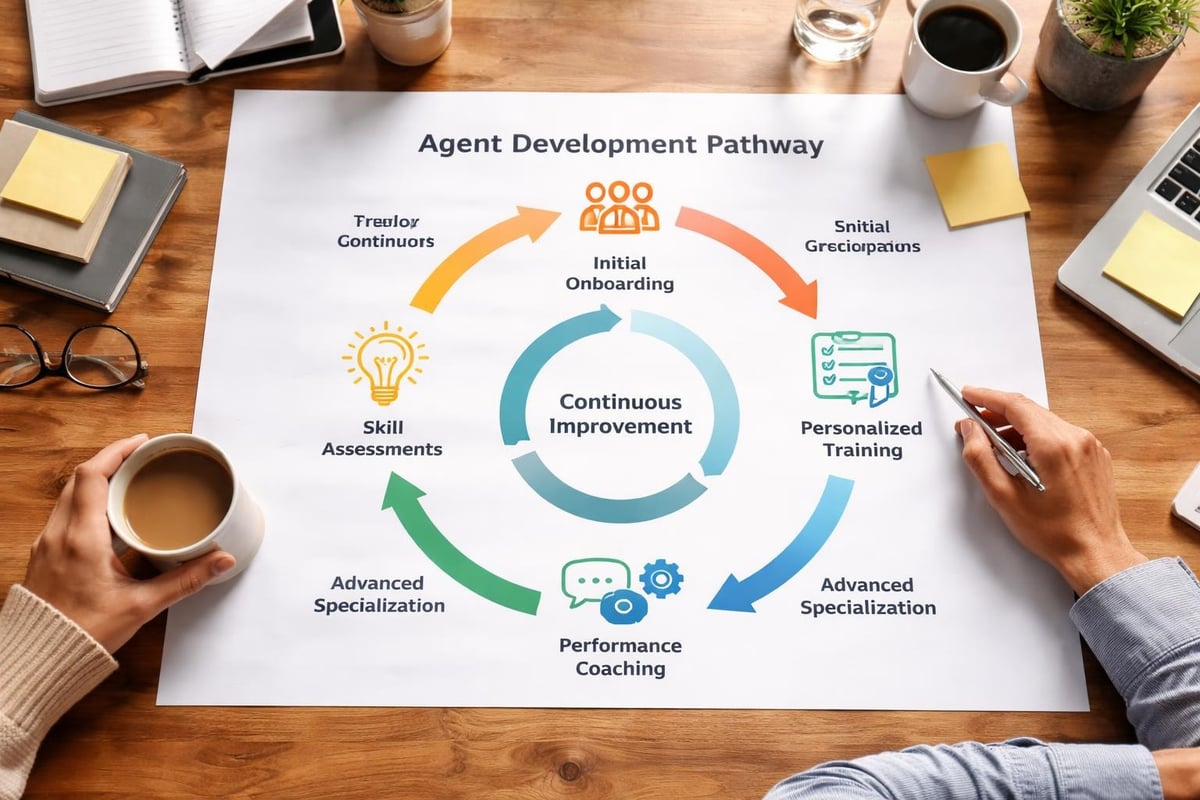
Regular skill assessments identify knowledge gaps and learning opportunities. Microlearning modules deliver targeted content in digestible formats, accommodating busy schedules while reinforcing critical concepts. Advanced training paths enable experienced agents to develop specialized expertise in technical support, escalation management, or team leadership.
Performance Management and Quality Assurance
Systematic performance management ensures that customer support customer support operations maintain high standards while identifying opportunities for improvement. Effective programs balance accountability with development, using data to drive constructive conversations.
Comprehensive Quality Monitoring
Quality assurance programs evaluate customer interactions across multiple dimensions, including technical accuracy, communication effectiveness, compliance adherence, and customer satisfaction. Efficient customer support practices emphasize regular monitoring combined with constructive feedback.
Modern quality programs leverage technology to review larger sample sizes while maintaining consistency. Speech analytics tools identify compliance risks, coaching opportunities, and best practices automatically. Screen recording capabilities enable supervisors to review complex interactions thoroughly.
Coaching and Feedback Mechanisms
Transforming quality monitoring insights into performance improvements requires effective coaching conversations. The most impactful coaching sessions focus on specific behaviors, provide concrete examples, and collaborate on improvement strategies.
Regular one-on-one meetings create opportunities for agents to discuss challenges, ask questions, and receive personalized guidance. Group coaching sessions share best practices across teams while building collaborative problem-solving capabilities. Recognition programs celebrate exceptional performance, reinforcing desired behaviors and motivating continued excellence.
Data Analytics and Continuous Improvement
Customer support customer support operations generate vast amounts of data that, when analyzed effectively, reveal patterns, trends, and improvement opportunities. Organizations that leverage analytics systematically outperform competitors in efficiency and customer satisfaction.
Key Performance Indicators
Tracking the right metrics provides visibility into operational health and customer experience quality. Beyond traditional efficiency metrics, forward-thinking organizations monitor indicators that predict future performance and identify emerging issues.
Critical analytics categories include:
- Operational efficiency – Handle time, first contact resolution, schedule adherence, and cost per contact
- Customer experience – Satisfaction scores, Net Promoter Score, customer effort score, and repeat contact rates
- Agent performance – Quality scores, productivity metrics, skill utilization, and development progress
- Business impact – Revenue retention, upsell success rates, and customer lifetime value changes
Integrated dashboards provide real-time visibility while historical trending reveals long-term patterns and seasonal variations.
Predictive Analytics Applications
Advanced analytics enable proactive management by predicting future support volumes, identifying at-risk customers, and forecasting staffing requirements. Machine learning models analyze historical patterns to generate accurate forecasts, enabling optimal resource allocation.
Predictive capabilities also identify customers likely to escalate issues or cancel services, triggering proactive outreach that prevents problems before they occur. This shift from reactive to proactive support represents a significant competitive advantage in crowded markets.
Customer Self-Service Enablement
Empowering customers to resolve issues independently represents an important component of comprehensive customer support customer support strategies. Well-designed self-service options provide immediate assistance while reducing support team workloads.
Knowledge Base Development
Comprehensive knowledge bases serve both customers seeking self-service solutions and agents needing quick reference materials. Effective knowledge management systems organize information logically, maintain content accuracy, and optimize discoverability through robust search functionality.
Content development should prioritize the most common inquiries while ensuring technical accuracy and clarity. Regular updates address product changes, emerging issues, and frequently asked questions. Analytics reveal which articles customers find most helpful and which topics require additional coverage.
Interactive Support Tools
Beyond static knowledge bases, interactive tools guide customers through troubleshooting processes and complex tasks. Guided workflows ask diagnostic questions, narrowing potential causes while providing step-by-step resolution instructions.
Video tutorials demonstrate procedures visually, particularly valuable for products with complex interfaces or multi-step processes. Community forums enable customers to help each other while providing support teams with insights into common challenges and feature requests.
Emerging Trends Reshaping Support Operations
The customer support landscape continues evolving rapidly, driven by technological innovation, changing customer preferences, and competitive pressures. Organizations must monitor emerging trends and adapt strategies accordingly to maintain service excellence.
Conversational AI Advancement
Natural language processing capabilities continue improving, enabling more sophisticated automated conversations. Customer service trends for 2026 emphasize adapting to evolving expectations through advanced technology integration.
Modern conversational AI handles increasingly complex inquiries while maintaining context across extended interactions. Integration with knowledge bases, CRM systems, and transaction platforms enables automated issue resolution without human intervention for appropriate use cases.
Proactive Support Strategies
Rather than waiting for customers to report problems, forward-thinking organizations identify and address issues proactively. Monitoring systems detect potential problems through usage patterns, error logs, and performance metrics, triggering preventive action before customers experience disruptions.
Proactive communication builds trust and demonstrates commitment to customer success. Informing customers about potential issues and providing solutions before they encounter problems creates positive impressions and reduces support volume simultaneously.
Privacy and Security Emphasis
As data breaches and privacy concerns dominate headlines, customer service trends increasingly focus on data privacy and protection as essential components of customer trust. Support operations must implement robust security measures while maintaining service accessibility and efficiency.
Secure authentication processes verify customer identities without creating friction. Data encryption protects sensitive information during transmission and storage. Compliance with regional privacy regulations like GDPR and CCPA requires careful process design and ongoing monitoring.
Building exceptional customer support customer support capabilities requires strategic vision, appropriate technology investment, and unwavering commitment to continuous improvement. Organizations that support both their customers and support teams create sustainable competitive advantages through superior service delivery, operational efficiency, and customer loyalty. Whether you’re a startup establishing initial support operations or an enterprise optimizing existing programs, partnering with experienced providers accelerates success.
Focus Services delivers high-performance customer care programs and AI-enabled workforce optimization across global locations, helping organizations transform support operations into strategic assets that drive business growth and customer satisfaction.
Schedule a Discovery Call Today https://www.focusservices.com/contact/





Leave a Reply
Want to join the discussion?Feel free to contribute!