
Call Center Excellence: Strategies for Success in 2026
The modern call center has evolved from a simple telephone answering service into a sophisticated, multi-channel customer engagement hub. In 2026, businesses face unprecedented pressure to deliver exceptional customer experiences while managing operational costs and leveraging emerging technologies. Whether you’re running an in-house operation or partnering with outsourcing providers, understanding the core principles of call center excellence is essential for maintaining competitive advantage in today’s demanding marketplace.
The Strategic Foundation of Modern Call Center Operations
Contents
- 1 The Strategic Foundation of Modern Call Center Operations
- 2 Optimizing Call Center Performance Through Quality Assurance
- 3 Workforce Development and Agent Empowerment
- 4 Integrating AI and Automation for Enhanced Efficiency
- 5 Multichannel Integration and Omnichannel Excellence
- 6 Security and Compliance in Modern Call Center Operations
- 7 Performance Metrics and Continuous Improvement
- 8 Global Call Center Strategies and Cultural Considerations
- 9 Emerging Trends Shaping Call Center Future
Building a successful call center requires more than just phones and computers. It demands a comprehensive strategy that aligns technology, people, and processes with your business objectives.
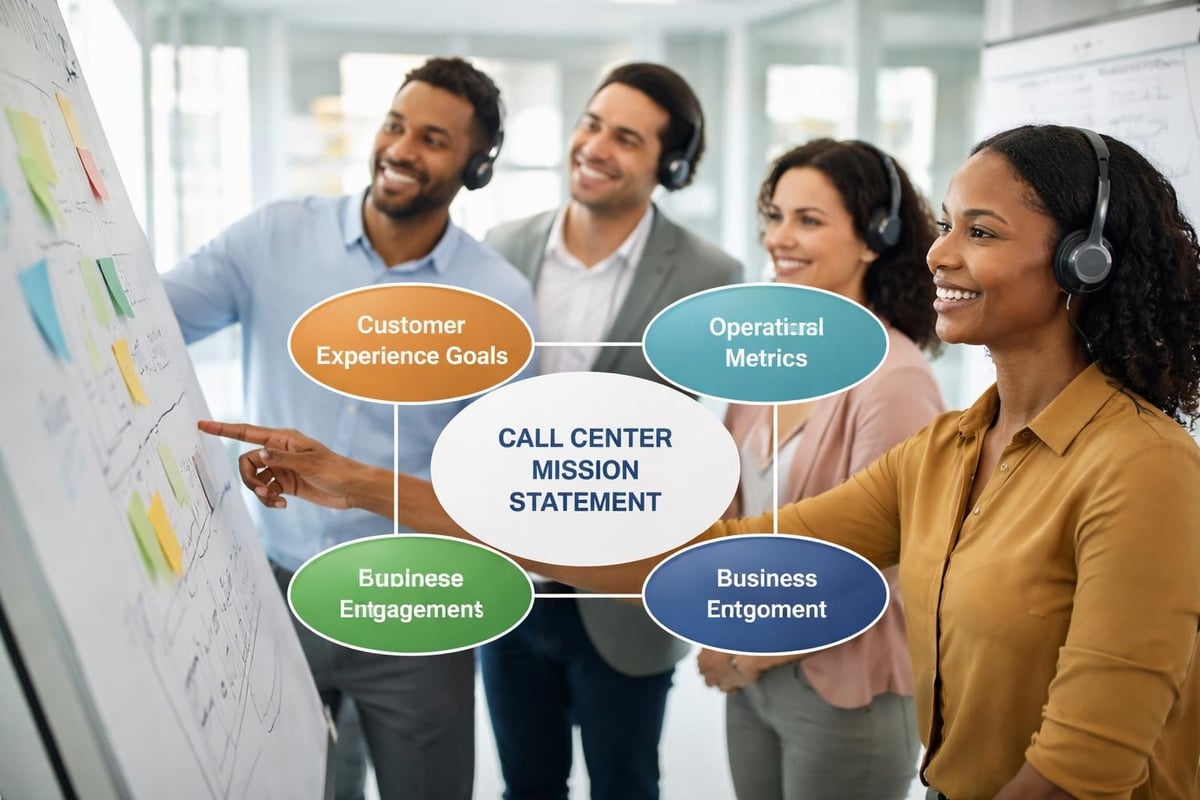
Defining Your Call Center Mission
Every high-performing call center starts with a clear mission statement. This foundation shapes everything from hiring decisions to technology investments. Your mission should articulate specific goals around customer satisfaction, operational efficiency, and business outcomes.
Key components of an effective mission include:
- Customer experience targets and service level agreements
- Revenue generation or cost savings objectives
- Brand representation and communication standards
- Employee development and retention priorities
When your team understands the “why” behind their work, they become more engaged and effective. This clarity translates directly into better customer interactions and improved business results.
Technology Infrastructure Planning
The technology stack you choose fundamentally determines your operational capabilities. Modern platforms integrate multiple channels, provide real-time analytics, and support AI-enhanced workflows that were impossible just a few years ago.
| Technology Component | Primary Function | Business Impact |
|---|---|---|
| Cloud-based platform | Scalability and flexibility | Reduced infrastructure costs, remote workforce support |
| AI-powered routing | Intelligent call distribution | Higher first-call resolution, reduced wait times |
| CRM integration | Unified customer data | Personalized service, improved efficiency |
| Quality monitoring | Performance tracking | Enhanced training, compliance assurance |
| Workforce management | Staffing optimization | Better coverage, reduced labor costs |
According to emerging contact center trends, organizations are increasingly adopting true omnichannel capabilities that seamlessly blend voice, chat, email, and social media interactions.
Optimizing Call Center Performance Through Quality Assurance
Quality assurance represents the backbone of operational excellence. Without systematic evaluation and improvement processes, even the best-equipped call center will struggle to deliver consistent results.
Implementing Effective QA Programs
A robust quality assurance program goes beyond random call monitoring. It establishes clear standards, provides regular feedback, and creates pathways for continuous improvement across your entire operation.
Proven call center quality assurance practices emphasize the importance of setting transparent quality standards that agents understand and accept. When evaluation criteria are ambiguous or inconsistent, team members become frustrated and disengaged.
Essential QA program elements:
- Standardized evaluation scorecards with weighted criteria
- Regular calibration sessions to ensure evaluator consistency
- Balanced feedback combining coaching and recognition
- Root cause analysis for recurring issues
- Agent self-evaluation opportunities
- Customer feedback integration
The most effective programs evaluate both technical compliance and soft skills like empathy, communication clarity, and problem-solving creativity. This balanced approach develops well-rounded agents who can handle diverse customer situations.
Leveraging Technology for Quality Monitoring
Manual call monitoring remains valuable, but modern technology enables more comprehensive quality assessment. Speech analytics platforms can evaluate 100% of interactions, identifying trends and opportunities that human reviewers might miss.
These systems track metrics like talk time, hold duration, and dead air while analyzing sentiment, keyword usage, and compliance adherence. The data provides managers with actionable insights for both individual coaching and systemic improvements.
Workforce Development and Agent Empowerment
Your call center’s success ultimately depends on the people answering the phones. Investing in recruitment, training, and development creates a sustainable competitive advantage that technology alone cannot replicate.
Strategic Hiring and Onboarding
Finding the right talent starts with understanding the specific skills your operation requires. Sales-focused centers need persuasive communicators with resilience, while technical support operations benefit from analytical problem-solvers with patience and teaching abilities.
Comprehensive onboarding programs set new agents up for success. Rather than rushing people onto the phones, effective training covers:
- Product or service knowledge in depth
- Communication techniques and de-escalation strategies
- Technology platform proficiency
- Company culture and customer service philosophy
- Shadowing experienced agents and gradual responsibility increase
Organizations that invest in thorough onboarding see significantly lower attrition rates and faster time-to-proficiency for new hires.

Creating Career Pathways
Agent turnover remains one of the industry’s most persistent challenges. Creating clear career pathways helps retain top performers by demonstrating long-term opportunity within your organization.
Potential advancement tracks include:
- Subject matter expert specializations
- Quality assurance and training roles
- Team lead and supervisory positions
- Workforce management and analytics
- Client relationship management
When agents see colleagues advancing based on performance and skill development, it creates positive motivation across the entire team. This internal promotion culture also reduces recruitment costs while preserving institutional knowledge.
Integrating AI and Automation for Enhanced Efficiency
Artificial intelligence is transforming call center operations in 2026, but successful implementation requires strategic thinking about where automation adds value and where human interaction remains essential.
AI Applications That Deliver Results
The most impactful AI deployments focus on augmenting human capabilities rather than replacing agents entirely. AI’s transformation of the call center industry demonstrates how technology handles routine tasks while agents focus on complex problem-solving and emotional support.
Practical AI applications include intelligent routing that directs customers to the most qualified agent, real-time agent assistance that surfaces relevant information during calls, and automated after-call work that reduces administrative burden.
Chatbots and virtual assistants handle straightforward inquiries like account balance checks or appointment scheduling, freeing human agents for interactions requiring judgment, empathy, or creative problem-solving. This division maximizes both efficiency and customer satisfaction.
Balancing Automation with Human Touch
Despite technological advances, voice communication remains crucial in AI-powered contact centers for handling emotionally charged situations and complex issues. Customers dealing with billing disputes, service failures, or urgent problems want to speak with empathetic humans who can exercise discretion.
The key is designing customer journeys that make automation optional and convenient rather than mandatory and frustrating. Customers should always have clear pathways to human assistance when self-service options don’t meet their needs.
Organizations implementing AI agent solutions report significant efficiency gains while maintaining high customer satisfaction when they preserve human escalation options and focus automation on appropriate use cases.
Multichannel Integration and Omnichannel Excellence
Today’s customers expect seamless experiences across multiple touchpoints. Your call center must integrate voice, email, chat, social media, and messaging platforms into a unified operation.
Building True Omnichannel Capabilities
Omnichannel differs from multichannel by maintaining context and continuity as customers move between channels. When someone starts a conversation via chat and later calls, agents should have complete visibility into that history without requiring customers to repeat information.
| Channel | Primary Use Cases | Integration Requirements |
|---|---|---|
| Voice | Complex issues, emotional situations, sales | CRM integration, call recording, speech analytics |
| Non-urgent inquiries, documentation needs | Ticket management, automated acknowledgment, knowledge base | |
| Live chat | Quick questions, browsing support, multitasking | Website integration, chatbot handoff, co-browsing |
| Social media | Public inquiries, complaints, community building | Social listening tools, response tracking, escalation protocols |
| SMS/Messaging | Appointment reminders, status updates, simple queries | Two-way messaging, automation rules, opt-in management |
According to key call center industry trends, organizations that successfully implement omnichannel strategies see measurable improvements in customer retention and lifetime value.
Skill-Based Routing Across Channels
Different channels require different skill sets. Your most articulate writer might struggle on phone calls, while your most persuasive voice agent might produce unclear email responses.
Advanced workforce management systems enable skill-based routing across all channels, matching customer needs with agent capabilities. This optimization improves both customer outcomes and agent confidence, creating a positive feedback loop that benefits everyone.
Security and Compliance in Modern Call Center Operations
As call centers handle increasingly sensitive customer information, security and compliance have become operational imperatives rather than mere checkbox exercises.
Protecting Customer Data
Data breaches carry enormous costs in both direct financial impact and brand reputation damage. Comprehensive security programs address technology vulnerabilities, process weaknesses, and human error risks.
Essential security measures include encrypted data storage and transmission, multi-factor authentication for system access, regular security audits and penetration testing, and employee training on phishing and social engineering threats.
AI voice fraud represents an emerging threat that call centers must address through enhanced authentication protocols. Synthetic voice technology can now bypass traditional voice biometric systems, requiring organizations to implement layered security approaches.
Regulatory Compliance Management
Call centers must navigate complex regulatory requirements that vary by industry and geography. Financial services operations face different rules than healthcare providers, while international operations must comply with multiple jurisdictions simultaneously.
Common compliance frameworks include:
- PCI DSS for payment card data security
- HIPAA for healthcare information protection
- GDPR for European Union data privacy
- TCPA for telemarketing and calling practices
- Industry-specific regulations for utilities, financial services, and other sectors
For organizations operating utility call center outsourcing programs or other regulated industries, partnering with experienced providers ensures compliance expertise and reduces risk exposure.

Performance Metrics and Continuous Improvement
What gets measured gets managed. Establishing the right metrics and creating a culture of continuous improvement separates exceptional call centers from mediocre operations.
Key Performance Indicators That Matter
While dozens of metrics can be tracked, focusing on a core set of indicators prevents analysis paralysis and keeps teams aligned on priorities.
Critical operational metrics:
- First call resolution rate (percentage of issues resolved without callbacks)
- Average handle time (balanced against quality and resolution)
- Customer satisfaction scores (CSAT, NPS, CES)
- Service level achievement (percentage of calls answered within target)
- Agent utilization and occupancy rates
- Quality assurance scores and compliance adherence
The best call center leaders understand that metrics must be balanced. Driving down handle time at the expense of resolution quality creates more callbacks and frustrated customers. Maximizing agent occupancy without adequate break time leads to burnout and turnover.
Creating Feedback Loops
Data only creates value when it drives action. Establishing regular review cycles at multiple organizational levels ensures insights translate into improvements.
Daily huddles address immediate issues and celebrate wins. Weekly team meetings review trends and adjust tactics. Monthly leadership reviews examine strategic performance and resource allocation. Quarterly business reviews with stakeholders demonstrate value and align future priorities.
Understanding customer support excellence requires listening to both quantitative metrics and qualitative feedback from customers and frontline agents who interact with them daily.
Global Call Center Strategies and Cultural Considerations
Organizations increasingly operate call centers across multiple countries and time zones, requiring thoughtful approaches to cultural alignment and global coordination.
Leveraging Global Talent Pools
Geographic diversification provides access to multilingual agents, extended operating hours, and cost optimization opportunities. However, success requires more than simply opening offices in different countries.
Effective global operations maintain consistent quality standards while respecting local cultural contexts. Training programs must address both universal customer service principles and market-specific expectations around communication styles, formality levels, and problem resolution approaches.
The Philippines excels at American accent and cultural familiarity, making it ideal for US customer bases. South Africa offers English proficiency and European time zone coverage. El Salvador provides nearshore advantages with minimal time differences and cultural alignment. Understanding these regional strengths enables strategic location decisions.
Technology Enablement for Distributed Teams
Cloud-based platforms enable seamless operation across global locations, providing unified reporting, consistent customer experiences, and centralized management capabilities. Cloud technology’s role in reducing contact center carbon emissions adds environmental benefits to the operational advantages.
Remote work capabilities expanded dramatically during recent years, proving that location flexibility doesn’t compromise performance when proper technology and management practices are in place. This flexibility expands talent pools and improves work-life balance for agents.
Emerging Trends Shaping Call Center Future
The call center industry continues evolving rapidly. Organizations that anticipate and adapt to emerging trends position themselves for sustained competitive advantage.
Conversational AI and Natural Language Processing
Next-generation AI systems understand context, nuance, and intent rather than simply matching keywords. These capabilities enable more natural customer interactions and more sophisticated automation of complex workflows.
Voice biometrics provide frictionless authentication while conversational analytics identify customer emotions and satisfaction in real-time, enabling proactive intervention before situations escalate.
Predictive Analytics and Proactive Service
Advanced analytics predict customer needs before they arise, enabling proactive outreach that prevents problems rather than merely resolving them. This shift from reactive to proactive service delivery transforms call centers from cost centers into revenue and retention drivers.
Machine learning models identify customers at risk of churn, products likely to require support, and opportunities for upselling or cross-selling. These insights enable targeted, timely interventions that improve outcomes while reducing overall contact volume.
Employee Experience as Competitive Differentiator
Organizations increasingly recognize that exceptional customer experiences require exceptional employee experiences. Call centers investing in agent wellbeing, career development, and workplace culture see measurable improvements in both performance and retention.
Flexible scheduling, mental health support, recognition programs, and transparent communication create environments where agents choose to stay and perform at their best. This focus on employee experience represents one of the most impactful investments call center leaders can make in 2026.
Modern call center operations require balancing technology investment with human development, efficiency optimization with quality maintenance, and global scalability with local relevance. Organizations that master these dynamics create sustainable competitive advantages through superior customer experiences. Focus Services delivers comprehensive call center outsourcing solutions across global locations, combining AI-enabled technology with high-performance teams to help businesses from startups to enterprises achieve their customer experience and operational goals. Whether you need sales support, customer care programs, or workforce optimization, our expertise across the United States, El Salvador, the Philippines, and South Africa provides the flexibility and performance your business demands.