Focus Services
  • Home
  • Services
    • Customer Care Outsourcing
    • Sales Outsourcing
    • Tech Support Outsourcing
    • AI Agent Solutions
    • IT Outsourcing
  • AI Agent Solutions
  • Industries
    • Utilities
    • Travel
    • E-commerce
  • Locations
  • Resources
    • Blog
    • Podcast
    • Case Studies
    • Company Updates
  • About Us
    • Leadership
    • Careers
      • Apply
  • Schedule Your Discovery Call
  • Click to open the search input field Click to open the search input field Search
  • Menu Menu
  • Link to LinkedIn
  • Link to Facebook
  • Link to Youtube
  • Link to Instagram

Contact Center Outsourcing Solutions for 2026

May 6, 2026/in BPO Call Center Operations, Call Center Outsourcing, Real Time Analytics /by BenJoe Markland

Businesses face mounting pressure to deliver exceptional customer experiences while managing operational costs and staffing complexities. A contact center outsourcing solution addresses these challenges by enabling companies to access specialized expertise, advanced technology, and flexible workforce capacity without the overhead of maintaining an in-house operation. As customer expectations continue to evolve in 2026, organizations are increasingly turning to outsourcing partners to enhance service quality, expand channel coverage, and drive measurable performance improvements across their support operations.

Listen more in our podcast: https://www.focusservices.com/podcasts/contact-center-outsourcing-2026/

Strategic Benefits of Contact Center Outsourcing

The decision to implement a contact center outsourcing solution extends beyond simple cost reduction. Organizations that partner with the right provider gain access to a comprehensive ecosystem of technology, talent, and proven processes that would require years and significant capital investment to build internally.

Cost efficiency represents one of the most immediate advantages. Companies eliminate expenses associated with facility maintenance, equipment procurement, software licensing, and full-time employee benefits. The operational model shifts from fixed costs to variable expenses that scale with business demand, providing greater financial flexibility during seasonal fluctuations or market uncertainties.

Access to Specialized Expertise

Outsourcing partners bring domain-specific knowledge accumulated across hundreds of client engagements and industry verticals. This expertise translates into faster implementation timelines, reduced training cycles, and higher first-contact resolution rates.

  • Industry best practices refined through continuous optimization
  • Quality assurance frameworks with proven performance metrics
  • Workforce management strategies that maximize productivity
  • Compliance knowledge across regulatory environments
  • Technology integration capabilities with existing systems

The strategic value becomes particularly evident when evaluating call center outsourcing companies that offer vertical specialization aligned with specific business needs.

Global contact center infrastructure

Read more

Focus Services Call Center Agent taking Travel Calls

Call Center Nearshore: A Strategic Guide for 2026

May 5, 2026/in BPO Call Center Operations, Call Center Outsourcing, Nearshore, Offshore /by BenJoe Markland

Companies across industries face mounting pressure to deliver exceptional customer service while managing operational costs. As businesses evaluate outsourcing strategies, call center nearshore solutions have emerged as a compelling middle ground between domestic operations and distant offshore alternatives. This approach combines geographic proximity, cultural compatibility, and operational efficiency in ways that transform customer experience and bottom-line performance. Understanding the strategic advantages and implementation considerations of nearshore outsourcing has become essential for organizations seeking sustainable growth in 2026.

Listen more in our podcast: https://www.focusservices.com/podcasts/call-center-nearshore/

Understanding Call Center Nearshore Operations

Call center nearshore outsourcing refers to partnering with contact center providers located in nearby countries, typically sharing similar time zones and cultural characteristics with the client company. For North American businesses, this usually means outsourcing to Latin American countries such as El Salvador, Mexico, Colombia, or Costa Rica rather than distant offshore destinations.

The fundamental appeal lies in balancing cost efficiency with operational quality. While nearshore locations offer labor cost advantages compared to domestic operations, they maintain critical advantages over faraway offshore centers.

Geographic and Temporal Advantages

Time zone alignment represents one of the most practical benefits of nearshore partnerships. When your outsourced team operates within one to three hours of your headquarters, real-time collaboration becomes seamless. Morning stand-ups, mid-day escalations, and end-of-day reporting all occur within normal business hours for both parties.

This proximity enables:

  • Immediate response to urgent customer issues
  • Real-time supervisor escalation without overnight delays
  • Synchronous training sessions and quality reviews
  • Simplified scheduling for management visits and audits

Companies operating call center nearshore facilities can maintain oversight without the logistical complexity of managing teams twelve time zones away. According to research on temporal location effects, nearshore development significantly improves communication quality and project success rates compared to offshore alternatives.

Time zone comparison

Read more

Call Center and BPO: Strategic Guide for 2026

May 3, 2026/in BPO Call Center Operations, Call Center Outsourcing /by BenJoe Markland

The business process outsourcing industry continues to reshape how companies deliver customer service, manage sales operations, and optimize back-office functions. As organizations face mounting pressure to reduce costs while improving service quality, the strategic partnership between call center and BPO providers has become essential for maintaining competitive advantage. Global delivery models now span multiple continents, leveraging technology, talent pools, and time zones to create seamless 24/7 operations that support everything from simple inquiries to complex technical troubleshooting.

Listen more in our podcast: https://www.focusservices.com/podcasts/customer-experience-into-growth/

Understanding the Call Center and BPO Landscape

The call center and BPO ecosystem has evolved dramatically from simple offshore answering services to sophisticated strategic partnerships that drive revenue growth and customer retention. Modern providers deliver integrated solutions across voice, digital channels, analytics, and workforce management platforms. This transformation reflects changing customer expectations and the availability of advanced technologies that enable real-time performance monitoring and quality assurance.

Organizations now choose between nearshore, offshore, and onshore delivery models based on specific business requirements rather than cost alone. The decision framework encompasses language capabilities, cultural alignment, regulatory compliance, data security requirements, and service level agreements that define response times and resolution rates.

Key Components of Modern BPO Solutions

Contemporary call center and BPO operations integrate multiple service layers to deliver comprehensive support:

  • Inbound customer service handling inquiries, complaints, and account management across all channels
  • Outbound sales programs focused on lead generation, appointment setting, and revenue growth
  • Technical support services providing troubleshooting, onboarding, and product assistance
  • Back-office operations managing data entry, claims processing, and administrative tasks
  • Quality assurance programs monitoring interactions, coaching agents, and maintaining service standards
  • Workforce optimization tools forecasting volume, scheduling staff, and balancing efficiency with service quality

The integration of these components creates operational synergies that single-function providers cannot match. Companies increasingly seek partners who can scale services up or down based on seasonal demand, product launches, or market conditions without sacrificing quality or continuity.

BPO service integration

Technology Driving Call Center and BPO Performance

Artificial intelligence has fundamentally altered the call center and BPO landscape, moving beyond simple chatbots to sophisticated systems that handle complex customer interactions. Natural language processing enables systems to understand intent, sentiment, and context, routing interactions to the most appropriate resource whether human or digital. According to recent industry analysis, AI enhances efficiency while human agents remain essential for nuanced problem-solving and relationship building.

AI and Automation Integration

The deployment of AI across call center and BPO operations follows a strategic framework that balances automation with human expertise:

  1. Intent recognition analyzing customer requests to determine appropriate routing and response
  2. Predictive analytics forecasting contact volume, customer behavior, and service outcomes
  3. Agent assistance providing real-time suggestions, knowledge base access, and next-best-action guidance
  4. Quality monitoring evaluating 100% of interactions rather than traditional random sampling
  5. Performance optimization identifying training needs, process improvements, and efficiency opportunities

Organizations implementing AI call center solutions report significant improvements in first-contact resolution rates, average handle times, and customer satisfaction scores. The technology handles routine transactions while enabling human agents to focus on complex issues requiring empathy, judgment, and creative problem-solving.

AI Application Primary Benefit Implementation Complexity
Chatbots 24/7 availability for simple queries Low to Medium
Speech Analytics Quality insights from all interactions Medium
Predictive Routing Optimal agent-customer matching Medium to High
Virtual Agents Automated transaction completion High
Sentiment Analysis Real-time escalation triggers Medium

Cloud Infrastructure and Omnichannel Integration

Modern call center and BPO providers operate on cloud-based platforms that enable rapid scaling, disaster recovery, and geographic distribution. These systems integrate voice, email, chat, SMS, social media, and emerging channels into unified agent desktops that maintain context across touchpoints. The shift toward strategic customer experience hubs reflects customer expectations for seamless service regardless of channel.

Cloud deployment eliminates the capital expenditure and long implementation timelines associated with on-premise contact center infrastructure. Providers can launch new programs in weeks rather than months, adjust capacity in real-time, and implement software updates without service interruptions. This agility proves particularly valuable for companies entering new markets, launching products, or responding to competitive threats.

Global Delivery Models and Location Strategy

The call center and BPO industry operates across strategic locations that balance labor costs, talent availability, language capabilities, and infrastructure quality. Companies leverage multi-site delivery models to manage risk, provide follow-the-sun coverage, and optimize cost structures across different service types.

Strategic Location Selection

Choosing the right delivery locations requires analysis of multiple factors that impact both performance and economics:

Americas Region

  • United States operations deliver native English speakers, cultural alignment, and data sovereignty for regulated industries
  • El Salvador provides nearshore advantages with minimal time zone differences and strong Spanish-English bilingual capabilities
  • Cost structures range from $18-35 per hour in the US to $8-15 per hour in Central America

Asia-Pacific Region

  • The Philippines dominates English-language customer service with neutral accents, high education levels, and cultural affinity for Western brands
  • Labor costs typically range from $4-9 per hour while maintaining quality comparable to North American operations
  • Infrastructure investments in fiber connectivity and power reliability support 24/7 operations

Africa Region

  • South Africa offers English proficiency, time zone alignment with Europe, and cultural diversity supporting multiple markets
  • Growing technology infrastructure and government support create favorable business conditions
  • Competitive pricing combined with quality service delivery attracts global brands

Global BPO delivery

Organizations increasingly adopt hybrid models rather than concentrating operations in single locations. This approach distributes risk across geographies, provides business continuity during local disruptions, and enables workload balancing based on time zones and seasonal patterns.

Quality Management and Performance Optimization

Excellence in call center and BPO operations requires systematic approaches to quality monitoring, agent development, and continuous improvement. Leading providers implement comprehensive frameworks that measure performance across multiple dimensions and drive accountability at individual, team, and program levels.

Quality Assurance Frameworks

Effective quality programs extend beyond traditional call monitoring to evaluate customer outcomes and business results. The best practices for quality monitoring emphasize establishing clear standards, monitoring across all touchpoints, and leveraging technology for scalable evaluation.

Core Quality Metrics

Metric Category Key Indicators Target Ranges
Service Level Calls answered within threshold 80/20 to 90/30
Quality Scores Evaluation ratings across criteria 85-95%
Customer Satisfaction CSAT, NPS, CES measurements CSAT 4.2+/5.0
Efficiency Average handle time, first contact resolution Varies by program
Adherence Schedule compliance, attendance 95%+

Quality monitoring has evolved from evaluating 2-3% of interactions to technology-enabled review of 100% of customer contacts. Speech analytics platforms identify compliance risks, coaching opportunities, and process failures in real-time rather than weeks after interactions occur. This shift enables proactive intervention and prevents recurring issues from impacting customer experience.

Agent Training and Development

The human element remains central to call center and BPO success despite technological advances. Comprehensive training programs prepare agents for product knowledge, system proficiency, soft skills, and company culture. Initial training typically spans 2-4 weeks followed by ongoing development, refresher courses, and specialized certifications.

The importance of workforce retraining has intensified as AI reshapes job requirements. Agents must develop higher-order skills in problem-solving, emotional intelligence, and complex issue resolution while technology handles routine transactions. Progressive BPO providers invest in career pathing that enables top performers to advance into quality assurance, training, or management roles.

Industry Trends Shaping Call Center and BPO Services

The business process outsourcing sector continues rapid evolution driven by technology innovation, changing customer expectations, and economic pressures. Understanding these trends helps organizations make informed decisions about partnerships, service models, and investment priorities.

Shift from Cost Reduction to Value Creation

The call center and BPO conversation has moved beyond simple labor arbitrage to strategic value delivery. Companies now evaluate providers based on their ability to improve customer lifetime value, generate revenue through upselling and cross-selling, and deliver actionable insights from customer interactions. This shift from scale to substance reflects maturation of the industry and rising client sophistication.

Modern BPO relationships emphasize outcomes over inputs. Rather than paying for agents and hours, companies structure agreements around performance metrics such as customer retention rates, revenue per contact, or net promoter scores. This alignment of incentives drives continuous improvement and focuses provider attention on business results rather than operational efficiency alone.

Specialized Vertical Solutions

Generic call center and BPO services have given way to industry-specific solutions that incorporate deep domain expertise, regulatory knowledge, and specialized processes. Healthcare BPO programs navigate HIPAA compliance and medical terminology. Financial services operations manage PCI-DSS requirements and complex product knowledge. Utility companies require seasonal flexibility and emergency response capabilities.

Selecting the right call center outsourcing partner increasingly depends on vertical expertise that reduces training time, improves first-contact resolution, and demonstrates credibility with customers. Providers develop specialized capabilities through dedicated recruiting, customized training curricula, and technology platforms configured for industry requirements.

BPO vertical specialization

The most significant trend reshaping call center and BPO operations involves AI adoption and customer experience focus. Organizations implement conversational AI, predictive analytics, and robotic process automation while maintaining human connection points for complex interactions. This hybrid approach optimizes costs while preserving service quality and customer satisfaction.

Strategic Partnership Considerations

Successful call center and BPO relationships require careful provider selection, comprehensive planning, and ongoing governance. Organizations must evaluate capabilities across multiple dimensions and establish frameworks for collaboration, communication, and performance management.

Provider Evaluation Criteria

Selecting a call center and BPO partner involves assessment of operational capabilities, financial stability, cultural fit, and strategic alignment:

  • Operational track record demonstrated through case studies, client references, and retention rates
  • Technology infrastructure including platforms, security certifications, and disaster recovery capabilities
  • Talent management encompassing recruitment, training, quality assurance, and retention programs
  • Financial stability ensuring long-term viability and investment capacity for continuous improvement
  • Geographic footprint providing appropriate delivery locations, language capabilities, and risk distribution
  • Cultural alignment matching communication styles, values, and approaches to customer service

The evaluation process should include site visits, agent observations, and detailed operational reviews rather than relying solely on proposals and presentations. Understanding how providers manage daily operations, handle escalations, and drive continuous improvement reveals capabilities that sales materials cannot capture.

Service Level Agreements and Governance

Comprehensive service level agreements define expectations, measurement methodologies, and consequences for performance gaps. Effective SLAs balance aspirational targets with operational reality and create incentives for continuous improvement rather than minimum acceptable performance.

Critical SLA Components

  1. Service level targets specifying answer times, abandonment rates, and availability thresholds
  2. Quality standards defining evaluation criteria, scoring methodologies, and minimum acceptable ratings
  3. Customer satisfaction metrics establishing measurement approaches and target scores
  4. Efficiency parameters setting expectations for handle times, productivity, and cost per contact
  5. Reporting requirements detailing frequency, formats, and distribution of performance data

Governance structures should include regular business reviews, operational check-ins, and strategic planning sessions that extend beyond metric reporting. The strongest partnerships involve collaborative problem-solving, transparent communication, and shared accountability for outcomes.

Implementing Customer Care Outsourcing

Organizations seeking to implement or expand call center and BPO partnerships face choices about scope, timing, and transition approaches. Strategic planning addresses program design, technology integration, knowledge transfer, and change management across both internal teams and external providers.

For companies requiring comprehensive support across multiple channels, Customer Care Outsourcing delivers omnichannel capabilities spanning voice, chat, email, SMS, and social media with dedicated teams operating as seamless extensions of internal organizations.

Transition Planning and Risk Management

Successful transitions from internal operations to outsourced delivery or between BPO providers require detailed planning and risk mitigation. Critical path activities include knowledge documentation, system access provisioning, agent training, parallel operation periods, and phased volume ramping.

Transition Risk Mitigation Strategies

Risk Category Mitigation Approach Timeline
Knowledge Loss Comprehensive documentation, SME involvement 4-6 weeks pre-launch
Service Disruption Parallel operations, gradual volume transfer 2-4 weeks at launch
Quality Degradation Enhanced monitoring, immediate coaching First 8-12 weeks
Customer Impact Proactive communication, expedited escalation Throughout transition
Technology Issues Testing cycles, fallback procedures 3-4 weeks pre-launch

The first 90 days of call center and BPO programs prove critical for establishing performance baselines, identifying improvement opportunities, and building operational rhythm. Intensive governance during this period enables rapid course correction and demonstrates provider responsiveness to emerging issues.

Measuring Return on Investment

Quantifying the financial and operational impact of call center and BPO partnerships requires frameworks that capture both direct cost savings and indirect value creation. Comprehensive ROI analysis extends beyond labor cost comparison to include factors such as scalability benefits, capital avoidance, quality improvements, and strategic focus.

Direct Cost Components

Organizations typically achieve 30-50% cost reduction through call center and BPO partnerships when comparing fully loaded internal costs to outsourced pricing. The calculation must include elements beyond base wages:

  • Labor costs including wages, benefits, payroll taxes, and incentive compensation
  • Infrastructure expenses covering real estate, technology, telecommunications, and utilities
  • Management overhead encompassing supervisors, quality analysts, trainers, and program managers
  • Support functions including HR, IT, facilities, and finance allocated to contact center operations
  • Technology licensing for contact center platforms, quality monitoring, workforce management, and CRM integration

The outlook for call center outsourcing services indicates continued growth driven by these cost advantages combined with quality and flexibility benefits that internal operations struggle to match.

Strategic Value Drivers

Beyond direct cost savings, call center and BPO partnerships deliver strategic value that financial analysis must capture:

Scalability and Flexibility
Organizations gain ability to scale operations rapidly for product launches, seasonal peaks, or market expansion without capital investment or long-term fixed costs. This agility proves particularly valuable for high-growth companies and businesses with variable demand patterns.

Access to Expertise
BPO providers invest in specialized capabilities, training programs, and technology platforms that would be cost-prohibitive for individual clients to develop independently. This expertise accelerates time-to-market and improves program performance.

Focus on Core Business
Outsourcing customer service and back-office functions enables leadership teams to concentrate resources on product development, sales, and strategic initiatives that drive competitive differentiation and revenue growth.

Understanding these emerging trends shaping contact centers helps organizations position BPO partnerships as strategic enablers rather than purely tactical cost-reduction initiatives. The most successful relationships balance financial performance with quality delivery and strategic alignment.

Maximizing Call Center and BPO Partnership Value

Organizations extract maximum value from call center and BPO relationships through active partnership management, continuous improvement initiatives, and strategic alignment between internal teams and external providers. Passive oversight produces mediocre results regardless of provider capabilities or contract terms.

Continuous Improvement Methodologies

Leading BPO providers implement structured improvement frameworks such as Six Sigma, Lean, or proprietary methodologies that systematically identify and eliminate waste, reduce variation, and enhance customer outcomes. Client participation in these initiatives accelerates improvement and ensures changes align with business priorities.

Regular program optimization reviews analyze performance data to identify opportunities in areas such as:

  • Knowledge base enhancements reducing handle times and improving first-contact resolution
  • Process simplification eliminating unnecessary steps or system interactions
  • Technology upgrades enabling automation or improved agent productivity
  • Training refinements addressing skill gaps or emerging customer needs
  • Routing logic optimization improving agent-customer matching and outcomes

The strategic value emphasis in modern BPO relationships requires this continuous improvement focus to maintain competitive advantage and justify ongoing investment.

Innovation and Technology Adoption

Progressive call center and BPO providers serve as innovation partners who introduce clients to emerging technologies, industry best practices, and competitive intelligence gathered across multiple client programs. This knowledge transfer accelerates innovation and reduces implementation risk compared to internal experimentation.

Organizations should establish innovation roadmaps with BPO partners that outline planned technology deployments, process improvements, and capability development over 12-24 month horizons. These roadmaps create accountability, align investments, and ensure both parties prioritize similar objectives.

Exploring call center outsourcing resources provides insights into emerging practices, technology trends, and strategic approaches that drive superior results in competitive markets.


The call center and BPO industry has evolved into a sophisticated ecosystem that enables organizations to deliver exceptional customer experiences while optimizing operational costs and focusing internal resources on core competencies. Success requires strategic provider selection, comprehensive planning, active partnership management, and continuous improvement focus that extends beyond contract compliance to value creation. Whether you’re exploring outsourcing for the first time or optimizing existing partnerships, Focus Services delivers global delivery capabilities, AI-enabled optimization, and proven expertise across customer care, sales, and technical support programs that drive measurable business results.


Call Center Performance: Metrics, Strategies & Best Practices

May 2, 2026/in BPO Call Center Operations, Call Center Outsourcing /by BenJoe Markland

Call center performance directly impacts customer satisfaction, operational costs, and revenue generation. Organizations that systematically measure and optimize their contact center operations consistently outperform competitors across retention rates, resolution times, and profitability metrics. Understanding which performance indicators matter most and how to improve them transforms struggling operations into strategic business assets that drive sustainable growth and competitive advantage.

Listen more in our podcast: https://www.focusservices.com/podcasts/call-center-metrics/

Understanding Core Call Center Performance Metrics

Successful call center management begins with identifying and tracking the right performance indicators. Not all metrics carry equal weight in determining overall effectiveness.

First Call Resolution (FCR) stands as one of the most critical measurements of call center performance. This metric tracks the percentage of customer issues resolved during the initial contact without requiring follow-up calls or escalations. High FCR rates reduce operational costs while simultaneously improving customer satisfaction scores.

Primary Performance Indicators

Organizations should monitor these essential metrics to gain comprehensive visibility into their operations:

  • Average Handle Time (AHT) – Total duration of customer interactions including talk time, hold time, and after-call work
  • Service Level – Percentage of calls answered within a predetermined timeframe, typically 80% within 20 seconds
  • Customer Satisfaction Score (CSAT) – Direct feedback measuring customer contentment with service quality
  • Net Promoter Score (NPS) – Likelihood that customers will recommend your service to others
  • Agent Occupancy Rate – Percentage of time agents spend handling interactions versus waiting for calls

Different metrics serve different purposes. While call center metrics and KPIs provide operational visibility, leadership must determine which align most closely with strategic business objectives.

Call center performance dashboard metrics

Building High-Performing Agent Teams

Individual agent performance directly influences overall call center success. Investing in team development yields measurable returns across nearly every performance metric.

Agent attrition disrupts continuity and inflates training costs. Organizations experiencing annual turnover rates exceeding 30% face constant staffing challenges that undermine performance consistency. Creating supportive work environments with clear career progression reduces attrition while improving service quality.

Effective Training and Development Strategies

Onboarding programs should extend beyond product knowledge to include soft skills development, system navigation, and scenario-based practice. New agents require at least two to three weeks of structured training before handling live customer interactions independently.

Continuous coaching separates high-performing operations from average ones. Regular feedback sessions help agents understand their strengths and improvement opportunities. Quality assurance teams should review call recordings weekly, providing specific, actionable guidance rather than generic criticism.

Training Component Duration Impact on Performance
Product Knowledge 5-7 days Reduces transfer rates by 25-35%
System Navigation 3-5 days Decreases handle time by 15-20%
Soft Skills 2-3 days Improves CSAT by 10-15%
Call Shadowing 3-5 days Accelerates proficiency by 30%

Performance management systems should balance accountability with support. Agents perform best when they understand expectations, receive regular feedback, and have access to resources needed for success.

Optimizing Operational Efficiency

Call center performance extends beyond individual metrics to encompass operational design and resource allocation. Strategic decisions about technology, scheduling, and processes create the foundation for sustained excellence.

Workforce management ensures adequate staffing levels during peak demand periods while avoiding overstaffing during slower intervals. Accurate forecasting based on historical patterns, seasonal variations, and business initiatives prevents both customer frustration from long wait times and unnecessary labor costs.

Technology Integration and Automation

Modern contact centers leverage technology to enhance both efficiency and customer experience. Interactive Voice Response (IVR) systems route callers to appropriate departments, reducing transfers and improving first-call resolution rates. When designed thoughtfully, automation handles routine inquiries while preserving human interaction for complex issues requiring empathy and judgment.

Omnichannel capabilities have become essential rather than optional. Customers expect seamless experiences across phone, email, chat, SMS, and social media channels. Integrated platforms provide agents with complete interaction histories regardless of channel, eliminating the need for customers to repeat information.

Quality assurance programs must evolve beyond random call monitoring. Call center analytics and KPIs enable data-driven quality assessment across 100% of interactions, identifying trends and coaching opportunities that manual sampling might miss.

For organizations seeking to enhance their operations without significant capital investment, Customer Care Outsourcing provides access to established infrastructure, trained teams, and proven processes across multiple communication channels.

Measuring and Analyzing Performance Data

Data collection means nothing without proper analysis and action. Organizations generate massive volumes of performance data daily, yet many struggle to translate information into meaningful improvements.

Real-time dashboards provide immediate visibility into critical metrics. Supervisors monitoring live data can intervene proactively when service levels decline or queue times exceed thresholds. This immediate responsiveness prevents minor issues from escalating into significant customer experience problems.

Performance Benchmarking

Understanding how your metrics compare to industry standards provides essential context. A 75% first-call resolution rate might seem acceptable until you discover industry leaders achieve 85% or higher. Productivity benchmarking in contact centers helps organizations set realistic yet ambitious targets.

Performance analysis workflow

Companies should establish baseline measurements before implementing improvement initiatives. This approach enables accurate assessment of program effectiveness and return on investment.

  • Track metrics consistently across identical time periods
  • Account for seasonal variations and business changes
  • Segment data by team, shift, or product line for granular insights
  • Compare week-over-week and year-over-year trends
  • Identify correlations between different performance indicators

Root cause analysis helps teams understand why metrics fluctuate rather than simply observing that changes occurred. When average handle time increases unexpectedly, effective leaders investigate whether the cause stems from agent training gaps, system performance issues, or increased product complexity.

Strategies for Continuous Improvement

Call center performance optimization represents an ongoing commitment rather than a one-time initiative. Markets evolve, customer expectations shift, and competitive pressures intensify, requiring continuous adaptation.

Monthly performance reviews should examine trends rather than isolated incidents. A single day of poor service level performance might result from unexpected call volume or system outages. Consistent underperformance across weeks indicates systemic issues requiring structural solutions.

Agent Empowerment and Engagement

Engaged employees deliver superior customer experiences. Organizations that involve frontline agents in process improvement discussions gain valuable insights from team members who interact with customers daily. Many breakthrough efficiency improvements originate from agent suggestions rather than management directives.

Recognition programs acknowledging exceptional performance reinforce desired behaviors. Public acknowledgment, performance bonuses, and career advancement opportunities motivate agents while demonstrating that excellence yields tangible rewards.

Performance Level Recognition Approach Frequency
Top Performers Monetary bonuses, promotion consideration Monthly
Improved Performance Team acknowledgment, preferred scheduling Weekly
Consistent Achievement Peer recognition, development opportunities Quarterly

Companies operating their own contact centers often discover that call center outsourcing enables them to benefit from providers who have already invested years developing performance management methodologies and training programs.

Balancing Efficiency with Customer Experience

The tension between operational efficiency and customer satisfaction presents one of call center management’s greatest challenges. Organizations that overemphasize cost reduction risk degrading service quality, while excessive focus on customer satisfaction without efficiency controls inflates operating expenses unsustainably.

Average handle time illustrates this balance perfectly. While shorter calls reduce costs, rushing customers undermines satisfaction and increases repeat contacts. The optimal approach focuses on efficient resolution rather than speed alone.

Quality Versus Quantity Metrics

Call center performance management systems must weight both efficiency and effectiveness measures. An agent who handles 50 calls daily with a 60% resolution rate provides less value than one handling 40 calls with 90% resolution. Quality metrics should influence performance evaluations at least as heavily as quantity measures.

Methods and best practices for improving call center performance emphasize the importance of aligning individual agent incentives with overall business objectives rather than optimizing isolated metrics.

Customer effort score measures how much work customers must invest to resolve their issues. Low-effort experiences correlate strongly with loyalty and retention, making this metric particularly valuable for organizations prioritizing long-term customer relationships over transactional efficiency.

Efficiency and experience balance

Modern approaches to call center operations recognize that sustainable performance requires simultaneous excellence across multiple dimensions rather than maximizing single metrics at the expense of others.

Implementing Performance Management Systems

Effective performance management transforms abstract goals into concrete actions. Clear frameworks help agents understand expectations while providing supervisors with structured approaches for coaching and development.

SMART objectives ensure performance targets meet five essential criteria: Specific, Measurable, Achievable, Relevant, and Time-bound. Rather than asking agents to “improve customer satisfaction,” effective objectives specify “increase CSAT scores from 82% to 87% by June 30, 2026.”

Performance Review Cadence

Different metrics require different review frequencies:

  1. Real-time monitoring – Service level, queue status, system availability
  2. Daily reviews – Call volume, abandonment rate, average speed of answer
  3. Weekly analysis – Individual agent performance, quality scores, training needs
  4. Monthly assessment – Trend analysis, team performance, goal progress
  5. Quarterly evaluation – Strategic alignment, benchmark comparison, program effectiveness

Documentation ensures consistency and fairness across performance evaluations. Agent performance metrics should be accessible to agents themselves, enabling self-monitoring and reducing surprises during formal reviews.

Many organizations struggle with the time investment required for comprehensive performance management. A 30-minute strategy call with outsourcing specialists can help leaders understand whether Schedule Your Strategy Call Today makes sense for their specific situation, providing honest assessment of what outsourcing can realistically deliver.

Addressing Common Performance Challenges

Even well-designed call centers encounter recurring obstacles that undermine performance. Recognizing these patterns enables proactive intervention before problems escalate.

Agent burnout manifests through increased absenteeism, declining quality scores, and elevated attrition. High-stress environments with minimal support create unsustainable working conditions. Organizations must balance productivity expectations with workload management, break schedules, and mental health resources.

Technology Limitations

Outdated systems force agents to navigate multiple platforms, inflating handle times while frustrating both employees and customers. Legacy technology creates competitive disadvantages that training programs cannot overcome. Strategic technology investments frequently deliver returns exceeding 300% through efficiency gains and improved customer experiences.

Inconsistent processes create unnecessary variation in customer experiences and agent performance. Standardized workflows with clearly documented procedures ensure customers receive consistent service regardless of which agent handles their call. Process documentation also accelerates new agent onboarding and reduces training duration.

When dealing with seasonal demand fluctuations or unexpected volume spikes, sales call center outsourcing provides scalable capacity without the overhead of maintaining excess internal staff during slower periods.

Leveraging Advanced Analytics and AI

Artificial intelligence transforms call center performance management from reactive to predictive. Machine learning algorithms identify patterns invisible to human observers, enabling interventions before problems impact customers.

Speech analytics examines 100% of customer conversations, detecting sentiment shifts, compliance violations, and coaching opportunities across entire agent populations. Rather than reviewing five random calls per agent monthly, supervisors access comprehensive performance data spanning thousands of interactions.

Predictive Performance Tools

AI-powered workforce management systems forecast call volumes with unprecedented accuracy, accounting for weather patterns, marketing campaigns, product launches, and historical trends. Optimal scheduling reduces both customer wait times and labor costs simultaneously.

Contact center performance management increasingly incorporates AI-driven coaching recommendations that suggest specific training modules based on individual agent performance patterns and development needs.

Natural language processing identifies common customer pain points and emerging issues before they become widespread problems. Early detection enables proactive communication and process adjustments that prevent customer frustration.

Organizations exploring AI call center solutions should prioritize tools that augment rather than replace human judgment. Technology performs best when supporting agents with real-time guidance and automated routine tasks while preserving human connection for complex interactions.

Creating a Performance-Driven Culture

Sustained call center excellence requires cultural commitment extending beyond metrics and management systems. Organizations where performance optimization becomes part of operational DNA consistently outperform those treating it as a compliance exercise.

Leadership engagement sets the tone for the entire organization. When executives regularly review performance data, participate in quality calibration sessions, and celebrate team achievements, they signal that contact center excellence matters strategically.

Transparency builds trust and accountability. Publishing team performance metrics demonstrates confidence in operations while motivating continuous improvement. Agents perform better when they understand how their individual contributions support organizational success.

Cultural Element Implementation Performance Impact
Open Communication Weekly team meetings, anonymous feedback channels 15-20% improvement in engagement
Recognition Programs Performance spotlights, achievement awards 10-15% reduction in attrition
Development Focus Career pathing, skill-building opportunities 20-25% increase in internal promotions
Customer Centricity Customer feedback sharing, impact stories 12-18% CSAT improvement

Performance management should emphasize growth rather than punishment. Coaching conversations focusing on development rather than criticism create environments where agents actively seek feedback and view performance reviews as valuable learning opportunities.


Optimizing call center performance requires systematic attention to metrics, people development, operational design, and cultural commitment. Organizations that measure the right indicators, invest in their teams, leverage appropriate technology, and maintain continuous improvement focus create sustainable competitive advantages through superior customer experiences and operational efficiency. Focus Services brings global expertise in performance optimization across the United States, El Salvador, the Philippines, and South Africa, helping companies transform their contact center operations into strategic business assets that drive growth and customer loyalty.

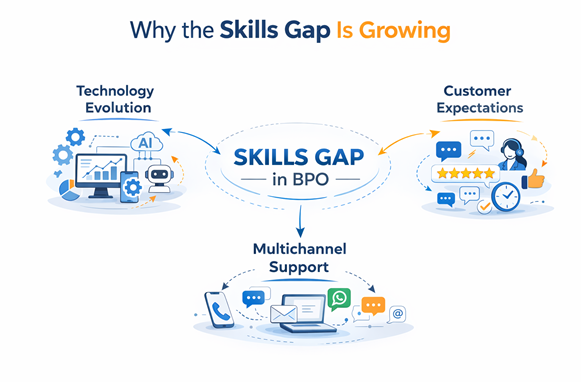
Focus Services Call Center Outsourcing Skills Gap

Call Center Outsourcing and the BPO Skills Gap: What Skills Matter Most

May 1, 2026/in Call Center Outsourcing, AI Agent Solutions, BPO Call Center Operations /by BenJoe Markland

The rapid evolution of technology is reshaping call center outsourcing at every level. As businesses scale customer engagement through outsourced models, they are no longer just looking for cost efficiency. They are demanding highly skilled teams that can deliver exceptional customer experiences while working alongside advanced technology.

This shift is creating a measurable skills gap across the BPO industry. Traditional call handling is no longer sufficient. Modern call center outsourcing requires agents who combine communication expertise with digital fluency, problem-solving ability, and adaptability to AI-driven environments.

For executives evaluating outsourcing strategies, understanding which skills matter most is critical to selecting the right partner and building a future-ready customer experience operation.

Listen more in out podcast: https://www.focusservices.com/podcasts/call-center-outsourcing-in-2026/


Why Call Center Outsourcing Is Driving New Skill Requirements

Call center outsourcing has moved beyond transactional support. It is now a strategic function that directly impacts revenue, retention, and brand perception.

Organizations outsource to achieve:

  • Scalable customer support without internal overhead

  • Faster response times across multiple channels

  • Access to trained talent and advanced technologies

  • Improved customer satisfaction and retention

However, these outcomes depend on the quality of the workforce. As outsourcing providers integrate automation and digital platforms, the required skill set for agents is expanding significantly.

The result is a widening gap between traditional agent capabilities and modern business expectations.


Understanding the Skills Gap in the Modern Call Center

The skills gap in a call center environment refers to the disconnect between the capabilities companies require and what the workforce currently offers.

Organizations are increasingly prioritizing AI agents to improve skills gap who can operate within technology-enabled ecosystems rather than relying solely on scripted interactions.

Modern call center environments now include:

  • AI-assisted workflows

  • Real-time analytics dashboards

  • Omnichannel communication platforms

  • CRM and knowledge base integrations

Agents must interpret data, adapt quickly, and deliver personalized experiences. Without these capabilities, performance declines even if headcount increases.


Focus Services Call Center Outsourcing Skills Gap

Focus Services Call Center Outsourcing Skills Gap

Why the Skills Gap Is Expanding

Rapid Adoption of AI and Automation

AI is now embedded in daily operations through tools like:

  • Intelligent routing

  • Real-time transcription

  • Automated response suggestions

  • Sentiment analysis

Agents are no longer just handling interactions. They are managing AI-assisted workflows. This requires a higher level of technical comfort and decision-making ability.

Rising Customer Expectations

Modern customers expect:

  • Immediate responses

  • Personalized interactions

  • Seamless transitions between channels

These expectations increase pressure on agents to perform at a higher level while managing more complex interactions.

Omnichannel Complexity

A modern call center operates across:

  • Voice

  • Chat

  • Email

  • Social platforms

Each channel requires different communication styles, response times, and technical workflows. Agents must switch seamlessly between them without losing quality.


Key Skills Required in Call Center Outsourcing

Advanced Communication and Customer Engagement

Communication is no longer just about clarity. It now includes:

  • Active listening

  • Emotional intelligence

  • Personalization

  • Brand alignment

In call center outsourcing, agents represent external brands. Their ability to communicate effectively directly impacts client reputation and customer loyalty.


Digital Literacy and Technology Fluency

Modern AI Solutions for call center environments require agents to:

  • Navigate CRM systems efficiently

  • Interpret real-time prompts and insights

  • Use knowledge bases effectively

  • Manage multiple digital tools simultaneously

Digital fluency is now a baseline requirement, not a differentiator.


Problem-Solving and Critical Thinking

As automation handles routine inquiries, human agents are left with more complex issues.

High-performing agents:

  • Analyze situations quickly

  • Identify root causes

  • Apply structured problem-solving frameworks

  • Deliver accurate resolutions under pressure

This is where human value increases as automation expands.


Emotional Intelligence and Empathy

Despite automation, customer experience remains fundamentally human.

Agents must:

  • Recognize emotional cues

  • De-escalate tense situations

  • Build trust quickly

  • Maintain professionalism under stress

Empathy remains one of the most defensible differentiators in a technology-driven environment.


Adaptability and Continuous Learning

Technology in outsourcing environments evolves constantly.

Top-performing teams:

  • Embrace ongoing training

  • Adapt to new tools quickly

  • Stay aligned with process updates

  • Transition into higher-value roles over time

Organizations that prioritize continuous learning outperform those that treat training as a one-time event.


How AI Solutions for Call Center Operations Are Reshaping Skills

AI is not replacing agents. It is redefining their role.

Modern AI Solutions for call center environments enhance performance by:

  • Providing real-time response recommendations

  • Automating repetitive workflows

  • Delivering instant customer context

  • Identifying sentiment and escalation risk

This allows agents to focus on:

  • Complex problem resolution

  • Relationship building

  • Revenue-generating interactions

AI-powered platforms are enabling organizations to improve both efficiency and customer satisfaction simultaneously.


Operational Impact of the Skills Gap

For executives, the skills gap is not just a talent issue. It is an operational risk.

Without the right skills:

  • Average handle time increases

  • First-call resolution declines

  • Customer satisfaction drops

  • Training costs rise

  • Employee turnover accelerates

With the right skills and structure:

  • Productivity improves

  • Customer experience becomes consistent

  • Scalability becomes predictable

  • Margin performance increases

This is why selecting the right call center outsourcing partner is critical.


How Call Center Outsourcing Providers Close the Skills Gap

Leading outsourcing providers address the skills gap through structured workforce strategies.

These include:

  • Continuous training and certification programs

  • AI-integrated workflows and coaching tools

  • Performance management systems

  • Specialized hiring and talent pipelines

A mature call center outsourcing provider does not just supply labor. It delivers a fully developed workforce aligned with modern CX requirements.


Practical Applications and Use Cases

Organizations across industries are leveraging outsourcing partners to address skill gaps:

E-commerce and Retail

  • High-volume support across chat and voice

  • AI-assisted order tracking and issue resolution

  • Personalized upsell and cross-sell interactions

Healthcare and Insurance

  • Complex customer inquiries requiring compliance awareness

  • AI-supported documentation and workflow management

  • Empathy-driven customer interactions

Financial Services

  • Fraud detection and escalation handling

  • High-stakes customer interactions requiring accuracy

  • Integration with secure digital platforms

In each case, the combination of skilled agents and AI-enabled systems drives better outcomes.


Building a Future-Ready Call Center Outsourcing Strategy

To remain competitive, organizations must rethink how they approach talent in outsourced environments.

Key priorities include:

  • Partnering with providers that invest in workforce development

  • Integrating AI into customer engagement workflows

  • Prioritizing quality over cost-only outsourcing decisions

  • Aligning CX strategy with business outcomes

The future of call center outsourcing will be defined by providers that combine talent, technology, and operational discipline.


Conclusion: Closing the Skills Gap Through Smarter Outsourcing

The skills gap in the BPO industry is real and growing. However, it is also an opportunity.

Organizations that embrace modern call center outsourcing can:

  • Access highly trained talent

  • Leverage advanced AI capabilities

  • Scale operations efficiently

  • Deliver superior customer experiences

Focus Services combines workforce expertise with AI-enabled solutions to help businesses close the skills gap and build high-performing customer engagement operations.

If you are evaluating your outsourcing strategy, now is the time to align with a partner that invests in both people and technology.

Explore how our call center outsourcing services can support your growth:

https://www.focusservices.com/contact/

Telemarketing Outsourcing: Save Money & Boost with AI

April 23, 2026/in Call Center Outsourcing, BPO Call Center Operations, Customer Service /by Jan Santafede

Companies face relentless pressure to generate qualified leads while controlling operational expenses. Telemarketing remains one of the most direct methods for reaching prospects, but building and maintaining an in-house team demands substantial capital investment, ongoing training costs, and infrastructure overhead. Smart organizations are discovering that strategic telemarketing outsourcing delivers both cost efficiency and performance gains, especially when enhanced with artificial intelligence capabilities that multiply agent effectiveness.

Understanding the Financial Impact of Telemarketing Outsourcing

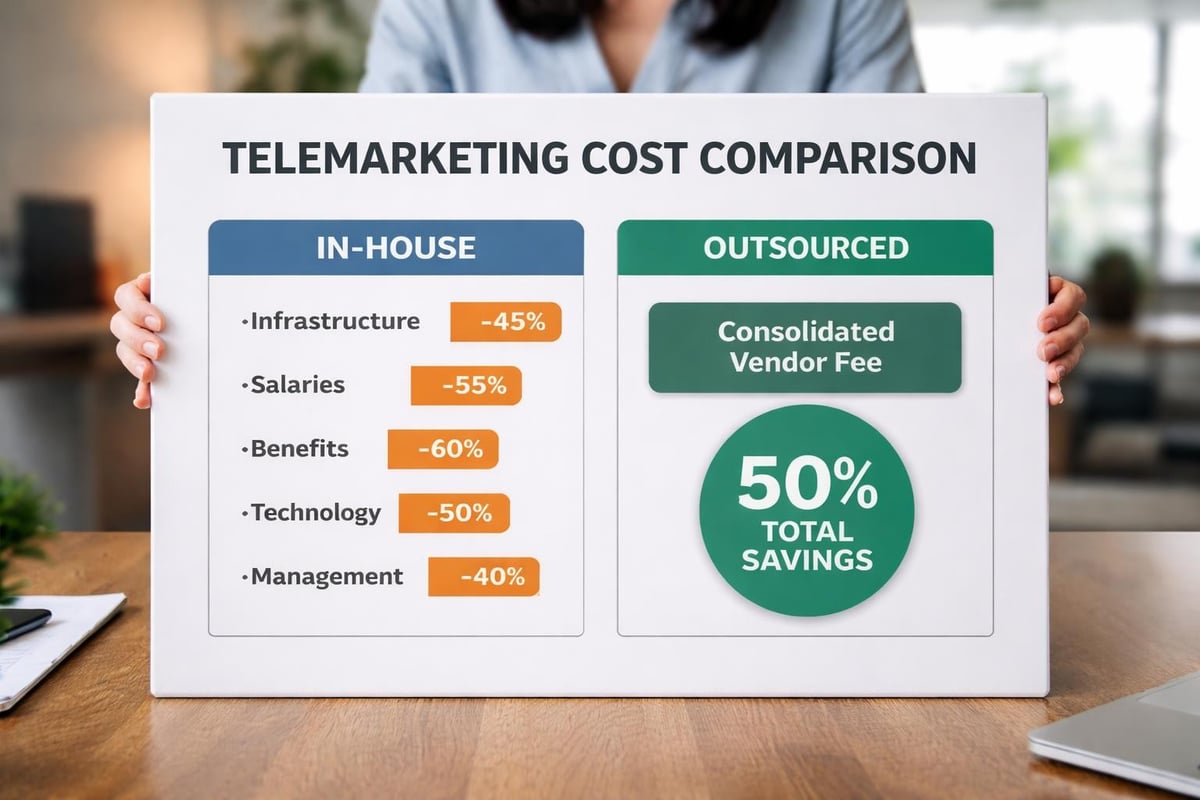
The economic advantages of outsourcing telemarketing operations extend far beyond simple wage differences. When organizations transition from in-house teams to external partners, they eliminate entire cost categories while gaining predictable monthly expenses.

Infrastructure savings represent the first major benefit. In-house telemarketing requires office space, workstations, computers, headsets, telephony systems, and dedicated IT support. These capital expenditures disappear when you partner with an established provider. The outsourcing firm absorbs facility costs, equipment depreciation, and technology maintenance.

Labor cost arbitrage creates substantial ongoing savings. Telemarketing outsourcing providers operating in markets like the Philippines, El Salvador, and South Africa offer access to talented professionals at compensation levels significantly lower than domestic markets. This geographic advantage translates directly to your bottom line without sacrificing quality.

Hidden Cost Reductions That Add Up

Beyond obvious savings, telemarketing outsourcing eliminates numerous hidden expenses that drain budgets:

  • Recruitment and onboarding costs disappear as the provider handles all hiring
  • Training program development becomes the vendor’s responsibility
  • Employee benefits packages include healthcare, retirement, and paid time off
  • Management overhead for team supervision and quality assurance
  • Technology licensing fees for CRM systems, dialers, and analytics platforms
  • Compliance and legal costs associated with employment regulations

Organizations typically reduce total telemarketing costs by forty to sixty percent through strategic outsourcing. The cost-benefit analysis reveals that even after vendor fees, the net savings remain substantial compared to maintaining equivalent in-house capacity.

Cost comparison breakdown

Read more

Focus Services Call Center Outsourcing Agents

Call Center Excellence: Strategies for Success in 2026

April 22, 2026/in BPO Call Center Operations, Call Center Outsourcing /by Jan Santafede

The modern call center has evolved from a simple telephone answering service into a sophisticated, multi-channel customer engagement hub. In 2026, businesses face unprecedented pressure to deliver exceptional customer experiences while managing operational costs and leveraging emerging technologies. Whether you’re running an in-house operation or partnering with outsourcing providers, understanding the core principles of call center excellence is essential for maintaining competitive advantage in today’s demanding marketplace.

The Strategic Foundation of Modern Call Center Operations

Building a successful call center requires more than just phones and computers. It demands a comprehensive strategy that aligns technology, people, and processes with your business objectives.

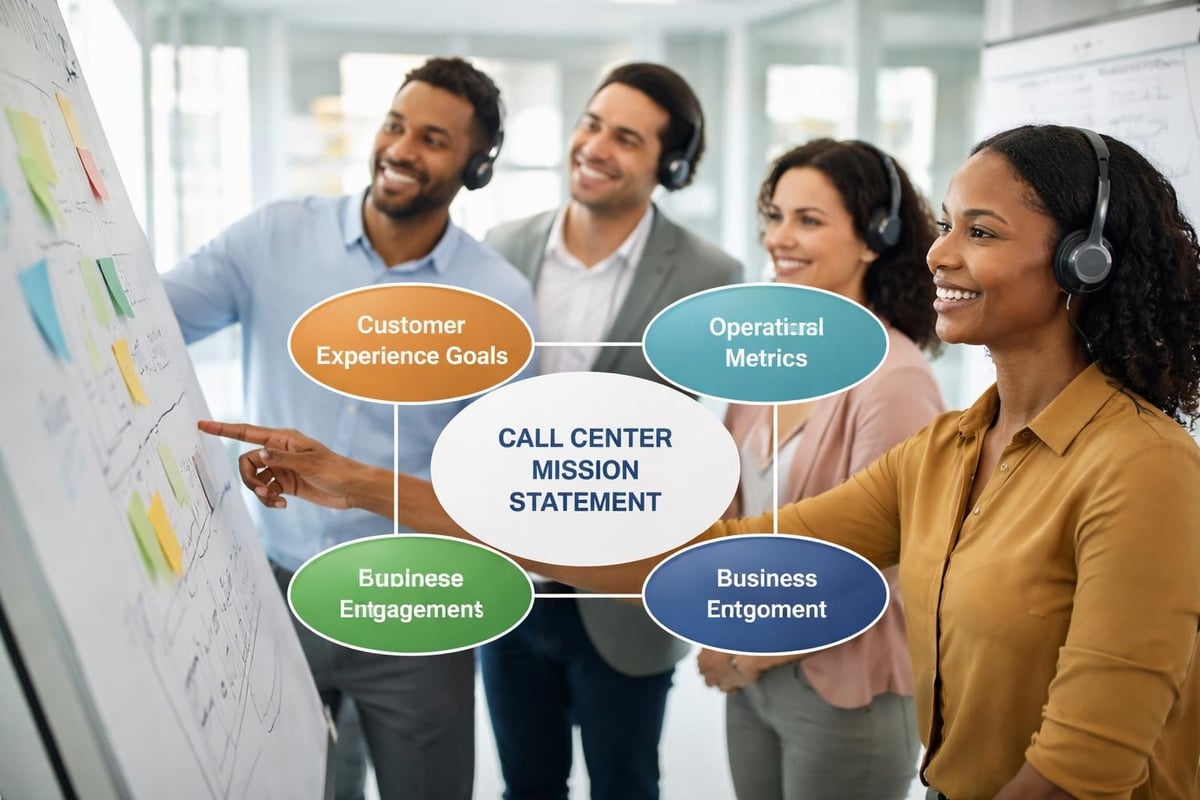
Defining Your Call Center Mission

Every high-performing call center starts with a clear mission statement. This foundation shapes everything from hiring decisions to technology investments. Your mission should articulate specific goals around customer satisfaction, operational efficiency, and business outcomes.

Key components of an effective mission include:

  • Customer experience targets and service level agreements
  • Revenue generation or cost savings objectives
  • Brand representation and communication standards
  • Employee development and retention priorities

When your team understands the “why” behind their work, they become more engaged and effective. This clarity translates directly into better customer interactions and improved business results.

Call center mission alignment

Read more

Call Center Oursourcing Customer Care: Elevating Service Excellence in 2026

April 16, 2026/in BPO Call Center Operations, Call Center Outsourcing /by Jan Santafede

The phrase “customer care” might seem redundant at first glance, but it represents a fundamental shift in how modern businesses approach service delivery. This concept extends beyond traditional customer service to encompass the comprehensive care organizations provide to their customer care teams, enabling those teams to deliver exceptional experiences to end users. In 2026, as companies navigate increasingly complex customer expectations and technological advancements, understanding and implementing effective customer care strategies has become essential for sustainable competitive advantage.

The Evolution of Customer Care Support Systems

Customer care represents the infrastructure, resources, and support systems organizations invest in their customer-facing teams. This multi-layered approach recognizes that exceptional customer experiences originate from well-supported, well-trained, and well-equipped service professionals.

The global shift toward outsourced customer care solutions has accelerated this evolution. Companies now recognize that their internal customer care strategies must extend to partner organizations and outsourcing providers. This expansion creates alignment across geographic boundaries and operational models.

Key Components of Effective Customer Care

Building a robust customer care framework requires attention to several critical elements that directly impact service quality and team performance:

  • Comprehensive training programs that prepare agents for diverse customer interactions
  • Technology infrastructure that empowers rather than constrains service delivery
  • Performance support systems that provide real-time guidance and resources
  • Well-being initiatives that address agent burnout and turnover
  • Career development pathways that retain top talent and build expertise
  • Quality assurance frameworks that maintain consistency across all touchpoints

Organizations implementing these components report significantly higher customer satisfaction scores and lower employee attrition rates. The connection between internal care systems and external service delivery becomes unmistakable when tracking these metrics over time.

Customer care care framework components

Read more

Customer Care Support: Building Excellence in 2026

April 15, 2026/in BPO Call Center Operations, Call Center Outsourcing /by BenJoe Markland

Customer care support has evolved from a reactive service function into a strategic business imperative that directly impacts customer retention, brand reputation, and revenue growth. In 2026, organizations across industries recognize that exceptional customer care support creates competitive advantages that technology alone cannot replicate. With customer expectations reaching unprecedented levels and communication channels multiplying, businesses must rethink their approach to delivering support experiences that balance efficiency with genuine human connection. This transformation requires sophisticated infrastructure, skilled teams, and technology integration that enhances rather than replaces the human element.

The Strategic Foundation of Customer Care Support

Building robust customer care support begins with understanding that every interaction represents an opportunity to strengthen customer relationships. Organizations that view support as an investment rather than a cost center consistently outperform competitors in customer satisfaction metrics and long-term profitability.

Aligning Support Operations with Business Objectives

The most effective customer care support programs align directly with broader business goals. This alignment ensures that support teams contribute measurably to customer lifetime value, reduce churn, and generate actionable insights that inform product development and service improvements.

Key alignment strategies include:

  • Establishing clear performance metrics that connect support activities to revenue outcomes
  • Integrating support data into executive dashboards and strategic planning sessions
  • Empowering support teams to escalate critical customer feedback to product and marketing teams
  • Creating feedback loops that transform customer pain points into business opportunities

When support operations function as isolated departments, valuable customer insights remain trapped in individual interactions rather than informing company-wide improvements. AI-powered contact centers leverage these insights systematically, transforming raw interaction data into strategic intelligence.

Customer care support framework

Technology Integration in Modern Customer Care Support

Technology has fundamentally transformed how organizations deliver customer care support, yet the most successful implementations maintain human expertise at their core. Research on AI transforming customer experiences demonstrates that automation works best when it complements human capabilities rather than attempting to replace them entirely.

Balancing Automation and Human Touch

The optimal customer care support model leverages automation for routine inquiries while preserving human intervention for complex, emotionally charged, or high-value interactions. This balance maximizes efficiency without sacrificing the personal connection that builds customer loyalty.

Support Channel Best Automated Use Best Human Use
Live Chat FAQ responses, order tracking, basic troubleshooting Complex technical issues, complaints, sales consultations
Voice Appointment scheduling, payment processing, simple inquiries Emotional situations, negotiations, detailed explanations
Email Confirmation messages, status updates, knowledge base links Personalized problem resolution, apology handling, relationship building
Social Media Acknowledgment responses, routing to appropriate channels Public complaint resolution, brand reputation management

Modern customer care support systems integrate artificial intelligence to route inquiries intelligently, suggest solutions to agents in real-time, and identify escalation triggers before situations deteriorate. However, voice communication remains essential in contact center operations because certain customer needs require the nuance and empathy that only human conversation provides.

Implementing Omnichannel Support Architecture

Customers expect seamless experiences regardless of which channel they use to contact support. Omnichannel customer service creates unified customer profiles that preserve context across interactions, eliminating the frustration of repeating information when switching channels.

Essential omnichannel capabilities:

  1. Unified customer data platforms that aggregate interaction history across all touchpoints
  2. Consistent knowledge bases accessible to agents regardless of communication channel
  3. Intelligent routing that considers previous interactions when assigning new inquiries
  4. Cross-channel analytics that reveal customer journey patterns and pain points

Organizations implementing omnichannel customer care support report significant improvements in first-contact resolution rates and customer satisfaction scores. The investment in integration infrastructure pays dividends through reduced handling times and improved agent productivity.

Building High-Performance Support Teams

Technology enables exceptional customer care support, but people deliver it. The quality of support teams directly determines whether organizations meet, exceed, or fall short of customer expectations.

Recruitment and Cultural Fit

Successful customer care support operations prioritize hiring individuals who demonstrate natural empathy, problem-solving abilities, and resilience. Technical skills can be taught, but core personality traits that align with service excellence prove far more difficult to develop.

The most effective recruitment strategies assess candidates through scenario-based evaluations that simulate actual customer interactions. These assessments reveal how candidates handle pressure, ambiguity, and difficult personalities far better than traditional interviews.

Global outsourcing providers maintain rigorous selection processes that identify talent across diverse markets, creating teams that combine cultural understanding with service expertise. Focus Services operates in multiple countries, enabling businesses to access skilled support professionals who understand regional customer expectations and communication preferences.

Customer care training program

Continuous Training and Development

Customer care support excellence requires ongoing investment in team development. Product updates, policy changes, and evolving customer expectations demand that agents continuously expand their knowledge and refine their skills.

Comprehensive training programs include:

  • Product and service expertise that enables agents to answer questions confidently
  • Soft skills development focused on active listening, de-escalation, and empathy
  • Technology proficiency ensuring agents maximize system capabilities
  • Industry knowledge that provides context for customer challenges and needs

Organizations that invest heavily in training report lower turnover rates, higher customer satisfaction scores, and improved first-contact resolution percentages. The cost of comprehensive training programs proves minimal compared to the expenses associated with customer churn and repeated contacts for unresolved issues.

Measuring Customer Care Support Performance

Effective measurement systems provide visibility into both operational efficiency and customer experience quality. The best metrics balance quantitative productivity indicators with qualitative measures of customer satisfaction and relationship strength.

Essential Performance Indicators

Metric Category Key Indicators Strategic Importance
Efficiency Average handle time, first-contact resolution, abandonment rate Operational cost management and resource optimization
Quality Customer satisfaction score, net promoter score, quality assurance scores Customer relationship strength and loyalty prediction
Business Impact Customer lifetime value, retention rate, resolution cost Direct financial contribution and ROI demonstration
Agent Performance Adherence rate, utilization rate, schedule efficiency Workforce optimization and capacity planning

Modern customer care support operations leverage real-time dashboards that provide immediate visibility into performance trends, enabling managers to identify and address issues before they escalate. These systems alert supervisors when metrics deviate from established thresholds, facilitating proactive intervention.

Quality Assurance and Continuous Improvement

Systematic quality monitoring ensures that customer care support maintains consistent standards across all interactions. Regular calibration sessions align evaluators on quality criteria, reducing subjective variation in assessment scores.

Quality assurance best practices:

  1. Random sampling across all channels, times, and agent experience levels
  2. Balanced scorecards that evaluate both compliance and customer experience factors
  3. Coaching sessions that transform evaluation findings into skill development opportunities
  4. Customer feedback integration that validates internal quality assessments

Organizations committed to improvement establish formal review cycles that analyze quality trends, identify root causes of recurring issues, and implement targeted interventions. Crafting effective customer support strategies requires this systematic approach to continuous enhancement.

Addressing the Trust Challenge in AI-Enabled Support

As artificial intelligence becomes more prevalent in customer care support, organizations face growing customer skepticism about automated interactions. The trust recession affecting AI reflects customer concerns about data privacy, impersonal service, and reduced access to human assistance.

Building Trust Through Transparency

Customers respond more positively to AI-enabled customer care support when organizations communicate clearly about when and how automation is used. Transparency about AI involvement, combined with easy escalation to human agents, reduces anxiety and improves acceptance.

Trust-building approaches include:

  • Clear disclosure when customers interact with chatbots or automated systems
  • Simple, obvious paths to reach human agents when AI cannot resolve issues
  • Privacy protections that demonstrate respect for customer data
  • Continuous improvement based on customer feedback about automated experiences

The most successful implementations position AI as a tool that enhances human capabilities rather than replacing personal service. When customers understand that automation handles routine tasks so human agents can focus on complex needs, they view technology as improving rather than degrading their experience.

Global Support Operations and Cultural Competency

Organizations expanding into international markets must adapt customer care support to accommodate cultural differences, language preferences, and regional expectations. Support strategies that succeed in one market may fail in another without thoughtful localization.

Leveraging Global Talent Pools

Distributed customer care support operations access talent pools with native language skills and cultural understanding that improve customer connections. Teams located in customer time zones provide convenient service hours without requiring night shifts that increase costs and reduce agent performance.

The Philippines, El Salvador, South Africa, and the United States each offer distinct advantages for customer care support operations. Philippine teams provide exceptional English proficiency and cultural alignment with North American customers. El Salvador offers nearshore advantages with minimal time zone differences. South Africa combines multilingual capabilities with cultural diversity. United States-based teams deliver domestic market expertise and regional accent alignment.

Global support infrastructure

Organizations partnering with global providers gain flexibility to scale operations, access specialized skills, and implement follow-the-sun support models without managing multiple international facilities. This approach reduces infrastructure costs while maintaining service quality.

The Human Element in Digital-First Support

Despite technological advances, maintaining human connection in the age of AI remains essential for building lasting customer relationships. Digital efficiency cannot replace emotional intelligence when customers face frustrating situations or complex problems.

Empathy as Competitive Advantage

Customer care support that demonstrates genuine empathy transforms potentially negative experiences into relationship-strengthening opportunities. When agents acknowledge customer frustration, validate concerns, and take ownership of resolution, they create emotional connections that transcend transactional interactions.

Empathy-driven practices:

  • Active listening techniques that ensure customers feel heard and understood
  • Emotional labeling that acknowledges customer feelings explicitly
  • Personalized responses that reference customer history and context
  • Proactive communication that keeps customers informed throughout resolution processes

Organizations that prioritize empathy in customer care support consistently achieve higher net promoter scores and customer retention rates. These outcomes reflect the fundamental truth that customers remember how interactions made them feel long after they forget specific details.

Future-Proofing Customer Care Support

Current customer service trends indicate that successful organizations will continue integrating advanced technology while preserving the human elements that customers value. Preparing for this future requires strategic investments in both infrastructure and people.

Preparing for Emerging Technologies

Customer care support will increasingly incorporate advanced analytics, predictive intelligence, and augmented reality tools that enhance agent capabilities. Organizations that build flexible technology architectures position themselves to adopt innovations as they mature without requiring complete system overhauls.

Future-ready capabilities include:

  1. Cloud-based platforms that enable rapid deployment of new features and integrations
  2. API-first architectures that facilitate connections with emerging tools and systems
  3. Data infrastructures that support advanced analytics and machine learning applications
  4. Workforce management systems that optimize scheduling across multiple channels and locations

The pace of technological change demands that customer care support operations maintain agility and adaptability. Organizations locked into rigid systems struggle to compete as customer expectations evolve and new communication channels emerge.

Developing Adaptive Workforces

Future customer care support teams will require broader skill sets that combine technical proficiency with advanced interpersonal capabilities. Agents who can seamlessly transition between assisted AI interactions and unscripted problem-solving will deliver the flexibility that modern customer expectations demand.

Progressive organizations invest in career development programs that transform entry-level support roles into professional growth opportunities. These programs reduce turnover, improve institutional knowledge retention, and create talent pipelines for leadership positions.

Exploring careers in customer care support reveals opportunities for individuals seeking meaningful work that combines technology interaction with human connection. The industry continues evolving, creating roles that did not exist five years ago and opportunities that will emerge in the coming years.


Delivering exceptional customer care support in 2026 requires sophisticated integration of technology, talented teams, and strategic vision that places customer relationships at the center of business operations. Organizations that invest in comprehensive support infrastructure, continuous improvement, and cultural alignment position themselves for sustainable competitive advantage. Focus Services partners with companies from startups to enterprise operations to build high-performance customer care programs backed by global teams, AI-enabled optimization, and proven methodologies that transform support from a cost center to a strategic asset.

IT Help Desk Call Center Tech Support Focus Services

Customer Care: Building Excellence in 2026

April 14, 2026/in BPO Call Center Operations, call center, Call Center Outsourcing /by Jan Santafede

The landscape of customer service has fundamentally transformed over the past decade, but one principle remains constant: exceptional customer care drives business growth and creates lasting competitive advantage. As organizations navigate increasingly complex customer expectations in 2026, the distinction between transactional support and genuine customer care has never been more critical. Companies that master customer care don’t just resolve issues-they build relationships, anticipate needs, and create experiences that turn customers into advocates. This comprehensive approach requires strategic planning, technological investment, and a workforce trained to deliver excellence at every touchpoint.

Understanding the Foundation of Customer Care

Customer care extends far beyond answering phones and responding to emails. It represents a holistic approach to every interaction your organization has with customers, from pre-sale inquiries to post-purchase support and ongoing relationship management. The fundamental concept of customer care emphasizes building trust through consistent, empathetic engagement that prioritizes customer success over short-term metrics.

Modern customer care operates on several core principles that separate exceptional programs from mediocre ones. Proactive engagement means reaching out before problems escalate, personalized interactions demonstrate you understand individual customer contexts, and continuous improvement ensures your service evolves with changing expectations. These principles require organizational commitment that extends from executive leadership through every team member.

Core principles of customer care

Read more

Page 1 of 3123
Focus Services Logo

Global BPO and AI-enabled customer experience solutions. Nearshore and offshore call center outsourcing built for growth-focused companies.

Call Us:
(801) 393-1635

© 2005–2026 Focus Services, LLC. All Rights Reserved.

Our Services

  • Call Center Outsourcing
  • Customer Care Outsourcing
  • AI Agent Solutions
  • Sales Call Center Outsourcing
  • IT Outsourcing
  • Tech Support Outsourcing
  • Utility Call Center Outsourcing
  • BPO Operational Excellence

Company

  • About Us
  • Leadership
  • Careers
  • Blog
  • Podcast
  • Locations
  • Industries
  • Privacy Policy
  • Terms of Service

Get Started

Talk to a BPO specialist. No pitch. Just answers.

Schedule Your Strategy Call

Follow Us

LinkedIn Facebook YouTube Instagram
Scroll to top