Focus Services
  • Home
  • Services
    • Customer Care Outsourcing
    • Sales Outsourcing
    • Tech Support Outsourcing
    • AI Agent Solutions
    • IT Outsourcing
  • AI Agent Solutions
  • Industries
    • Utilities
    • Travel
    • E-commerce
  • Locations
  • Resources
    • Blog
    • Podcast
    • Case Studies
    • Company Updates
  • About Us
    • Leadership
    • Careers
      • Apply
  • Schedule Your Discovery Call
  • Click to open the search input field Click to open the search input field Search
  • Menu Menu
  • Link to LinkedIn
  • Link to Facebook
  • Link to Youtube
  • Link to Instagram

Outbound Call Center Outsourcing: Strategic Guide 2026

May 10, 2026/0 Comments/in Call Center Outsourcing /by BenJoe Markland

Outbound call center outsourcing has evolved from a simple cost-cutting measure into a strategic growth accelerator for businesses across every sector. Companies today face mounting pressure to generate qualified leads, nurture customer relationships, and drive revenue while managing lean internal teams. By partnering with specialized providers, organizations gain immediate access to trained agents, proven infrastructure, and performance optimization systems that would take years and millions of dollars to build in-house. This approach transforms outbound calling from an operational burden into a competitive advantage.

Listen to our podcast: https://www.focusservices.com/podcasts/outbound-call-center-guide-2026/

Understanding the Outbound Call Center Outsourcing Landscape

The outbound calling ecosystem has undergone dramatic transformation over the past decade. Modern outbound call centers leverage sophisticated technology stacks that combine predictive dialers, CRM integration, quality monitoring systems, and AI-powered analytics to maximize agent productivity and campaign effectiveness. These capabilities require significant capital investment and specialized expertise that most businesses cannot justify maintaining internally.

Outbound call center outsourcing delivers several distinct operational models. Some organizations prefer dedicated teams that function as branded extensions of their internal sales or retention departments. Others opt for shared agent pools that handle multiple campaigns across different clients, maximizing cost efficiency during slower periods. Hybrid arrangements combine both approaches, dedicating core teams to primary campaigns while using flexible capacity for overflow or seasonal demand.

Key Service Categories in Outbound Outsourcing

Different business objectives require different outbound calling approaches. Understanding these service categories helps organizations select the right outsourcing partner and structure effective programs.

Lead generation and qualification represents the most common outbound application. Specialized teams reach out to targeted prospect lists, verify contact information, assess buying intent, and schedule appointments for field sales representatives or account executives. This function removes the burden of cold outreach from high-value internal salespeople.

Customer retention and winback programs focus on existing customer bases. Agents contact at-risk accounts identified through churn prediction models, address concerns, present retention offers, and rebuild relationships before customers defect to competitors. These campaigns often deliver the highest ROI of any outbound initiative.

Market research and surveys provide invaluable customer insights. Trained interviewers conduct telephone surveys, gather feedback on new products or services, validate marketing assumptions, and collect data that informs strategic decisions across the organization.

Appointment setting and event promotion supports both B2B and B2C operations. Teams confirm scheduled appointments, reduce no-show rates, promote webinars or events, and fill calendars for consultative sales processes that require face-to-face interaction.

Outbound calling service categories

Strategic Advantages of Outsourcing Outbound Operations

Cost reduction typically dominates initial outsourcing discussions, but the financial benefits extend far beyond simple labor arbitrage. When companies build internal outbound teams, they absorb recruiting costs, training expenses, technology licensing fees, facility overhead, benefits packages, and management salaries. These fixed costs continue regardless of campaign performance or seasonal fluctuations.

Outsourcing converts these fixed expenses into variable costs tied directly to production. Businesses pay for actual talk time, qualified leads delivered, or appointments set rather than maintaining idle capacity during slow periods. This financial flexibility proves especially valuable for companies with seasonal demand cycles or those testing new market segments before committing internal resources.

Access to Specialized Expertise and Technology

The performance gap between average and exceptional outbound calling operations is substantial. Elite sales call center teams employ proven methodologies for script development, objection handling, call flow optimization, and conversion improvement that take years to develop internally. These teams train continuously on industry-specific nuances, regulatory compliance requirements, and evolving best practices.

Technology infrastructure represents another significant advantage. Professional outsourcing providers invest in enterprise-grade platforms that most mid-market companies cannot justify purchasing independently. These systems include:

  • Predictive dialing technology that maximizes agent talk time by eliminating manual dialing, busy signals, and unanswered calls
  • Call recording and quality monitoring systems that capture every conversation for coaching, compliance, and dispute resolution
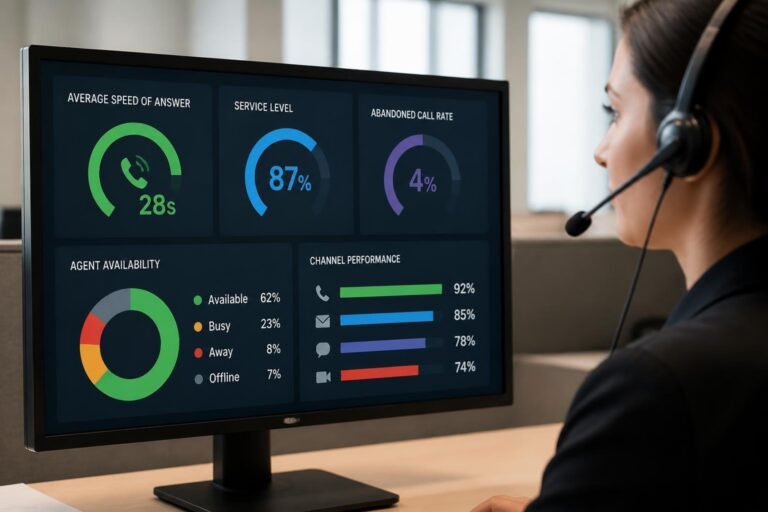
  • Real-time analytics dashboards that track key performance indicators and enable immediate campaign adjustments
  • CRM integration frameworks that synchronize customer data across systems and maintain updated contact records

The best practices for managing outbound call center operations emphasize continuous improvement cycles that most businesses cannot sustain with part-time or inexperienced internal teams.

Scalability and Flexibility Benefits

Revenue growth creates operational challenges. A company that suddenly needs to double its outbound calling capacity cannot simply hire twenty new agents next week. Recruiting, interviewing, onboarding, training, and ramping new hires to full productivity typically requires 60 to 90 days even under ideal conditions. During that lag, market opportunities evaporate and competitors capture available demand.

Outbound call center outsourcing eliminates these scaling constraints. Established providers maintain bench strength across their operations, allowing rapid deployment of trained agents when clients need expanded capacity. This flexibility works in both directions, as companies can scale down during slower periods without the trauma of layoffs or the sunk costs of empty workstations.

Scaling Factor Internal Team Outsourced Team
Ramp-up time for 20 agents 60-90 days 7-14 days
Technology infrastructure cost $150K-$300K upfront Included in per-hour rate
Seasonal downsizing flexibility Limited (severance, morale impact) High (contract adjustment)
Geographic expansion capability Requires new facility Immediate through existing sites

Multi-Channel and Multi-Market Capabilities

Modern customers expect engagement across their preferred channels. While outbound calling remains highly effective for many applications, integrating phone outreach with email follow-up, SMS messaging, and social media creates comprehensive campaigns that outperform single-channel approaches. Many call center outsourcing companies now offer these integrated capabilities as standard service offerings.

Geographic and linguistic expansion presents similar challenges for internal teams. A business targeting Spanish-speaking markets in Latin America needs native speakers who understand cultural nuances and regional dialects. Building this capability internally requires establishing operations in new markets or recruiting specialized talent in expensive domestic markets. Outsourcing partners with global operations in regions like the Philippines, El Salvador, and South Africa provide immediate access to multilingual talent pools without the complexity of international expansion.

Global outbound scaling

Selecting the Right Outbound Outsourcing Partner

Not all outsourcing providers deliver equivalent results. The partnership between a business and its outbound call center determines campaign success far more than any individual technology or methodology. Organizations should evaluate potential partners across multiple dimensions before committing to long-term agreements.

Vertical specialization matters significantly in outbound calling. An outsourcer with deep experience in financial services understands regulatory requirements like TCPA compliance, accredited investor verification, and disclosure obligations that generic providers might overlook. Similarly, healthcare-focused centers navigate HIPAA requirements and insurance verification processes that require specialized training. Businesses should prioritize partners who demonstrate relevant industry expertise rather than generalist operations.

Technology infrastructure and integration capabilities separate leaders from followers. The most effective outbound programs synchronize seamlessly with existing CRM platforms, marketing automation systems, and business intelligence tools. During evaluation, companies should assess API availability, data security protocols, real-time reporting capabilities, and system redundancy measures that prevent campaign disruptions during technical failures.

Performance Metrics and Accountability Structures

Successful outbound call center outsourcing relationships establish clear performance expectations from day one. Vague agreements that promise “quality service” or “best efforts” create misalignment and disappointment. Instead, contracts should specify measurable objectives tied to business outcomes.

Contact rate measures the percentage of dial attempts that reach live decision-makers rather than voicemail, disconnected numbers, or gatekeepers. Industry benchmarks vary by vertical and list quality, but rates below 20% typically indicate data problems or targeting issues that require immediate attention.

Conversion rate tracks the percentage of contacts that complete the desired action, whether scheduling appointments, agreeing to product demonstrations, or accepting offers. This metric directly correlates with revenue generation and provides the clearest measure of campaign effectiveness.

Average handle time balances efficiency with quality. While shorter calls reduce costs, rushed conversations that skip relationship-building or fail to address objections produce lower conversion rates. Optimal handle times vary by campaign complexity and should be established through testing rather than arbitrary mandates.

Quality scores assess whether agents follow approved scripts, maintain professional demeanor, accurately record information, and comply with regulatory requirements. Most providers implement multi-tiered quality assurance programs that include live call monitoring, recorded call reviews, and periodic calibration sessions.

A 30-minute strategy call with specialists who have built and run call centers at scale can provide clarity on realistic performance expectations and help establish appropriate benchmarks for specific industries and campaign types.

Implementation Best Practices for Outbound Campaigns

Launching successful outbound initiatives requires more than simply handing contact lists to an outsourcing partner and waiting for results. The most effective programs involve collaborative planning that aligns both parties around shared objectives and clearly defined processes.

Data Quality and List Management

No amount of agent skill or technology sophistication can overcome poor data quality. Outbound campaigns require accurate, current contact information that targets the right decision-makers with appropriate messaging. Companies should invest in list hygiene processes that remove disconnected numbers, update contact information, suppress DNC registrations, and append missing data fields before campaign launch.

The best practices for outbound call centers emphasize continuous list refinement throughout campaign lifecycles. Agents should flag bad data in real-time, systems should automatically suppress unproductive numbers after multiple failed attempts, and analytics should identify patterns that reveal broader data quality issues requiring resolution.

List segmentation improves results by tailoring messaging and timing to specific audience segments. Rather than treating all prospects identically, sophisticated campaigns group contacts by:

  • Prior engagement history (new leads versus warm prospects versus previous customers)
  • Demographic characteristics (age, income, location, company size)
  • Behavioral indicators (website visits, content downloads, event attendance)
  • Purchase authority (decision-makers versus influencers versus end-users)

Script Development and Continuous Optimization

Effective outbound scripts balance structure with flexibility. Rigid scripts that require word-for-word recitation sound robotic and fail when conversations deviate from expected paths. Conversely, completely unstructured approaches produce inconsistent messaging and make quality monitoring nearly impossible.

The optimal approach provides proven opening statements, core value propositions, objection responses, and closing language while empowering agents to adapt phrasing to individual conversations. These comprehensive guides to outbound calling recommend collaborative script development that incorporates input from sales leaders, top-performing agents, and legal compliance teams.

Scripts should evolve based on performance data. A/B testing different opening statements, value propositions, or closing techniques reveals which approaches drive higher conversion rates with specific audience segments. Regular review sessions that analyze call recordings identify new objections that require scripted responses or outdated talking points that no longer resonate with prospects.

Compliance and Risk Management Considerations

Outbound calling operates within complex regulatory frameworks that vary by country, industry, and contact type. The Telephone Consumer Protection Act (TCPA) in the United States, GDPR provisions in Europe, and similar regulations worldwide impose strict requirements on when, how, and whom businesses can contact via telephone. Violations carry severe penalties including statutory damages, regulatory fines, and reputational harm.

Professional outsourcing providers maintain dedicated compliance teams that monitor regulatory developments, update calling procedures, manage consent documentation, and implement safeguards that protect client businesses from liability. These programs typically include:

  1. Do Not Call (DNC) list scrubbing before every campaign to remove registered numbers from calling queues
  2. Time-of-day restrictions that prevent calls during prohibited hours based on recipient time zones
  3. Consent verification systems that document permission for contact and maintain audit trails
  4. Call recording and retention policies that preserve evidence of compliant practices
  5. Agent training programs that educate calling teams on current regulations and proper procedures

The importance of compliance-first approaches in modern outbound operations cannot be overstated as regulatory scrutiny intensifies and consumer protection advocacy grows stronger.

Outbound compliance framework

Technology Integration and Performance Analytics

Modern outbound call center outsourcing succeeds through seamless technology integration that connects calling operations with broader business systems. The most valuable partnerships extend beyond simple lead delivery to provide rich performance data that informs strategic decisions across marketing, sales, and customer success functions.

CRM synchronization ensures that every call outcome, conversation note, and contact update flows automatically into central customer databases. This bidirectional integration allows agents to access complete customer histories during calls while updating records in real-time as conversations conclude. The result is consistent data across the organization and elimination of manual data entry that introduces errors and delays.

Marketing automation integration closes the loop between campaign execution and prospect nurturing. When outbound teams identify interested but not-yet-ready prospects, automated workflows can deliver targeted email sequences, retargeting advertisements, or educational content that maintains engagement until buying intent strengthens. Similarly, marketing systems can trigger outbound follow-up calls when prospects demonstrate specific behaviors like pricing page visits or free trial expirations.

Real-Time Performance Monitoring and Optimization

The shift toward AI-powered performance gains in call centers enables unprecedented visibility into campaign performance and agent productivity. Modern platforms track dozens of metrics simultaneously, identify emerging patterns, and alert managers to issues requiring immediate intervention.

Live dashboards display current campaign status across multiple dimensions including:

  • Agents currently logged in and available versus idle or in after-call work
  • Calls attempted, connected, and converted during current shift
  • Average wait time for callbacks or scheduled follow-ups
  • Queue depth and estimated time to contact remaining leads
  • Individual agent performance compared to team averages

Predictive analytics leverage historical performance data to forecast future results and optimize resource allocation. Machine learning algorithms identify which contact attributes correlate with higher conversion rates, predict optimal calling times for different prospect segments, and recommend list prioritization strategies that maximize campaign ROI.

Speech analytics tools analyze recorded conversations to extract actionable insights beyond simple conversion metrics. These systems detect emotional sentiment, identify frequently mentioned objections or concerns, measure talk-time ratios between agents and prospects, and flag conversations that deviate from compliance requirements. Organizations can use these insights to refine scripts, improve training programs, and recognize top performers who demonstrate excellence in specific competencies.

Cost Structures and ROI Considerations

Outbound call center outsourcing pricing models vary significantly based on service scope, geographic location, technology requirements, and performance expectations. Understanding these structures helps organizations budget appropriately and evaluate proposals from multiple providers.

Per-hour pricing represents the most common model for general outbound calling. Providers charge a fixed hourly rate per agent, typically ranging from $18 to $45 depending on location, specialization, and service level. This straightforward approach works well for campaigns with predictable volume and relatively stable staffing requirements.

Per-contact or per-lead pricing shifts risk toward the provider by tying compensation to actual production rather than time investment. Businesses pay only for qualified leads delivered, appointments scheduled, or surveys completed according to agreed specifications. While per-unit rates appear higher than hourly equivalents, this model eliminates payment for unproductive time and aligns incentives around results.

Performance-based pricing takes outcome focus further by incorporating revenue share or success fees into compensation structures. These arrangements work best for high-value transactions where individual conversions generate substantial revenue and close tracking is feasible. The model creates strong alignment but requires sophisticated attribution systems and clear definition of qualifying events.

Pricing Model Best For Typical Rate Range Risk Distribution
Per Hour Predictable volume, general outbound $18-$45/hour Client bears performance risk
Per Contact Lead generation, appointment setting $15-$75/contact Shared risk, provider absorbs unproductive time
Per Qualified Lead B2B sales, complex qualification $50-$300/lead Provider bears most risk
Revenue Share High-value transactions, consultative sales 10-30% of revenue Fully aligned incentives

ROI calculation for outbound call center outsourcing should account for both direct and indirect value creation. Direct returns include incremental revenue from new customers acquired, retention value from saved accounts, or cost savings from improved operational efficiency. Indirect benefits encompass market intelligence gathered during prospect conversations, competitive insights from objection analysis, and organizational learning that informs product development or positioning strategy.

Managing the Transition to Outsourced Operations

Organizations moving outbound calling functions from internal teams to external providers face change management challenges that extend beyond operational logistics. Successful transitions require careful planning, clear communication, and realistic timelines that account for knowledge transfer and relationship building.

Knowledge documentation forms the foundation of effective transitions. Companies should compile comprehensive campaign guides that detail target audience definitions, value propositions, competitive differentiators, common objections with recommended responses, escalation procedures, and success criteria. This documentation accelerates new team onboarding and ensures consistency with historical approaches.

Pilot programs reduce risk by validating partnership fit before full-scale deployment. A limited pilot running a single campaign or geographic market for 30 to 60 days reveals potential issues with technology integration, communication processes, or performance expectations while stakes remain relatively low. Successful pilots build confidence and create momentum for broader expansion.

The challenges and strategies in transitioning between outsourcing vendors demonstrate the importance of structured handoff processes that minimize disruption to ongoing campaigns and preserve institutional knowledge that might otherwise disappear during provider changes.

Ongoing Partnership Management

The relationship between businesses and their outbound call center outsourcing partners requires active management to maintain alignment and drive continuous improvement. Regular touchpoints create opportunities to address emerging issues, celebrate successes, and adapt strategies as market conditions evolve.

Weekly operational reviews focus on tactical performance across active campaigns. These sessions examine key metrics, discuss agent feedback or common prospect objections, adjust calling schedules or list priorities, and resolve technical issues affecting productivity. Participation should include operational managers from both organizations who possess authority to make immediate decisions.

Monthly strategic reviews step back from daily execution to assess broader trends and opportunities. These meetings evaluate campaign ROI, review competitive intelligence gathered during calls, explore new market segments or product applications, and plan capacity adjustments for upcoming periods. Executive participation signals commitment and enables strategic pivots that require organizational buy-in.

Quarterly business reviews provide comprehensive performance assessment and relationship health checks. Detailed analytics compare results against established benchmarks, celebrate achievements, identify improvement opportunities, and reset objectives for coming periods. These sessions also address contractual matters, pricing adjustments, or service scope modifications that require formal agreement.

Future Trends Shaping Outbound Outsourcing

The outbound calling landscape continues evolving as technology advances, regulatory frameworks tighten, and customer expectations shift. Organizations planning long-term outsourcing partnerships should understand emerging trends that will shape operations over the next three to five years.

AI-powered conversation intelligence represents the most transformative development in outbound calling technology. Advanced systems now analyze voice patterns, speech cadence, emotional tone, and conversational dynamics in real-time, providing agents with coaching prompts during live calls. These tools suggest optimal responses to detected objections, alert supervisors when conversations require intervention, and automatically populate CRM fields based on conversation content without manual data entry.

Omnichannel orchestration integrates outbound calling with email, SMS, social media, and other channels to create coordinated prospect engagement sequences. Rather than relying solely on phone contact, modern campaigns use calling as one touchpoint within broader nurturing programs that meet prospects through their preferred channels at optimal times.

Regulatory evolution continues reshaping permissible outbound practices. Anticipated developments include expanded consent requirements, stricter call volume limitations, enhanced caller ID authentication mandates, and increased penalties for violations. The role of personalization and automation in 2025 outbound strategies emphasizes adaptation to these changing requirements while maintaining campaign effectiveness.

Hybrid workforce models blend traditional call center agents with gig economy contractors and AI-powered virtual agents. This approach provides unprecedented scalability and cost flexibility while introducing new management challenges around quality consistency, data security, and performance monitoring across diverse worker populations.

Organizations exploring these capabilities benefit from partnering with providers who invest continuously in emerging technologies and maintain flexible service models that adapt as client needs evolve. If you are managing cost pressure, staffing challenges, and rising customer expectations simultaneously, Schedule Your Strategy Call Today to gain a clear picture of what outsourcing can realistically deliver for your specific operation through an honest conversation with specialists who have built and run call centers at scale.


Outbound call center outsourcing delivers measurable advantages across cost efficiency, operational flexibility, technology access, and performance optimization when structured properly. Success requires selecting partners with relevant expertise, establishing clear performance expectations, maintaining active relationship management, and adapting strategies as markets and technologies evolve. Focus Services operates high-performance outbound programs across the United States, El Salvador, the Philippines, and South Africa with AI-enabled workforce optimization and proven methodologies that drive customer acquisition and revenue growth for companies from startups to enterprise operations.

Agent Customer Care: AI Agents Boost CSAT in 2026

May 9, 2026/0 Comments/in Call Center Outsourcing /by BenJoe Markland

The landscape of agent customer care has fundamentally shifted in 2026, driven by artificial intelligence technologies that amplify human capabilities rather than replace them. Call centers are no longer choosing between human agents and AI systems. Instead, leading organizations are deploying AI agents as intelligent assistants that work alongside human representatives to deliver superior customer experiences. This hybrid approach is producing measurable improvements in customer satisfaction scores (CSAT) while simultaneously reducing operational costs and agent burnout. For businesses evaluating outsourcing partners or optimizing existing contact center operations, understanding how AI agents enhance traditional customer care delivery has become essential to maintaining competitive advantage.

Listen to our podcast: https://www.focusservices.com/podcasts/customer-care-ai-agents/

The Evolution of Agent Customer Care in the AI Era

Traditional contact centers have long struggled with inconsistent service quality, high training costs, and agent turnover rates that disrupt customer experience. Human agents face immense pressure to resolve issues quickly while maintaining empathy and accuracy across hundreds of daily interactions. AI agents are now addressing these fundamental challenges by providing real-time support that elevates every customer interaction.

Modern AI agents function as intelligent co-pilots that analyze conversations in real time, surface relevant knowledge base articles, suggest optimal responses, and flag potential escalation scenarios before they deteriorate. This technology doesn’t eliminate the human element that customers value. Instead, it removes friction from the support process and empowers agents to focus on relationship-building rather than information retrieval.

How AI Agents Transform Daily Operations

The operational impact of AI-enhanced agent customer care becomes evident across multiple dimensions of contact center performance:

  • Instant knowledge access: AI agents search entire documentation libraries in milliseconds, delivering precise answers while human agents maintain conversational flow
  • Quality assurance automation: Every interaction receives consistent evaluation against predetermined standards, eliminating sampling bias
  • Sentiment analysis: Real-time emotional intelligence alerts supervisors to distressed customers requiring immediate intervention
  • Multilingual support: Translation and cultural context assistance expand service capabilities without proportional staffing increases

These capabilities create a foundation for sustained CSAT improvements that traditional training programs struggle to achieve. According to research on AI customer care viability, organizations implementing AI support systems report significant gains in both service speed and consistency.

AI agent providing real-time support to human customer care agent

Measurable CSAT Improvements Through AI Agent Integration

Customer satisfaction scores provide the clearest evidence of AI agent impact on service quality. Organizations that integrate AI assistance into their agent customer care workflows consistently report CSAT increases ranging from 12% to 28% within the first six months of deployment. These gains stem from several interconnected factors that address root causes of customer frustration.

Resolution speed represents the most immediate CSAT driver that AI agents influence. When human agents receive instant access to troubleshooting protocols, account history, and product specifications, average handle time decreases while first-call resolution rates climb. Customers experience faster issue resolution without feeling rushed or transferred between departments.

The Data Behind Customer Satisfaction Gains

CSAT Metric Pre-AI Baseline Post-AI Implementation Improvement
First Call Resolution 68% 84% +16 points
Average Handle Time 8.2 minutes 6.1 minutes -26%
Customer Effort Score 3.8/5 4.6/5 +21%
Net Promoter Score 32 51 +19 points

These improvements reflect fundamental changes in how agent customer care operates when AI removes barriers to excellent service delivery. The reduction in customer effort particularly influences satisfaction scores, as buyers increasingly prioritize convenience over other service attributes.

Consistency across interactions represents another critical CSAT factor that AI agents dramatically improve. Human agents naturally vary in knowledge depth, communication style, and problem-solving approaches. AI systems ensure every customer receives accurate information regardless of which agent handles their inquiry. This standardization eliminates the frustrating experience of receiving contradictory information from different representatives on subsequent contacts.

Training and Onboarding Acceleration

The traditional agent customer care training cycle extends across weeks or months, during which new hires gradually build product knowledge and develop communication skills. AI agents compress this timeline by providing just-in-time learning during actual customer interactions. New representatives gain confidence faster when they know intelligent systems will prevent critical errors and suggest appropriate responses.

Training efficiency gains translate directly into improved CSAT scores because customers interact with capable agents sooner. The typical performance gap between novice and experienced representatives narrows considerably when AI assistance provides institutional knowledge to every team member. Organizations deploying AI-enhanced training report 40% faster time-to-proficiency for new hires.

Structured Onboarding with AI Support

  1. Initial product exposure: AI agents surface relevant information as trainees handle supervised calls, reinforcing knowledge retention
  2. Real-time correction: Systems identify procedural errors immediately and suggest corrections before customers notice
  3. Performance analytics: Detailed interaction analysis reveals specific skill gaps requiring targeted coaching
  4. Gradual independence: AI assistance scales down as agents demonstrate competency in specific areas
  5. Continuous learning: Ongoing knowledge updates reach all agents simultaneously through AI systems

This structured approach ensures service quality remains high even during periods of rapid team expansion. For businesses scaling operations through call center outsourcing companies, AI-assisted training represents a competitive differentiator that maintains brand consistency across global teams.

The best practices for training agents to deliver great customer service emphasize First Call Resolution as a primary focus area. AI agents directly support this objective by ensuring representatives have comprehensive information access during every interaction.

Agent onboarding acceleration process

Handling Difficult Customer Interactions

Angry or frustrated customers present the greatest challenge to maintaining high CSAT scores in agent customer care environments. These emotionally charged interactions require agents to balance empathy with efficiency while navigating company policies that may not fully satisfy customer demands. AI agents provide crucial support during these high-stakes moments.

Sentiment analysis capabilities alert agents and supervisors to escalating frustration before customers explicitly threaten to cancel service or leave negative reviews. This early warning system enables proactive intervention strategies that de-escalate tension. AI systems also suggest de-escalation language patterns proven effective in similar situations, giving agents confidence to address difficult conversations.

The guidance on dealing with angry customers emphasizes staying calm and using active listening techniques. AI agents reinforce these behaviors by monitoring conversation flow and prompting agents to pause, summarize customer concerns, and demonstrate understanding before proposing solutions.

De-escalation Support Features

  • Emotion detection: Voice and text analysis identifies frustration, anger, or disappointment in real time
  • Response suggestions: Context-aware recommendations for empathetic acknowledgment phrases
  • Policy flexibility alerts: Systems identify opportunities for exceptions or goodwill gestures within authorized parameters
  • Supervisor escalation: Automatic flagging of interactions requiring management intervention
  • Follow-up scheduling: Coordinated callback systems ensure promised actions occur on time

These capabilities transform difficult interactions from CSAT liabilities into opportunities for relationship strengthening. Customers who experience effective problem resolution after initial frustration often become more loyal than those who never encounter issues.

Omnichannel Consistency and AI Orchestration

Modern customers expect seamless experiences across voice, chat, email, SMS, and social media channels. Maintaining consistent agent customer care quality across these diverse platforms challenges even well-trained teams. AI agents excel at orchestrating omnichannel support by maintaining conversation context and customer history regardless of communication method.

When a customer initiates contact via chat, escalates to phone, and follows up through email, AI systems ensure each agent has complete interaction history and current issue status. This continuity eliminates the frustrating experience of repeatedly explaining problems to different representatives. Understanding what omnichannel customer service means reveals why this seamless approach drives CSAT improvements.

Focus Services delivers omnichannel customer care outsourcing designed to support growing brands across voice, chat, email, SMS, and social media channels, with dedicated contact center teams operating as a seamless extension of businesses to provide consistent support across every touchpoint.

Channel-Specific AI Adaptations

Channel AI Agent Function CSAT Impact
Voice Real-time transcription, sentiment analysis, knowledge surfacing Faster resolution, reduced transfers
Chat Suggested responses, auto-complete, link insertion Shorter wait times, accurate information
Email Draft generation, tone analysis, priority routing Professional consistency, timely responses
Social Media Brand voice adherence, public sentiment monitoring Reputation protection, engagement quality

The orchestration layer ensures agents maintain appropriate communication styles for each channel while delivering factually consistent information. A customer receiving formal email responses and conversational chat interactions experiences coherent support rather than fragmented service from seemingly unrelated teams.

Omnichannel customer journey with AI coordination

Performance Metrics and Continuous Improvement

AI agents generate unprecedented visibility into agent customer care performance through comprehensive interaction analysis. Every conversation becomes a data source for identifying improvement opportunities, validating training effectiveness, and recognizing top performers. This analytical capability drives continuous CSAT enhancement through evidence-based optimization.

Traditional quality assurance programs evaluate small interaction samples due to manual review constraints. AI systems analyze 100% of customer contacts, identifying patterns that sample-based approaches miss. Managers gain insights into common customer pain points, frequently asked questions requiring better documentation, and specific agents needing targeted coaching.

The customer service tips for better support include establishing clear guidelines and ensuring comprehensive product knowledge. AI analytics reveal precisely where guidelines require clarification and which knowledge gaps most frequently impact customer satisfaction.

Key Performance Indicators Enhanced by AI

  • Average handle time trends: Identify efficiency improvements without sacrificing quality
  • Transfer rate analysis: Reveal knowledge gaps requiring additional training
  • CSAT correlation factors: Determine which behaviors most strongly predict satisfaction
  • Compliance adherence: Ensure regulatory requirements met across all interactions
  • Script effectiveness: Compare conversational approaches to optimize communication strategies

This measurement infrastructure supports data-driven management decisions rather than intuition-based interventions. When CSAT scores decline for specific interaction types, managers can quickly identify contributing factors and implement targeted solutions.

Balancing Automation and Human Connection

The most successful agent customer care implementations recognize that AI agents should enhance rather than eliminate human judgment and empathy. Customers value efficiency but also need genuine understanding during complex or emotional situations. The optimal balance automates routine tasks while preserving human connection for moments that matter.

Simple inquiries like password resets, order status checks, and basic troubleshooting can be fully automated through AI agents without negatively impacting CSAT. These routine interactions represent 60-70% of typical contact center volume. Automating this work frees human agents to focus on complex problems requiring critical thinking and emotional intelligence.

Best practices for improving customer experience in call centers emphasize training agents for empathy and active listening. AI systems amplify these human skills by removing administrative burdens and providing information support that allows agents to concentrate on relationship-building rather than data retrieval.

Interaction Routing Intelligence

  1. Complexity assessment: AI evaluates incoming contacts and routes simple issues to automated systems
  2. Customer value recognition: High-lifetime-value customers receive priority human agent access
  3. Emotional state detection: Frustrated customers bypass automation and reach empathetic representatives
  4. Skill-based matching: Specialized inquiries route to agents with relevant expertise
  5. Preference learning: Systems remember individual customer channel and communication style preferences

This intelligent routing ensures customers receive appropriate support levels based on their specific needs and situations. The efficiency gains from automation fund investments in premium human support for interactions where personal connection drives satisfaction.

Implementing AI Agents in Existing Operations

Transitioning from traditional agent customer care to AI-enhanced operations requires careful change management to maintain service quality during implementation. Organizations that rush deployment without adequate preparation often experience temporary CSAT declines as agents adapt to new workflows. Successful implementations follow structured approaches that prioritize agent buy-in and incremental capability rollout.

Agent resistance represents the primary implementation challenge, as team members may perceive AI systems as job threats rather than productivity tools. Effective change leadership emphasizes how AI assistance makes jobs easier and more rewarding by eliminating frustrating aspects of customer service work. When agents understand that technology handles repetitive tasks while they focus on meaningful problem-solving, adoption accelerates.

The comprehensive call center best practices guide recommends setting clear goals and emphasizing communication during operational changes. These principles apply directly to AI agent implementation projects.

Phased Implementation Approach

Phase Duration Focus Areas Success Metrics
Pilot 4-6 weeks Single team, limited features Agent satisfaction, technical stability
Expansion 8-12 weeks Additional teams, enhanced capabilities CSAT trends, efficiency gains
Optimization Ongoing Refinement based on performance data ROI achievement, quality consistency

This staged approach allows organizations to validate technology effectiveness, refine configurations based on actual usage patterns, and build organizational confidence before full-scale deployment. Early wins from pilot programs create momentum and demonstrate tangible benefits to skeptical stakeholders.

Future-Proofing Agent Customer Care Strategy

The trajectory of AI development suggests that agent assistance capabilities will continue advancing rapidly throughout 2026 and beyond. Organizations building agent customer care strategies must balance current needs with future technology evolution. Flexible platforms that accommodate emerging capabilities without requiring complete replacement protect long-term investments.

Interoperability with existing contact center infrastructure represents a critical selection criterion for AI agent solutions. Systems that integrate seamlessly with current CRM platforms, workforce management tools, and quality assurance applications deliver faster time-to-value than those requiring extensive customization. The AI agent solutions landscape continues evolving as providers enhance integration capabilities and expand feature sets.

Looking ahead, natural language processing improvements will enable more sophisticated conversation understanding, while predictive analytics will help agents anticipate customer needs before explicit requests occur. Organizations establishing AI-enhanced agent customer care foundations today position themselves to adopt these advancing capabilities as they mature.

Emerging Capabilities on the Horizon

  • Proactive outreach: AI identifies at-risk customers and suggests preventive contact strategies
  • Emotional intelligence advancement: More nuanced detection of complex emotional states beyond basic sentiment
  • Personalization at scale: Individual customer preference learning and communication style adaptation
  • Cross-functional coordination: Integration with sales, technical support, and billing systems for comprehensive assistance
  • Continuous learning systems: AI agents that improve through interaction observation without manual programming

These developments will further compress the performance gap between average and exceptional agent customer care delivery. Early adopters who build organizational competency in AI-augmented service now will capture competitive advantages that late movers struggle to replicate.

Measuring Return on Investment

Finance and operations leaders evaluating AI agent investments require clear ROI projections based on realistic assumptions. The business case for enhanced agent customer care extends beyond direct cost savings to include revenue protection through improved retention and expansion opportunities from satisfied customers. Comprehensive analysis captures both tangible and strategic value.

Hard cost reductions emerge from improved efficiency metrics. When average handle time decreases by 25% through AI assistance, contact centers handle more volume with existing staff or reduce headcount through attrition. Quality improvements reduce repeat contacts, further lowering operational costs. Training expense reductions compound these savings as new agents reach productivity faster.

CSAT improvement value proves more difficult to quantify but represents substantial financial impact. Research consistently demonstrates that satisfied customers exhibit higher retention rates, generate more referrals, and show greater willingness to purchase additional products or services. A 15-point CSAT increase might translate into 5% better retention, producing millions in preserved revenue for mid-sized operations.

ROI Calculation Framework

  • Efficiency savings: Reduced AHT × hourly cost × annual interaction volume
  • Quality cost avoidance: Decreased repeat contacts × cost per interaction
  • Training expense reduction: Faster time-to-proficiency × new hire volume × training cost
  • Revenue preservation: CSAT improvement × retention impact × customer lifetime value
  • Capacity expansion: Additional volume handled without proportional cost increase

Most organizations implementing AI-enhanced agent customer care achieve payback within 12-18 months, with ongoing annual returns exceeding 200% of initial investment. These economics explain the rapid adoption rates across call center operations in competitive industries.


AI agents are fundamentally transforming agent customer care by amplifying human capabilities and driving measurable CSAT improvements across contact center operations. Organizations that strategically implement these technologies gain competitive advantages through superior service quality, operational efficiency, and workforce optimization. Focus Services combines AI-enabled workforce optimization with global contact center expertise to help companies deliver exceptional customer experiences while controlling costs, whether you’re scaling startup operations or optimizing enterprise programs across multiple markets.

Saving Money with Call Center Outsourcing in 2026

May 8, 2026/0 Comments/in Call Center Outsourcing /by Jan Santafede

The modern call center outsourcing landscape has evolved far beyond simple phone answering services. Today’s operations integrate advanced AI technologies, omnichannel communication platforms, and sophisticated workforce optimization tools to deliver exceptional customer experiences while maintaining cost efficiency. For businesses ranging from startups to enterprise-level organizations, understanding how to select the right call center outsourcing partner and leverage outsourcing to reduce operational expenses has become a critical competitive advantage. This comprehensive guide explores the essential decision-making framework and cost-saving strategies that define successful partnerships in 2026.

Listen to our podcast: https://www.focusservices.com/podcasts/call-center-saving-money-solutions/

Understanding the Modern Call Center Outsourcing Ecosystem

The distinction between traditional call centers and modern contact centers has blurred significantly over the past decade. A call center outsourcing today represents a comprehensive customer interaction hub that manages voice calls, digital messaging, email, social media, and chat through unified platforms. This evolution reflects changing customer expectations and technological capabilities.

Key characteristics of contemporary call center outsourcing operations include:

  • Omnichannel integration across all customer touchpoints
  • AI-powered routing and predictive analytics
  • Cloud-based infrastructure for flexibility and scalability
  • Real-time performance monitoring and quality assurance
  • Workforce management systems optimizing agent productivity

The transformation toward digital-first customer engagement has accelerated dramatically. According to recent research on contact center trends, customer expectations for seamless multichannel experiences have reached unprecedented levels, with 78% of consumers expecting consistent service quality regardless of communication channel.

Omnichannel call center technology integration

Read more

Call Center Outsourcing for Travel: Expert Guide 2026

May 7, 2026/0 Comments/in Call Center Outsourcing, Travel /by BenJoe Markland

The travel industry operates in a constant state of motion, with customer inquiries arriving at all hours, booking modifications happening across time zones, and service expectations climbing higher each year. For travel companies navigating this demanding landscape, call center outsourcing has emerged as a strategic solution that delivers both operational efficiency and exceptional customer experience. Whether you’re managing a startup travel booking platform or an established enterprise operation, the right outsourcing partnership can transform how you serve customers while controlling costs and maintaining service quality.

Listen to our podcast: https://www.focusservices.com/podcasts/contact-center-outsourcing-2026/

Understanding Call Center Outsourcing in the Travel Sector

Travel call center outsourcing involves partnering with specialized providers who handle customer interactions on behalf of your travel business. This arrangement extends far beyond simply answering phones. Modern outsourcing encompasses omnichannel support across voice, chat, email, SMS, and social media platforms.

The travel industry presents unique challenges that make outsourcing particularly valuable. Customers expect immediate assistance when flights are delayed, reservations need modification, or emergencies arise during trips. These demands create staffing requirements that fluctuate dramatically based on seasonal travel patterns, promotional campaigns, and unexpected events.

Read more

Contact Center Outsourcing Solutions for 2026

May 6, 2026/in BPO Call Center Operations, Call Center Outsourcing, Real Time Analytics /by BenJoe Markland

Businesses face mounting pressure to deliver exceptional customer experiences while managing operational costs and staffing complexities. A contact center outsourcing solution addresses these challenges by enabling companies to access specialized expertise, advanced technology, and flexible workforce capacity without the overhead of maintaining an in-house operation. As customer expectations continue to evolve in 2026, organizations are increasingly turning to outsourcing partners to enhance service quality, expand channel coverage, and drive measurable performance improvements across their support operations.

Listen more in our podcast: https://www.focusservices.com/podcasts/contact-center-outsourcing-2026/

Strategic Benefits of Contact Center Outsourcing

The decision to implement a contact center outsourcing solution extends beyond simple cost reduction. Organizations that partner with the right provider gain access to a comprehensive ecosystem of technology, talent, and proven processes that would require years and significant capital investment to build internally.

Cost efficiency represents one of the most immediate advantages. Companies eliminate expenses associated with facility maintenance, equipment procurement, software licensing, and full-time employee benefits. The operational model shifts from fixed costs to variable expenses that scale with business demand, providing greater financial flexibility during seasonal fluctuations or market uncertainties.

Access to Specialized Expertise

Outsourcing partners bring domain-specific knowledge accumulated across hundreds of client engagements and industry verticals. This expertise translates into faster implementation timelines, reduced training cycles, and higher first-contact resolution rates.

  • Industry best practices refined through continuous optimization
  • Quality assurance frameworks with proven performance metrics
  • Workforce management strategies that maximize productivity
  • Compliance knowledge across regulatory environments
  • Technology integration capabilities with existing systems

The strategic value becomes particularly evident when evaluating call center outsourcing companies that offer vertical specialization aligned with specific business needs.

Global contact center infrastructure

Read more

Focus Services Call Center Agent taking Travel Calls

Call Center Nearshore: A Strategic Guide for 2026

May 5, 2026/in BPO Call Center Operations, Call Center Outsourcing, Nearshore, Offshore /by BenJoe Markland

Companies across industries face mounting pressure to deliver exceptional customer service while managing operational costs. As businesses evaluate outsourcing strategies, call center nearshore solutions have emerged as a compelling middle ground between domestic operations and distant offshore alternatives. This approach combines geographic proximity, cultural compatibility, and operational efficiency in ways that transform customer experience and bottom-line performance. Understanding the strategic advantages and implementation considerations of nearshore outsourcing has become essential for organizations seeking sustainable growth in 2026.

Listen more in our podcast: https://www.focusservices.com/podcasts/call-center-nearshore/

Understanding Call Center Nearshore Operations

Call center nearshore outsourcing refers to partnering with contact center providers located in nearby countries, typically sharing similar time zones and cultural characteristics with the client company. For North American businesses, this usually means outsourcing to Latin American countries such as El Salvador, Mexico, Colombia, or Costa Rica rather than distant offshore destinations.

The fundamental appeal lies in balancing cost efficiency with operational quality. While nearshore locations offer labor cost advantages compared to domestic operations, they maintain critical advantages over faraway offshore centers.

Geographic and Temporal Advantages

Time zone alignment represents one of the most practical benefits of nearshore partnerships. When your outsourced team operates within one to three hours of your headquarters, real-time collaboration becomes seamless. Morning stand-ups, mid-day escalations, and end-of-day reporting all occur within normal business hours for both parties.

This proximity enables:

  • Immediate response to urgent customer issues
  • Real-time supervisor escalation without overnight delays
  • Synchronous training sessions and quality reviews
  • Simplified scheduling for management visits and audits

Companies operating call center nearshore facilities can maintain oversight without the logistical complexity of managing teams twelve time zones away. According to research on temporal location effects, nearshore development significantly improves communication quality and project success rates compared to offshore alternatives.

Time zone comparison

Read more

Customer Care Operations: The Complete 2026 Guide

May 4, 2026/in Call Center Outsourcing /by BenJoe Markland

Customer care operations have evolved from simple phone support to complex, multi-channel ecosystems that define brand reputation and customer lifetime value. In 2026, businesses face mounting pressure to deliver seamless experiences across voice, chat, email, social media, and emerging platforms while managing costs and maintaining quality. The organizations that excel understand that effective customer care operations require more than friendly agents-they demand strategic planning, operational excellence, and continuous optimization. Whether you’re scaling a startup or managing enterprise-level support, building robust customer care operations is no longer optional; it’s a competitive necessity.

Listen more in our podcast: https://www.focusservices.com/podcasts/customer-care-operations/

The Foundation of Modern Customer Care Operations

Building effective customer care operations starts with understanding the core components that drive performance. At its foundation, customer care operations encompass the people, processes, technology, and metrics that enable organizations to resolve customer issues, answer questions, and build lasting relationships.

The Four Pillars of Customer Care Operations:

  • Workforce Management: Recruiting, training, scheduling, and retaining qualified customer care professionals
  • Technology Infrastructure: CRM systems, helpdesk platforms, communication tools, and analytics software
  • Process Design: Standard operating procedures, escalation paths, quality assurance frameworks, and knowledge management
  • Performance Measurement: KPIs, quality metrics, customer satisfaction scores, and operational efficiency benchmarks

Each pillar must work in harmony with the others. A sophisticated technology stack means little without properly trained agents to use it. Similarly, exceptional talent cannot deliver results without clear processes and the right tools.

Read more

Call Center and BPO: Strategic Guide for 2026

May 3, 2026/in BPO Call Center Operations, Call Center Outsourcing /by BenJoe Markland

The business process outsourcing industry continues to reshape how companies deliver customer service, manage sales operations, and optimize back-office functions. As organizations face mounting pressure to reduce costs while improving service quality, the strategic partnership between call center and BPO providers has become essential for maintaining competitive advantage. Global delivery models now span multiple continents, leveraging technology, talent pools, and time zones to create seamless 24/7 operations that support everything from simple inquiries to complex technical troubleshooting.

Listen more in our podcast: https://www.focusservices.com/podcasts/customer-experience-into-growth/

Understanding the Call Center and BPO Landscape

The call center and BPO ecosystem has evolved dramatically from simple offshore answering services to sophisticated strategic partnerships that drive revenue growth and customer retention. Modern providers deliver integrated solutions across voice, digital channels, analytics, and workforce management platforms. This transformation reflects changing customer expectations and the availability of advanced technologies that enable real-time performance monitoring and quality assurance.

Organizations now choose between nearshore, offshore, and onshore delivery models based on specific business requirements rather than cost alone. The decision framework encompasses language capabilities, cultural alignment, regulatory compliance, data security requirements, and service level agreements that define response times and resolution rates.

Key Components of Modern BPO Solutions

Contemporary call center and BPO operations integrate multiple service layers to deliver comprehensive support:

  • Inbound customer service handling inquiries, complaints, and account management across all channels
  • Outbound sales programs focused on lead generation, appointment setting, and revenue growth
  • Technical support services providing troubleshooting, onboarding, and product assistance
  • Back-office operations managing data entry, claims processing, and administrative tasks
  • Quality assurance programs monitoring interactions, coaching agents, and maintaining service standards
  • Workforce optimization tools forecasting volume, scheduling staff, and balancing efficiency with service quality

The integration of these components creates operational synergies that single-function providers cannot match. Companies increasingly seek partners who can scale services up or down based on seasonal demand, product launches, or market conditions without sacrificing quality or continuity.

BPO service integration

Technology Driving Call Center and BPO Performance

Artificial intelligence has fundamentally altered the call center and BPO landscape, moving beyond simple chatbots to sophisticated systems that handle complex customer interactions. Natural language processing enables systems to understand intent, sentiment, and context, routing interactions to the most appropriate resource whether human or digital. According to recent industry analysis, AI enhances efficiency while human agents remain essential for nuanced problem-solving and relationship building.

AI and Automation Integration

The deployment of AI across call center and BPO operations follows a strategic framework that balances automation with human expertise:

  1. Intent recognition analyzing customer requests to determine appropriate routing and response
  2. Predictive analytics forecasting contact volume, customer behavior, and service outcomes
  3. Agent assistance providing real-time suggestions, knowledge base access, and next-best-action guidance
  4. Quality monitoring evaluating 100% of interactions rather than traditional random sampling
  5. Performance optimization identifying training needs, process improvements, and efficiency opportunities

Organizations implementing AI call center solutions report significant improvements in first-contact resolution rates, average handle times, and customer satisfaction scores. The technology handles routine transactions while enabling human agents to focus on complex issues requiring empathy, judgment, and creative problem-solving.

AI Application Primary Benefit Implementation Complexity
Chatbots 24/7 availability for simple queries Low to Medium
Speech Analytics Quality insights from all interactions Medium
Predictive Routing Optimal agent-customer matching Medium to High
Virtual Agents Automated transaction completion High
Sentiment Analysis Real-time escalation triggers Medium

Cloud Infrastructure and Omnichannel Integration

Modern call center and BPO providers operate on cloud-based platforms that enable rapid scaling, disaster recovery, and geographic distribution. These systems integrate voice, email, chat, SMS, social media, and emerging channels into unified agent desktops that maintain context across touchpoints. The shift toward strategic customer experience hubs reflects customer expectations for seamless service regardless of channel.

Cloud deployment eliminates the capital expenditure and long implementation timelines associated with on-premise contact center infrastructure. Providers can launch new programs in weeks rather than months, adjust capacity in real-time, and implement software updates without service interruptions. This agility proves particularly valuable for companies entering new markets, launching products, or responding to competitive threats.

Global Delivery Models and Location Strategy

The call center and BPO industry operates across strategic locations that balance labor costs, talent availability, language capabilities, and infrastructure quality. Companies leverage multi-site delivery models to manage risk, provide follow-the-sun coverage, and optimize cost structures across different service types.

Strategic Location Selection

Choosing the right delivery locations requires analysis of multiple factors that impact both performance and economics:

Americas Region

  • United States operations deliver native English speakers, cultural alignment, and data sovereignty for regulated industries
  • El Salvador provides nearshore advantages with minimal time zone differences and strong Spanish-English bilingual capabilities
  • Cost structures range from $18-35 per hour in the US to $8-15 per hour in Central America

Asia-Pacific Region

  • The Philippines dominates English-language customer service with neutral accents, high education levels, and cultural affinity for Western brands
  • Labor costs typically range from $4-9 per hour while maintaining quality comparable to North American operations
  • Infrastructure investments in fiber connectivity and power reliability support 24/7 operations

Africa Region

  • South Africa offers English proficiency, time zone alignment with Europe, and cultural diversity supporting multiple markets
  • Growing technology infrastructure and government support create favorable business conditions
  • Competitive pricing combined with quality service delivery attracts global brands

Global BPO delivery

Organizations increasingly adopt hybrid models rather than concentrating operations in single locations. This approach distributes risk across geographies, provides business continuity during local disruptions, and enables workload balancing based on time zones and seasonal patterns.

Quality Management and Performance Optimization

Excellence in call center and BPO operations requires systematic approaches to quality monitoring, agent development, and continuous improvement. Leading providers implement comprehensive frameworks that measure performance across multiple dimensions and drive accountability at individual, team, and program levels.

Quality Assurance Frameworks

Effective quality programs extend beyond traditional call monitoring to evaluate customer outcomes and business results. The best practices for quality monitoring emphasize establishing clear standards, monitoring across all touchpoints, and leveraging technology for scalable evaluation.

Core Quality Metrics

Metric Category Key Indicators Target Ranges
Service Level Calls answered within threshold 80/20 to 90/30
Quality Scores Evaluation ratings across criteria 85-95%
Customer Satisfaction CSAT, NPS, CES measurements CSAT 4.2+/5.0
Efficiency Average handle time, first contact resolution Varies by program
Adherence Schedule compliance, attendance 95%+

Quality monitoring has evolved from evaluating 2-3% of interactions to technology-enabled review of 100% of customer contacts. Speech analytics platforms identify compliance risks, coaching opportunities, and process failures in real-time rather than weeks after interactions occur. This shift enables proactive intervention and prevents recurring issues from impacting customer experience.

Agent Training and Development

The human element remains central to call center and BPO success despite technological advances. Comprehensive training programs prepare agents for product knowledge, system proficiency, soft skills, and company culture. Initial training typically spans 2-4 weeks followed by ongoing development, refresher courses, and specialized certifications.

The importance of workforce retraining has intensified as AI reshapes job requirements. Agents must develop higher-order skills in problem-solving, emotional intelligence, and complex issue resolution while technology handles routine transactions. Progressive BPO providers invest in career pathing that enables top performers to advance into quality assurance, training, or management roles.

Industry Trends Shaping Call Center and BPO Services

The business process outsourcing sector continues rapid evolution driven by technology innovation, changing customer expectations, and economic pressures. Understanding these trends helps organizations make informed decisions about partnerships, service models, and investment priorities.

Shift from Cost Reduction to Value Creation

The call center and BPO conversation has moved beyond simple labor arbitrage to strategic value delivery. Companies now evaluate providers based on their ability to improve customer lifetime value, generate revenue through upselling and cross-selling, and deliver actionable insights from customer interactions. This shift from scale to substance reflects maturation of the industry and rising client sophistication.

Modern BPO relationships emphasize outcomes over inputs. Rather than paying for agents and hours, companies structure agreements around performance metrics such as customer retention rates, revenue per contact, or net promoter scores. This alignment of incentives drives continuous improvement and focuses provider attention on business results rather than operational efficiency alone.

Specialized Vertical Solutions

Generic call center and BPO services have given way to industry-specific solutions that incorporate deep domain expertise, regulatory knowledge, and specialized processes. Healthcare BPO programs navigate HIPAA compliance and medical terminology. Financial services operations manage PCI-DSS requirements and complex product knowledge. Utility companies require seasonal flexibility and emergency response capabilities.

Selecting the right call center outsourcing partner increasingly depends on vertical expertise that reduces training time, improves first-contact resolution, and demonstrates credibility with customers. Providers develop specialized capabilities through dedicated recruiting, customized training curricula, and technology platforms configured for industry requirements.

BPO vertical specialization

The most significant trend reshaping call center and BPO operations involves AI adoption and customer experience focus. Organizations implement conversational AI, predictive analytics, and robotic process automation while maintaining human connection points for complex interactions. This hybrid approach optimizes costs while preserving service quality and customer satisfaction.

Strategic Partnership Considerations

Successful call center and BPO relationships require careful provider selection, comprehensive planning, and ongoing governance. Organizations must evaluate capabilities across multiple dimensions and establish frameworks for collaboration, communication, and performance management.

Provider Evaluation Criteria

Selecting a call center and BPO partner involves assessment of operational capabilities, financial stability, cultural fit, and strategic alignment:

  • Operational track record demonstrated through case studies, client references, and retention rates
  • Technology infrastructure including platforms, security certifications, and disaster recovery capabilities
  • Talent management encompassing recruitment, training, quality assurance, and retention programs
  • Financial stability ensuring long-term viability and investment capacity for continuous improvement
  • Geographic footprint providing appropriate delivery locations, language capabilities, and risk distribution
  • Cultural alignment matching communication styles, values, and approaches to customer service

The evaluation process should include site visits, agent observations, and detailed operational reviews rather than relying solely on proposals and presentations. Understanding how providers manage daily operations, handle escalations, and drive continuous improvement reveals capabilities that sales materials cannot capture.

Service Level Agreements and Governance

Comprehensive service level agreements define expectations, measurement methodologies, and consequences for performance gaps. Effective SLAs balance aspirational targets with operational reality and create incentives for continuous improvement rather than minimum acceptable performance.

Critical SLA Components

  1. Service level targets specifying answer times, abandonment rates, and availability thresholds
  2. Quality standards defining evaluation criteria, scoring methodologies, and minimum acceptable ratings
  3. Customer satisfaction metrics establishing measurement approaches and target scores
  4. Efficiency parameters setting expectations for handle times, productivity, and cost per contact
  5. Reporting requirements detailing frequency, formats, and distribution of performance data

Governance structures should include regular business reviews, operational check-ins, and strategic planning sessions that extend beyond metric reporting. The strongest partnerships involve collaborative problem-solving, transparent communication, and shared accountability for outcomes.

Implementing Customer Care Outsourcing

Organizations seeking to implement or expand call center and BPO partnerships face choices about scope, timing, and transition approaches. Strategic planning addresses program design, technology integration, knowledge transfer, and change management across both internal teams and external providers.

For companies requiring comprehensive support across multiple channels, Customer Care Outsourcing delivers omnichannel capabilities spanning voice, chat, email, SMS, and social media with dedicated teams operating as seamless extensions of internal organizations.

Transition Planning and Risk Management

Successful transitions from internal operations to outsourced delivery or between BPO providers require detailed planning and risk mitigation. Critical path activities include knowledge documentation, system access provisioning, agent training, parallel operation periods, and phased volume ramping.

Transition Risk Mitigation Strategies

Risk Category Mitigation Approach Timeline
Knowledge Loss Comprehensive documentation, SME involvement 4-6 weeks pre-launch
Service Disruption Parallel operations, gradual volume transfer 2-4 weeks at launch
Quality Degradation Enhanced monitoring, immediate coaching First 8-12 weeks
Customer Impact Proactive communication, expedited escalation Throughout transition
Technology Issues Testing cycles, fallback procedures 3-4 weeks pre-launch

The first 90 days of call center and BPO programs prove critical for establishing performance baselines, identifying improvement opportunities, and building operational rhythm. Intensive governance during this period enables rapid course correction and demonstrates provider responsiveness to emerging issues.

Measuring Return on Investment

Quantifying the financial and operational impact of call center and BPO partnerships requires frameworks that capture both direct cost savings and indirect value creation. Comprehensive ROI analysis extends beyond labor cost comparison to include factors such as scalability benefits, capital avoidance, quality improvements, and strategic focus.

Direct Cost Components

Organizations typically achieve 30-50% cost reduction through call center and BPO partnerships when comparing fully loaded internal costs to outsourced pricing. The calculation must include elements beyond base wages:

  • Labor costs including wages, benefits, payroll taxes, and incentive compensation
  • Infrastructure expenses covering real estate, technology, telecommunications, and utilities
  • Management overhead encompassing supervisors, quality analysts, trainers, and program managers
  • Support functions including HR, IT, facilities, and finance allocated to contact center operations
  • Technology licensing for contact center platforms, quality monitoring, workforce management, and CRM integration

The outlook for call center outsourcing services indicates continued growth driven by these cost advantages combined with quality and flexibility benefits that internal operations struggle to match.

Strategic Value Drivers

Beyond direct cost savings, call center and BPO partnerships deliver strategic value that financial analysis must capture:

Scalability and Flexibility
Organizations gain ability to scale operations rapidly for product launches, seasonal peaks, or market expansion without capital investment or long-term fixed costs. This agility proves particularly valuable for high-growth companies and businesses with variable demand patterns.

Access to Expertise
BPO providers invest in specialized capabilities, training programs, and technology platforms that would be cost-prohibitive for individual clients to develop independently. This expertise accelerates time-to-market and improves program performance.

Focus on Core Business
Outsourcing customer service and back-office functions enables leadership teams to concentrate resources on product development, sales, and strategic initiatives that drive competitive differentiation and revenue growth.

Understanding these emerging trends shaping contact centers helps organizations position BPO partnerships as strategic enablers rather than purely tactical cost-reduction initiatives. The most successful relationships balance financial performance with quality delivery and strategic alignment.

Maximizing Call Center and BPO Partnership Value

Organizations extract maximum value from call center and BPO relationships through active partnership management, continuous improvement initiatives, and strategic alignment between internal teams and external providers. Passive oversight produces mediocre results regardless of provider capabilities or contract terms.

Continuous Improvement Methodologies

Leading BPO providers implement structured improvement frameworks such as Six Sigma, Lean, or proprietary methodologies that systematically identify and eliminate waste, reduce variation, and enhance customer outcomes. Client participation in these initiatives accelerates improvement and ensures changes align with business priorities.

Regular program optimization reviews analyze performance data to identify opportunities in areas such as:

  • Knowledge base enhancements reducing handle times and improving first-contact resolution
  • Process simplification eliminating unnecessary steps or system interactions
  • Technology upgrades enabling automation or improved agent productivity
  • Training refinements addressing skill gaps or emerging customer needs
  • Routing logic optimization improving agent-customer matching and outcomes

The strategic value emphasis in modern BPO relationships requires this continuous improvement focus to maintain competitive advantage and justify ongoing investment.

Innovation and Technology Adoption

Progressive call center and BPO providers serve as innovation partners who introduce clients to emerging technologies, industry best practices, and competitive intelligence gathered across multiple client programs. This knowledge transfer accelerates innovation and reduces implementation risk compared to internal experimentation.

Organizations should establish innovation roadmaps with BPO partners that outline planned technology deployments, process improvements, and capability development over 12-24 month horizons. These roadmaps create accountability, align investments, and ensure both parties prioritize similar objectives.

Exploring call center outsourcing resources provides insights into emerging practices, technology trends, and strategic approaches that drive superior results in competitive markets.


The call center and BPO industry has evolved into a sophisticated ecosystem that enables organizations to deliver exceptional customer experiences while optimizing operational costs and focusing internal resources on core competencies. Success requires strategic provider selection, comprehensive planning, active partnership management, and continuous improvement focus that extends beyond contract compliance to value creation. Whether you’re exploring outsourcing for the first time or optimizing existing partnerships, Focus Services delivers global delivery capabilities, AI-enabled optimization, and proven expertise across customer care, sales, and technical support programs that drive measurable business results.

Call Center Performance: Metrics, Strategies & Best Practices

May 2, 2026/in BPO Call Center Operations, Call Center Outsourcing /by BenJoe Markland

Call center performance directly impacts customer satisfaction, operational costs, and revenue generation. Organizations that systematically measure and optimize their contact center operations consistently outperform competitors across retention rates, resolution times, and profitability metrics. Understanding which performance indicators matter most and how to improve them transforms struggling operations into strategic business assets that drive sustainable growth and competitive advantage.

Listen more in our podcast: https://www.focusservices.com/podcasts/call-center-metrics/

Understanding Core Call Center Performance Metrics

Successful call center management begins with identifying and tracking the right performance indicators. Not all metrics carry equal weight in determining overall effectiveness.

First Call Resolution (FCR) stands as one of the most critical measurements of call center performance. This metric tracks the percentage of customer issues resolved during the initial contact without requiring follow-up calls or escalations. High FCR rates reduce operational costs while simultaneously improving customer satisfaction scores.

Primary Performance Indicators

Organizations should monitor these essential metrics to gain comprehensive visibility into their operations:

  • Average Handle Time (AHT) – Total duration of customer interactions including talk time, hold time, and after-call work
  • Service Level – Percentage of calls answered within a predetermined timeframe, typically 80% within 20 seconds
  • Customer Satisfaction Score (CSAT) – Direct feedback measuring customer contentment with service quality
  • Net Promoter Score (NPS) – Likelihood that customers will recommend your service to others
  • Agent Occupancy Rate – Percentage of time agents spend handling interactions versus waiting for calls

Different metrics serve different purposes. While call center metrics and KPIs provide operational visibility, leadership must determine which align most closely with strategic business objectives.

Call center performance dashboard metrics

Building High-Performing Agent Teams

Individual agent performance directly influences overall call center success. Investing in team development yields measurable returns across nearly every performance metric.

Agent attrition disrupts continuity and inflates training costs. Organizations experiencing annual turnover rates exceeding 30% face constant staffing challenges that undermine performance consistency. Creating supportive work environments with clear career progression reduces attrition while improving service quality.

Effective Training and Development Strategies

Onboarding programs should extend beyond product knowledge to include soft skills development, system navigation, and scenario-based practice. New agents require at least two to three weeks of structured training before handling live customer interactions independently.

Continuous coaching separates high-performing operations from average ones. Regular feedback sessions help agents understand their strengths and improvement opportunities. Quality assurance teams should review call recordings weekly, providing specific, actionable guidance rather than generic criticism.

Training Component Duration Impact on Performance
Product Knowledge 5-7 days Reduces transfer rates by 25-35%
System Navigation 3-5 days Decreases handle time by 15-20%
Soft Skills 2-3 days Improves CSAT by 10-15%
Call Shadowing 3-5 days Accelerates proficiency by 30%

Performance management systems should balance accountability with support. Agents perform best when they understand expectations, receive regular feedback, and have access to resources needed for success.

Optimizing Operational Efficiency

Call center performance extends beyond individual metrics to encompass operational design and resource allocation. Strategic decisions about technology, scheduling, and processes create the foundation for sustained excellence.

Workforce management ensures adequate staffing levels during peak demand periods while avoiding overstaffing during slower intervals. Accurate forecasting based on historical patterns, seasonal variations, and business initiatives prevents both customer frustration from long wait times and unnecessary labor costs.

Technology Integration and Automation

Modern contact centers leverage technology to enhance both efficiency and customer experience. Interactive Voice Response (IVR) systems route callers to appropriate departments, reducing transfers and improving first-call resolution rates. When designed thoughtfully, automation handles routine inquiries while preserving human interaction for complex issues requiring empathy and judgment.

Omnichannel capabilities have become essential rather than optional. Customers expect seamless experiences across phone, email, chat, SMS, and social media channels. Integrated platforms provide agents with complete interaction histories regardless of channel, eliminating the need for customers to repeat information.

Quality assurance programs must evolve beyond random call monitoring. Call center analytics and KPIs enable data-driven quality assessment across 100% of interactions, identifying trends and coaching opportunities that manual sampling might miss.

For organizations seeking to enhance their operations without significant capital investment, Customer Care Outsourcing provides access to established infrastructure, trained teams, and proven processes across multiple communication channels.

Measuring and Analyzing Performance Data

Data collection means nothing without proper analysis and action. Organizations generate massive volumes of performance data daily, yet many struggle to translate information into meaningful improvements.

Real-time dashboards provide immediate visibility into critical metrics. Supervisors monitoring live data can intervene proactively when service levels decline or queue times exceed thresholds. This immediate responsiveness prevents minor issues from escalating into significant customer experience problems.

Performance Benchmarking

Understanding how your metrics compare to industry standards provides essential context. A 75% first-call resolution rate might seem acceptable until you discover industry leaders achieve 85% or higher. Productivity benchmarking in contact centers helps organizations set realistic yet ambitious targets.

Performance analysis workflow

Companies should establish baseline measurements before implementing improvement initiatives. This approach enables accurate assessment of program effectiveness and return on investment.

  • Track metrics consistently across identical time periods
  • Account for seasonal variations and business changes
  • Segment data by team, shift, or product line for granular insights
  • Compare week-over-week and year-over-year trends
  • Identify correlations between different performance indicators

Root cause analysis helps teams understand why metrics fluctuate rather than simply observing that changes occurred. When average handle time increases unexpectedly, effective leaders investigate whether the cause stems from agent training gaps, system performance issues, or increased product complexity.

Strategies for Continuous Improvement

Call center performance optimization represents an ongoing commitment rather than a one-time initiative. Markets evolve, customer expectations shift, and competitive pressures intensify, requiring continuous adaptation.

Monthly performance reviews should examine trends rather than isolated incidents. A single day of poor service level performance might result from unexpected call volume or system outages. Consistent underperformance across weeks indicates systemic issues requiring structural solutions.

Agent Empowerment and Engagement

Engaged employees deliver superior customer experiences. Organizations that involve frontline agents in process improvement discussions gain valuable insights from team members who interact with customers daily. Many breakthrough efficiency improvements originate from agent suggestions rather than management directives.

Recognition programs acknowledging exceptional performance reinforce desired behaviors. Public acknowledgment, performance bonuses, and career advancement opportunities motivate agents while demonstrating that excellence yields tangible rewards.

Performance Level Recognition Approach Frequency
Top Performers Monetary bonuses, promotion consideration Monthly
Improved Performance Team acknowledgment, preferred scheduling Weekly
Consistent Achievement Peer recognition, development opportunities Quarterly

Companies operating their own contact centers often discover that call center outsourcing enables them to benefit from providers who have already invested years developing performance management methodologies and training programs.

Balancing Efficiency with Customer Experience

The tension between operational efficiency and customer satisfaction presents one of call center management’s greatest challenges. Organizations that overemphasize cost reduction risk degrading service quality, while excessive focus on customer satisfaction without efficiency controls inflates operating expenses unsustainably.

Average handle time illustrates this balance perfectly. While shorter calls reduce costs, rushing customers undermines satisfaction and increases repeat contacts. The optimal approach focuses on efficient resolution rather than speed alone.

Quality Versus Quantity Metrics

Call center performance management systems must weight both efficiency and effectiveness measures. An agent who handles 50 calls daily with a 60% resolution rate provides less value than one handling 40 calls with 90% resolution. Quality metrics should influence performance evaluations at least as heavily as quantity measures.

Methods and best practices for improving call center performance emphasize the importance of aligning individual agent incentives with overall business objectives rather than optimizing isolated metrics.

Customer effort score measures how much work customers must invest to resolve their issues. Low-effort experiences correlate strongly with loyalty and retention, making this metric particularly valuable for organizations prioritizing long-term customer relationships over transactional efficiency.

Efficiency and experience balance

Modern approaches to call center operations recognize that sustainable performance requires simultaneous excellence across multiple dimensions rather than maximizing single metrics at the expense of others.

Implementing Performance Management Systems

Effective performance management transforms abstract goals into concrete actions. Clear frameworks help agents understand expectations while providing supervisors with structured approaches for coaching and development.

SMART objectives ensure performance targets meet five essential criteria: Specific, Measurable, Achievable, Relevant, and Time-bound. Rather than asking agents to “improve customer satisfaction,” effective objectives specify “increase CSAT scores from 82% to 87% by June 30, 2026.”

Performance Review Cadence

Different metrics require different review frequencies:

  1. Real-time monitoring – Service level, queue status, system availability
  2. Daily reviews – Call volume, abandonment rate, average speed of answer
  3. Weekly analysis – Individual agent performance, quality scores, training needs
  4. Monthly assessment – Trend analysis, team performance, goal progress
  5. Quarterly evaluation – Strategic alignment, benchmark comparison, program effectiveness

Documentation ensures consistency and fairness across performance evaluations. Agent performance metrics should be accessible to agents themselves, enabling self-monitoring and reducing surprises during formal reviews.

Many organizations struggle with the time investment required for comprehensive performance management. A 30-minute strategy call with outsourcing specialists can help leaders understand whether Schedule Your Strategy Call Today makes sense for their specific situation, providing honest assessment of what outsourcing can realistically deliver.

Addressing Common Performance Challenges

Even well-designed call centers encounter recurring obstacles that undermine performance. Recognizing these patterns enables proactive intervention before problems escalate.

Agent burnout manifests through increased absenteeism, declining quality scores, and elevated attrition. High-stress environments with minimal support create unsustainable working conditions. Organizations must balance productivity expectations with workload management, break schedules, and mental health resources.

Technology Limitations

Outdated systems force agents to navigate multiple platforms, inflating handle times while frustrating both employees and customers. Legacy technology creates competitive disadvantages that training programs cannot overcome. Strategic technology investments frequently deliver returns exceeding 300% through efficiency gains and improved customer experiences.

Inconsistent processes create unnecessary variation in customer experiences and agent performance. Standardized workflows with clearly documented procedures ensure customers receive consistent service regardless of which agent handles their call. Process documentation also accelerates new agent onboarding and reduces training duration.

When dealing with seasonal demand fluctuations or unexpected volume spikes, sales call center outsourcing provides scalable capacity without the overhead of maintaining excess internal staff during slower periods.

Leveraging Advanced Analytics and AI

Artificial intelligence transforms call center performance management from reactive to predictive. Machine learning algorithms identify patterns invisible to human observers, enabling interventions before problems impact customers.

Speech analytics examines 100% of customer conversations, detecting sentiment shifts, compliance violations, and coaching opportunities across entire agent populations. Rather than reviewing five random calls per agent monthly, supervisors access comprehensive performance data spanning thousands of interactions.

Predictive Performance Tools

AI-powered workforce management systems forecast call volumes with unprecedented accuracy, accounting for weather patterns, marketing campaigns, product launches, and historical trends. Optimal scheduling reduces both customer wait times and labor costs simultaneously.

Contact center performance management increasingly incorporates AI-driven coaching recommendations that suggest specific training modules based on individual agent performance patterns and development needs.

Natural language processing identifies common customer pain points and emerging issues before they become widespread problems. Early detection enables proactive communication and process adjustments that prevent customer frustration.

Organizations exploring AI call center solutions should prioritize tools that augment rather than replace human judgment. Technology performs best when supporting agents with real-time guidance and automated routine tasks while preserving human connection for complex interactions.

Creating a Performance-Driven Culture

Sustained call center excellence requires cultural commitment extending beyond metrics and management systems. Organizations where performance optimization becomes part of operational DNA consistently outperform those treating it as a compliance exercise.

Leadership engagement sets the tone for the entire organization. When executives regularly review performance data, participate in quality calibration sessions, and celebrate team achievements, they signal that contact center excellence matters strategically.

Transparency builds trust and accountability. Publishing team performance metrics demonstrates confidence in operations while motivating continuous improvement. Agents perform better when they understand how their individual contributions support organizational success.

Cultural Element Implementation Performance Impact
Open Communication Weekly team meetings, anonymous feedback channels 15-20% improvement in engagement
Recognition Programs Performance spotlights, achievement awards 10-15% reduction in attrition
Development Focus Career pathing, skill-building opportunities 20-25% increase in internal promotions
Customer Centricity Customer feedback sharing, impact stories 12-18% CSAT improvement

Performance management should emphasize growth rather than punishment. Coaching conversations focusing on development rather than criticism create environments where agents actively seek feedback and view performance reviews as valuable learning opportunities.


Optimizing call center performance requires systematic attention to metrics, people development, operational design, and cultural commitment. Organizations that measure the right indicators, invest in their teams, leverage appropriate technology, and maintain continuous improvement focus create sustainable competitive advantages through superior customer experiences and operational efficiency. Focus Services brings global expertise in performance optimization across the United States, El Salvador, the Philippines, and South Africa, helping companies transform their contact center operations into strategic business assets that drive growth and customer loyalty.

Focus Services Call Center Outsourcing Skills Gap

Call Center Outsourcing and the BPO Skills Gap: What Skills Matter Most

May 1, 2026/in Call Center Outsourcing, AI Agent Solutions, BPO Call Center Operations /by BenJoe Markland

The rapid evolution of technology is reshaping call center outsourcing at every level. As businesses scale customer engagement through outsourced models, they are no longer just looking for cost efficiency. They are demanding highly skilled teams that can deliver exceptional customer experiences while working alongside advanced technology.

This shift is creating a measurable skills gap across the BPO industry. Traditional call handling is no longer sufficient. Modern call center outsourcing requires agents who combine communication expertise with digital fluency, problem-solving ability, and adaptability to AI-driven environments.

For executives evaluating outsourcing strategies, understanding which skills matter most is critical to selecting the right partner and building a future-ready customer experience operation.

Listen more in out podcast: https://www.focusservices.com/podcasts/call-center-outsourcing-in-2026/


Why Call Center Outsourcing Is Driving New Skill Requirements

Call center outsourcing has moved beyond transactional support. It is now a strategic function that directly impacts revenue, retention, and brand perception.

Organizations outsource to achieve:

  • Scalable customer support without internal overhead

  • Faster response times across multiple channels

  • Access to trained talent and advanced technologies

  • Improved customer satisfaction and retention

However, these outcomes depend on the quality of the workforce. As outsourcing providers integrate automation and digital platforms, the required skill set for agents is expanding significantly.

The result is a widening gap between traditional agent capabilities and modern business expectations.


Understanding the Skills Gap in the Modern Call Center

The skills gap in a call center environment refers to the disconnect between the capabilities companies require and what the workforce currently offers.

Organizations are increasingly prioritizing AI agents to improve skills gap who can operate within technology-enabled ecosystems rather than relying solely on scripted interactions.

Modern call center environments now include:

  • AI-assisted workflows

  • Real-time analytics dashboards

  • Omnichannel communication platforms

  • CRM and knowledge base integrations

Agents must interpret data, adapt quickly, and deliver personalized experiences. Without these capabilities, performance declines even if headcount increases.


Focus Services Call Center Outsourcing Skills Gap

Focus Services Call Center Outsourcing Skills Gap

Why the Skills Gap Is Expanding

Rapid Adoption of AI and Automation

AI is now embedded in daily operations through tools like:

  • Intelligent routing

  • Real-time transcription

  • Automated response suggestions

  • Sentiment analysis

Agents are no longer just handling interactions. They are managing AI-assisted workflows. This requires a higher level of technical comfort and decision-making ability.

Rising Customer Expectations

Modern customers expect:

  • Immediate responses

  • Personalized interactions

  • Seamless transitions between channels

These expectations increase pressure on agents to perform at a higher level while managing more complex interactions.

Omnichannel Complexity

A modern call center operates across:

  • Voice

  • Chat

  • Email

  • Social platforms

Each channel requires different communication styles, response times, and technical workflows. Agents must switch seamlessly between them without losing quality.


Key Skills Required in Call Center Outsourcing

Advanced Communication and Customer Engagement

Communication is no longer just about clarity. It now includes:

  • Active listening

  • Emotional intelligence

  • Personalization

  • Brand alignment

In call center outsourcing, agents represent external brands. Their ability to communicate effectively directly impacts client reputation and customer loyalty.


Digital Literacy and Technology Fluency

Modern AI Solutions for call center environments require agents to:

  • Navigate CRM systems efficiently

  • Interpret real-time prompts and insights

  • Use knowledge bases effectively

  • Manage multiple digital tools simultaneously

Digital fluency is now a baseline requirement, not a differentiator.


Problem-Solving and Critical Thinking

As automation handles routine inquiries, human agents are left with more complex issues.

High-performing agents:

  • Analyze situations quickly

  • Identify root causes

  • Apply structured problem-solving frameworks

  • Deliver accurate resolutions under pressure

This is where human value increases as automation expands.


Emotional Intelligence and Empathy

Despite automation, customer experience remains fundamentally human.

Agents must:

  • Recognize emotional cues

  • De-escalate tense situations

  • Build trust quickly

  • Maintain professionalism under stress

Empathy remains one of the most defensible differentiators in a technology-driven environment.


Adaptability and Continuous Learning

Technology in outsourcing environments evolves constantly.

Top-performing teams:

  • Embrace ongoing training

  • Adapt to new tools quickly

  • Stay aligned with process updates

  • Transition into higher-value roles over time

Organizations that prioritize continuous learning outperform those that treat training as a one-time event.


How AI Solutions for Call Center Operations Are Reshaping Skills

AI is not replacing agents. It is redefining their role.

Modern AI Solutions for call center environments enhance performance by:

  • Providing real-time response recommendations

  • Automating repetitive workflows

  • Delivering instant customer context

  • Identifying sentiment and escalation risk

This allows agents to focus on:

  • Complex problem resolution

  • Relationship building

  • Revenue-generating interactions

AI-powered platforms are enabling organizations to improve both efficiency and customer satisfaction simultaneously.


Operational Impact of the Skills Gap

For executives, the skills gap is not just a talent issue. It is an operational risk.

Without the right skills:

  • Average handle time increases

  • First-call resolution declines

  • Customer satisfaction drops

  • Training costs rise

  • Employee turnover accelerates

With the right skills and structure:

  • Productivity improves

  • Customer experience becomes consistent

  • Scalability becomes predictable

  • Margin performance increases

This is why selecting the right call center outsourcing partner is critical.


How Call Center Outsourcing Providers Close the Skills Gap

Leading outsourcing providers address the skills gap through structured workforce strategies.

These include:

  • Continuous training and certification programs

  • AI-integrated workflows and coaching tools

  • Performance management systems

  • Specialized hiring and talent pipelines

A mature call center outsourcing provider does not just supply labor. It delivers a fully developed workforce aligned with modern CX requirements.


Practical Applications and Use Cases

Organizations across industries are leveraging outsourcing partners to address skill gaps:

E-commerce and Retail

  • High-volume support across chat and voice

  • AI-assisted order tracking and issue resolution

  • Personalized upsell and cross-sell interactions

Healthcare and Insurance

  • Complex customer inquiries requiring compliance awareness

  • AI-supported documentation and workflow management

  • Empathy-driven customer interactions

Financial Services

  • Fraud detection and escalation handling

  • High-stakes customer interactions requiring accuracy

  • Integration with secure digital platforms

In each case, the combination of skilled agents and AI-enabled systems drives better outcomes.


Building a Future-Ready Call Center Outsourcing Strategy

To remain competitive, organizations must rethink how they approach talent in outsourced environments.

Key priorities include:

  • Partnering with providers that invest in workforce development

  • Integrating AI into customer engagement workflows

  • Prioritizing quality over cost-only outsourcing decisions

  • Aligning CX strategy with business outcomes

The future of call center outsourcing will be defined by providers that combine talent, technology, and operational discipline.


Conclusion: Closing the Skills Gap Through Smarter Outsourcing

The skills gap in the BPO industry is real and growing. However, it is also an opportunity.

Organizations that embrace modern call center outsourcing can:

  • Access highly trained talent

  • Leverage advanced AI capabilities

  • Scale operations efficiently

  • Deliver superior customer experiences

Focus Services combines workforce expertise with AI-enabled solutions to help businesses close the skills gap and build high-performing customer engagement operations.

If you are evaluating your outsourcing strategy, now is the time to align with a partner that invests in both people and technology.

Explore how our call center outsourcing services can support your growth:

https://www.focusservices.com/contact/

Page 2 of 6‹1234›»
Focus Services Logo

Global BPO and AI-enabled customer experience solutions. Nearshore and offshore call center outsourcing built for growth-focused companies.

Call Us:
(801) 393-1635

© 2005–2026 Focus Services, LLC. All Rights Reserved.

Our Services

  • Call Center Outsourcing
  • Customer Care Outsourcing
  • AI Agent Solutions
  • Sales Call Center Outsourcing
  • IT Outsourcing
  • Tech Support Outsourcing
  • Utility Call Center Outsourcing
  • BPO Operational Excellence

Company

  • About Us
  • Leadership
  • Careers
  • Blog
  • Podcast
  • Locations
  • Industries
  • Privacy Policy
  • Terms of Service

Get Started

Talk to a BPO specialist. No pitch. Just answers.

Schedule Your Strategy Call

Follow Us

LinkedIn Facebook YouTube Instagram
Scroll to top